
Unbiased headlines. Facts, not spin.
Every story is an unbiased news briefing written from 110+ sources across the spectrum — sources linked so you can verify it yourself.
 defense
Notable (6/10)
May 21, 2026 at 07:09 AM
defense
Notable (6/10)
May 21, 2026 at 07:09 AM
Norway Has Quietly Become Europe's Most Important Strategic Asset — and Russia's Biggest Target
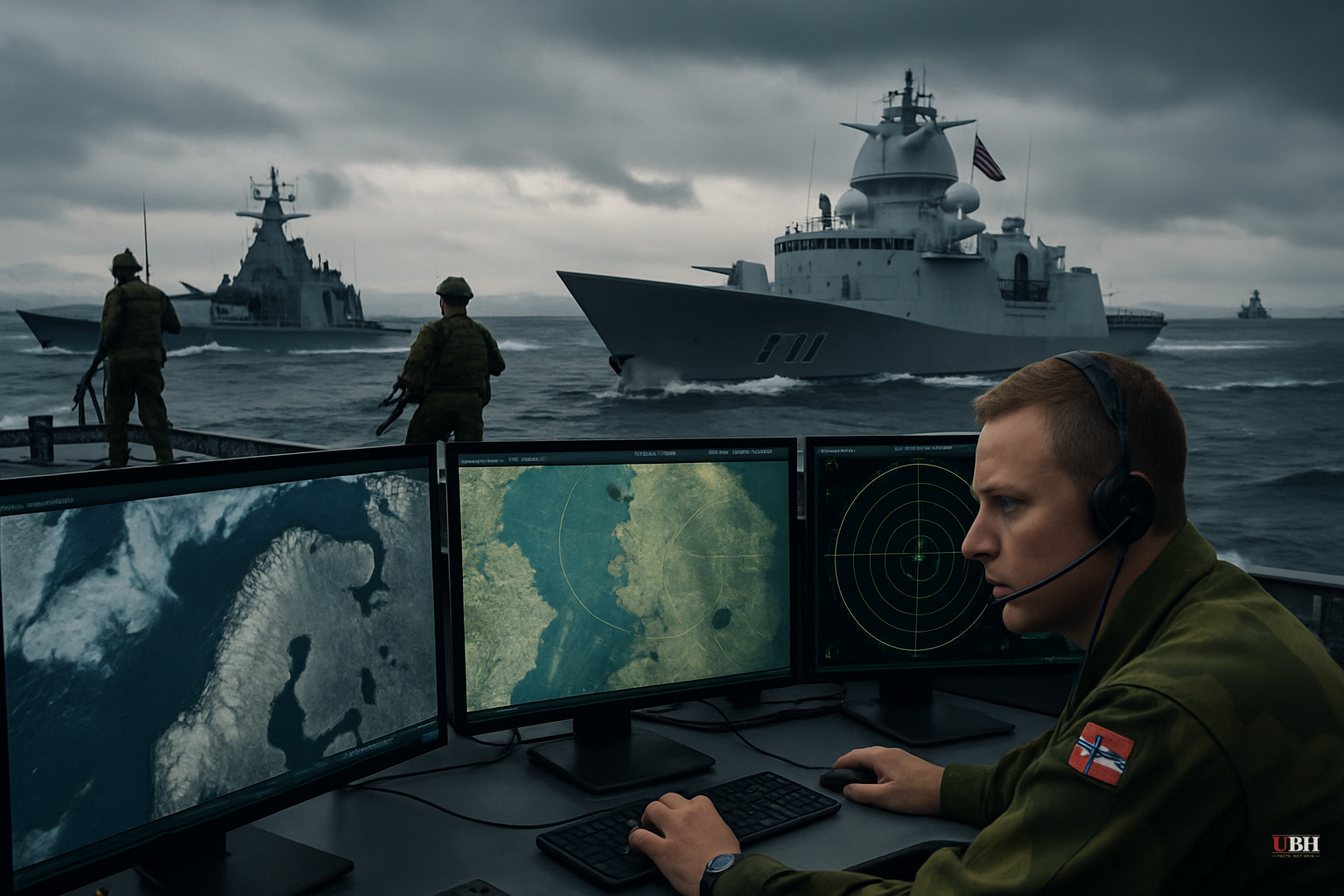
The Country Doing the Heavy Lifting Nobody Talks About
While Washington debates aid packages and Brussels argues over sanctions, Norway has quietly become the load-bearing wall of Western strategy against Russia.
Two fronts. One small country of 5.5 million people.
The Energy Numbers Are Staggering
According to New Security Beat (a publication of the Wilson Center's Environmental Change and Security Program), Russia's pipeline natural gas exports to the EU collapsed from over 40% of the bloc's total in 2021 to just 8% in 2023.
Who filled that gap? Norway.
By Q1 2024, Norway had become the largest single exporter of pipeline natural gas to the EU at 46.6% of total imports. It also supplies 13.6% of the EU's petroleum oils — second only to the United States. In 2022 alone, one-third of all gas consumed in Europe came from Norwegian wells.
Europe replaced a Russian energy chokehold with a Norwegian one. The geography changed, but the vulnerability remains.
What That Means in Plain English
New Security Beat's analysis by Griffen Ballenger and Patrick Kornegay Jr. identifies the risk explicitly: as Norway expands its role as Europe's energy backbone, it becomes a strategic chokepoint — exactly the kind of target Russia has already demonstrated willingness to hit through hybrid warfare and sabotage. The Nord Stream pipeline destruction made that clear.
Russia knows this. Norway knows Russia knows this.
The Military Piece Is Escalating Fast
At the same time Norway is becoming Europe's gas station, it's positioning itself as the architect of NATO's northern containment strategy.
Russian Ambassador to Norway Nikolai Korchunov gave an interview to TASS in which he warned that Norway is actively integrating new NATO members Sweden and Finland into regional military plans. More American bases are opening. NATO facilities are expanding.
Last March, 32,500 troops from 14 NATO countries participated in "Cold Response" military drills across Norway and Finland's northern regions, according to reporting republished via ZeroHedge from analyst Andrew Korybko.
Korchunov warned that escalating threats from Norway "will inevitably lead to a directly proportional increase in risks for Norway itself" — signaling potential Russian retaliation.
The "Viking Bloc" Is Real
The Arctic Institute's Hugo Blewett-Mundy laid out the geographic logic clearly in an April 2025 analysis. Finland and Sweden's NATO accession didn't just add two countries to the alliance — it fused three separate theaters into one: the High North, the North Atlantic, and the Baltic.
Former Swedish Foreign Minister Tobias Billström described exactly this effect. NATO now has a continuous strategic arc from the Norwegian Sea to the Gulf of Finland.
Norway, as the founding NATO member and geographic anchor of this arc, is the natural leader. Finland's Defense Minister Antti Häkkänen established a new NATO land command last year specifically tasked with leading Northern European defense in a conflict scenario. Sweden's defense industrial base exports over $2 billion in defense material annually.
This is a serious military coalition with real capability — and Norway is running point.
The UK just announced it will lead a new multilateral naval initiative against Russia with Norway and eight other nations. That's coordinated pressure on Russian naval access from multiple directions simultaneously.
What Mainstream Coverage Gets Wrong
Most Western outlets cover the Norway energy story and the Norway military story as separate beats. Energy reporters write about gas pipelines. Defense reporters write about NATO drills. Few connections are drawn between them.
Norway is in Russia's crosshairs because it occupies both roles simultaneously — Europe's primary energy supplier and the de facto leader of NATO's northern military strategy. Cutting Norway's energy exports to Europe would trigger an economic crisis. Neutralizing Norway's military role would collapse NATO's northern flank.
Russia sees a two-for-one target. Western coverage has largely treated these as distinct problems.
The ZeroHedge/Korybko framing leans heavily on Russian grievance — presenting NATO expansion as aggression rather than a defensive response to Russia's invasion of Ukraine. That framing warrants critical reading. Finland and Sweden didn't join NATO because Brussels pressured them. They joined because Russia invaded a neighbor and rewrote the regional threat calculus overnight.
Yet dismissing Russia's stated concerns as pure propaganda overlooks genuine Russian strategic anxiety — the kind that can produce miscalculation and escalation regardless of who bears responsibility for the current standoff.
The Real Risk
Norway is now simultaneously Europe's most important energy supplier and the de facto leader of NATO's northern military strategy against Russia.
Russia has already shown it will conduct sabotage operations against critical infrastructure. The Nord Stream pipeline destruction proved that. Norway's undersea cables and gas infrastructure represent obvious next targets. Russian hybrid warfare doesn't require a declaration of war.
For regular people in Europe, whether the lights and heat stay on this winter depends partly on whether Russia decides to test Norway's infrastructure. For Americans, it means a NATO Article 5 scenario is more plausible in the Norwegian Sea than almost anywhere else on the map.
Norway stepped up when Europe needed it. That choice also painted a target on its back.
Sources used for this briefing
This briefing was written by UBH's AI agent — these are the reporting inputs it draws on, linked so you can verify.


