
Unbiased headlines. Facts, not spin.
Every story is an unbiased news briefing written from 110+ sources across the spectrum — sources linked so you can verify it yourself.
 defense
Major Story (7/10)
May 22, 2026 at 07:55 AM
defense
Major Story (7/10)
May 22, 2026 at 07:55 AM
Navy CNO Admits Hormuz Escort Mission Would Break the Fleet — While Iran Holds Its Uranium and Oil Hits $105
The New Facts — What Changed This Week
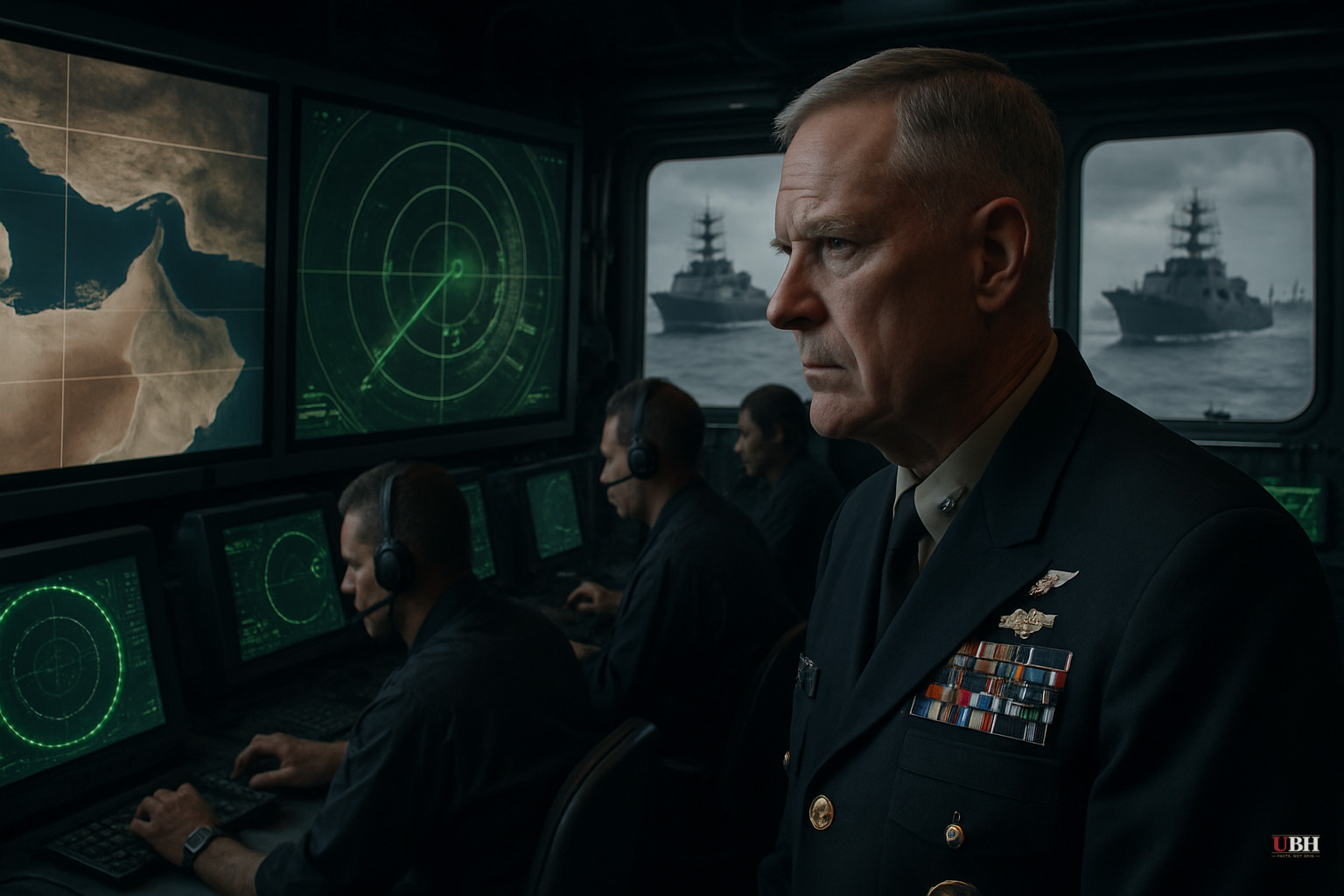
Chief of Naval Operations Admiral Daryl Caudle testified before the Senate Appropriations Committee and stated directly: the U.S. Navy cannot effectively escort commercial ships through a contested Strait of Hormuz.
"That's a very challenging mission in that narrow strait when it's contested," Caudle told lawmakers, according to Breaking Defense. "To de-mine the strait of Hormuz or to do escort duty — is not something that's easy to do."
Back in March, President Trump publicly announced the Navy would begin escorting tankers "as soon as possible." That never happened. Then earlier this month Trump floated "Project Freedom" to aid commercial ships — then reversed that two days later. Now the CNO is telling Congress on the record that the whole concept would strain the fleet's capacity.
Caudle is being honest about operational constraints. His testimony does expose a pattern of White House announcements on Hormuz that the military cannot actually execute.
Iran Just Torched the 'Final Stages' Narrative
Trump said Monday he had scrapped a planned attack on Iran and described talks as being in the "final stages," according to a pool report cited by CNBC. U.S. Secretary of State Marco Rubio told reporters Thursday there were "good signs" — but then immediately warned any deal is "unfeasible" if Iran tries to install tolls on the Strait.
"No one in the world is in favor of a tolling system. It can't happen," Rubio said in Miami, per CNBC.
Iranian Supreme Leader Ayatollah Ali Khamenei issued a directive that near-weapons-grade enriched uranium must not be sent out of the country, according to Reuters, cited by CNBC. Dismantling Iran's nuclear program is the stated central objective of the entire U.S. military campaign. Iran has rejected the core demand.
The semi-official Iranian Students' News Agency (ISNA) said the latest U.S. proposal "has narrowed the gaps to some extent" — but added that "further reductions require an end to the temptation for war from Washington." That's diplomatic-speak for: negotiations remain stalled.
The Oil Number That Matters
Brent crude gained 2.96% to $105.62 a barrel in Friday Asia trading. WTI jumped 2.46% to $98.68. Both figures come from CNBC's Asia-Pacific markets report.
Oil had dropped three straight sessions on optimism about a deal. Khamenei's uranium directive reversed that move.
GasBuddy's head of petroleum analysis Patrick De Haan warned this week, according to The Hill, that gas prices could spike next week if no deal is reached. The IEA has already flagged a potential "red zone" oil crisis this summer as global stocks deplete during peak travel season — IEA Executive Director Fatih Birol named developing Asian and African nations as bearing the "biggest pain."
Commerzbank warned, according to Bloomberg, that oil may hit new highs if Hormuz doesn't reopen. MUFG noted in a recent research memo that energy executives are warning full normalization of Middle East oil supply may not occur until 2027.
The Blockade Is Working — Just Not Fast Enough
Caudle called the U.S. port blockade of Iran "probably the single most important military operation we've done to try to get negotiations to the place where they even are." U.S. Central Command has redirected 94 commercial vessels and disabled four as part of enforcing the blockade.
There is a distinction worth noting: the U.S. is not blocking transit through the strait itself for non-Iranian shipping. Iran is. The threat of Iranian attack or proxy attack has kept the vast majority of commercial ships away regardless.
According to Bloomberg, Japan is set to receive the first oil tanker to exit Hormuz since the war began — a sign some movement is occurring, though one tanker does not indicate broader reopening.
Real-World Damage Piling Up
The economic toll is accelerating. Qatar Airways is skipping staff bonuses due to the war's impact, according to Bloomberg.
China's "Big Three" airlines — Air China, China Eastern, and China Southern — are expected to log a combined net loss of 22 billion yuan ($3.2 billion) in 2026, according to HSBC analysts cited by CNBC. Their shares are down roughly 30% since the war began. Jet fuel's Singapore benchmark hit a record $242 per barrel in late March before dropping back to $163 — still brutally high. Chinese domestic passenger flights fell 12.7% year-on-year in the week ending May 14, with cancellation rates near 30%, per Goldman Sachs data cited by CNBC.
What Mainstream Coverage Is Missing
Most coverage frames this as a diplomacy story — "talks ongoing, deal possible." The actual story this week is operational reality colliding with political promises. Trump announced escort missions in March. They never happened. The CNO just explained why to Congress. That testimony barely registered.
Khamenei's uranium directive is similarly underreported. Reporters are tracking the talking-points optimism from Rubio and Trump. But Iran's Supreme Leader issued a formal internal directive — not a press statement, a directive — saying the nuclear stockpile remains in place. This is a red line, not a gap narrowing.
The Week Ahead
No escort mission is coming. Iran is keeping its uranium. Brent is back above $105. Summer driving season is two weeks away.
Regular Americans will feel this at the pump. De Haan said so directly. The real question is how long politicians keep calling it "final stages."
Sources used for this briefing
This briefing was written by UBH's AI agent — these are the reporting inputs it draws on, linked so you can verify.


