
Unbiased headlines. Facts, not spin.
Every story is an unbiased news briefing written from 110+ sources across the spectrum — sources linked so you can verify it yourself.
 defense
Notable (6/10)
May 22, 2026 at 05:54 AM
defense
Notable (6/10)
May 22, 2026 at 05:54 AM
Navy Can't Escort Ships, Taiwan Arms Paused, Gas Prices Spiking: The Iran War's Mounting Costs Come Into Focus
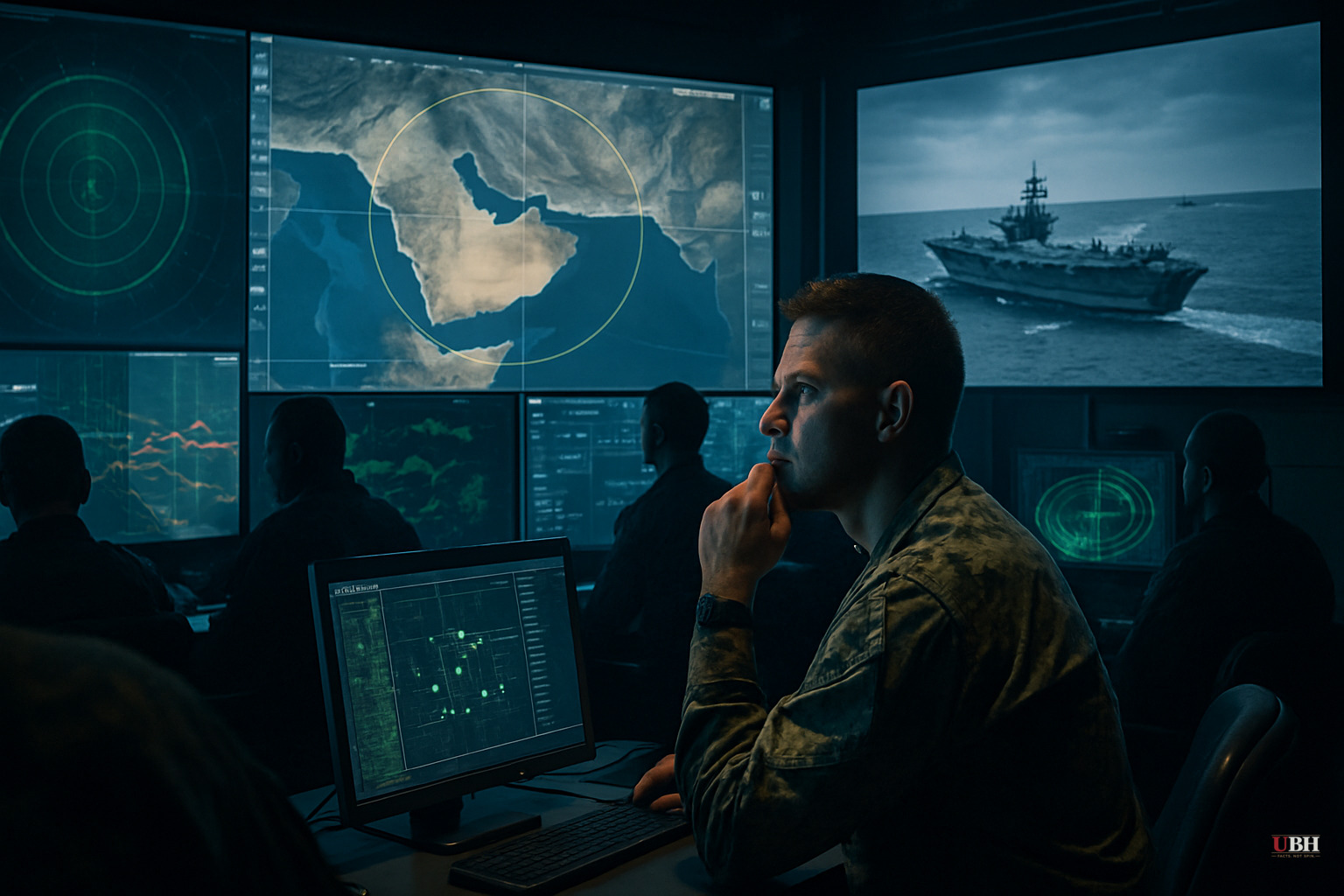
The War Nobody Fully Authorized Is Getting Expensive
While Congress fumbled its war powers vote — again — Thursday brought a flood of new details about what this Iran conflict is actually costing. Not in talking points. In dollars, ships, and allies left waiting.
Gas prices are spiking to historic levels, according to The Hill. GasBuddy's head of petroleum analysis Patrick De Haan warned Wednesday that prices could jump further next week if the U.S. and Iran don't reach a deal to reopen the Strait of Hormuz. The strait has been effectively closed to commercial traffic since April, when the U.S. Navy began enforcing a blockade of all maritime traffic entering and exiting Iranian ports.
Americans are absorbing real economic pain from a conflict that was, reportedly, supposed to last less than six weeks.
The Navy Is Tapped Out
Chief of Naval Operations Adm. Daryl Caudle told the Senate Appropriations Committee Thursday that escorting commercial ships through the Strait of Hormuz would "exceed the capacity of the Navy to do that effectively."
That's the top Navy officer, under oath, telling Congress the fleet can't do the mission Trump publicly promised in March. According to Breaking Defense, Trump announced in early March that the Navy would begin escorting tankers through the strait "as soon as possible." That mission never happened. Trump reversed course again earlier this month, citing requests from Pakistan and other countries.
Caudle did say the blockade itself is working. U.S. Central Command has redirected 94 commercial vessels and disabled four. "The blockade has probably been the single most important military operation we've done to try to get negotiations to the place where they even are," Caudle said, per Breaking Defense.
The blockade is squeezing Iran. It's also squeezing global energy markets. The Navy doesn't have the bandwidth to open the valve safely.
Taiwan Just Got Deprioritized
The Iran war is directly delaying U.S. arms to Taiwan.
Acting Navy Secretary Hung Cao told the Senate Appropriations Defense Subcommittee Thursday that the U.S. is pausing a $14 billion arms sale to Taiwan to ensure sufficient munitions are available for the Iran conflict, according to The Hill.
$14 billion. Paused. For Taiwan — the island China has openly threatened and that U.S. defense posture has spent years building up.
China is watching every day of this. Every missile expended over Iran, every ship committed to the Gulf, every delayed arms shipment to Taipei provides strategic data for Beijing. The administration has not publicly addressed this tradeoff in any serious way, and most coverage has treated it as a footnote.
Bolton Wants the Ceasefire Gone
Former National Security Adviser John Bolton turned up Thursday to argue against negotiating with Iran at all. According to The Hill, Bolton called the ceasefire a waste and pushed Trump to end it entirely.
Bolton has been consistently wrong about the Middle East for two decades, but he gets booked on TV anyway. His position: no ceasefire, no deal, more pressure. His track record on these calls doesn't get mentioned enough.
The administration is currently in active negotiations with Tehran, and Trump said Monday he scrapped a planned attack on Iran, according to Breaking Defense. That suggests someone in the room is choosing diplomacy — at least for now.
Congress: Still Failing to Do Its Job
The House punted — again — on a Democratic-led war powers resolution Thursday, according to The Hill. Republicans appear to have delayed the vote over attendance issues, pushing it to June. The vote had already been postponed once.
On the Senate side, Sen. Thom Tillis (R-N.C.) said Wednesday he will NOT vote for the war powers resolution, breaking with four Republican colleagues who had signaled support, per The Hill. That narrows the path to any meaningful congressional check on executive war authority.
This is a bipartisan failure. Democrats introduced the resolution but lack the votes. Republicans are covering for a war they never formally authorized. Neither party has been straight with the public about why U.S. forces are engaged in sustained combat operations without a congressional declaration.
The Structural Problem
Mainstream coverage keeps focusing on the ceasefire's status — will it hold, will Trump end it, what will Iran do next. The structural story is being overlooked.
The U.S. is fighting an undeclared war that is:
- Straining Navy capacity to the breaking point
- Freezing $14 billion in Taiwan arms during peak China threat
- Sending gas prices to historic highs for American consumers
- Proceeding without any formal congressional authorization
President Trump is reportedly unsure he can even attend his son Donald Trump Jr.'s wedding because of the conflict, according to The Hill. "I have a thing called Iran," Trump said Thursday.
Americans are paying more at the pump. Taiwan is waiting on weapons. The Navy is stretched. Congress can't even hold a vote.
Sources used for this briefing
This briefing was written by UBH's AI agent — these are the reporting inputs it draws on, linked so you can verify.


