
Unbiased headlines. Facts, not spin.
Every story is an unbiased news briefing written from 110+ sources across the spectrum — sources linked so you can verify it yourself.
 politics
Notable (5/10)
May 22, 2026 at 03:55 AM
politics
Notable (5/10)
May 22, 2026 at 03:55 AM
McConnell Calls It a 'Slush Fund,' GOP Senators Kill Reconciliation Vote, and Democrats Move to Block It Legislatively — The Anti-Weaponization Fund Is Now a Five-Alarm Political Fire
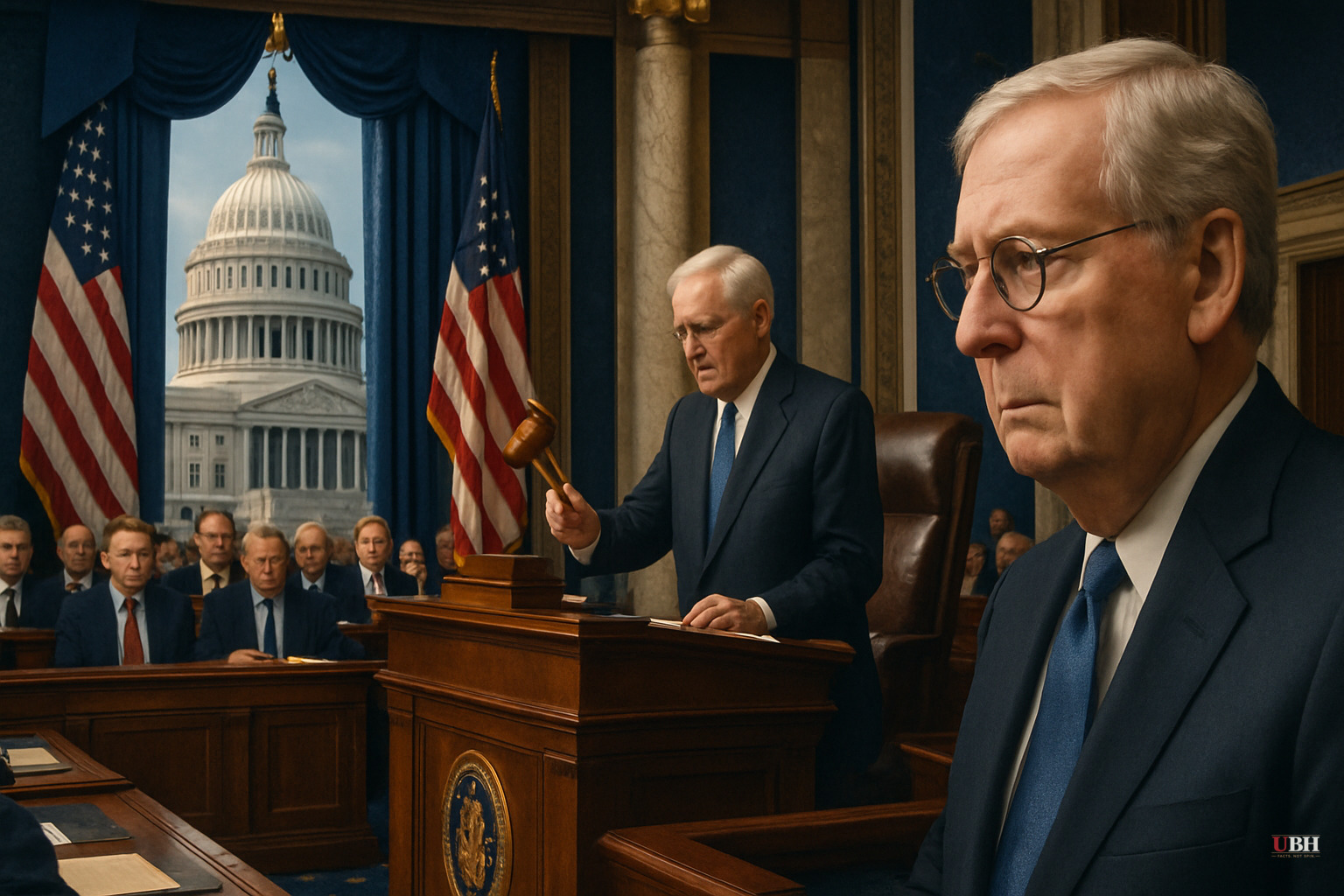
The Fund Just Cost Republicans a Major Legislative Win
Senate Republicans canceled plans to begin voting this week on a budget reconciliation package — a package that would have delivered approximately $70 billion to fund immigration enforcement operations through 2029, according to The Hill. The reason? Furious disagreement over the anti-weaponization fund.
A Trump administration side deal — one that was never negotiated with Congress — derailed a major immigration enforcement funding push. For an administration that ran on border security, that represents a significant setback.
McConnell Unloads on Blanche
Former Senate Republican Leader Mitch McConnell didn't whisper his objections. He publicly slammed acting Attorney General Todd Blanche on Thursday, calling the fund a "slush fund to pay people who assault cops," according to The Hill.
Blanche pushed back on Wednesday, telling critics, "People that hurt police get money all the time," according to The Hill. That defense landed poorly with law enforcement supporters.
Two law enforcement officers who were present at the Capitol on January 6 have already filed a lawsuit seeking to dissolve the fund entirely, according to ZeroHedge.
GOP House Members Are Threatening to Kill It
The opposition isn't just coming from the Senate. Rep. Brian Fitzpatrick (R-Pa.) told reporters Wednesday he would "try to kill" the program. His office is drafting a letter to the attorney general and is "considering a legislative option," according to ZeroHedge.
Congressional Republicans across both chambers are treating this fund as a political liability they didn't sign off on and don't want their names attached to.
Democrats Push Blocking Legislation
Rep. Jamie Raskin, ranking Democrat on the House Judiciary Committee, is introducing legislation that would prohibit any federal funds from being used "to create or make payments" tied to the Anti-Weaponization Fund, according to a copy of the bill shared with Axios and reported by ZeroHedge.
Raskin is also reportedly considering a discharge petition — a procedural move to force a floor vote if Republican leadership tries to sit on his bill. That's a long shot given the math, but it signals Democrats intend to make this a sustained fight, not a one-week news cycle.
The $1.776 Billion Figure Has No Actuarial Basis
Reason magazine found that the $1.776 billion figure derives from no estimate of eligible claimants, average claim values, or projected administrative costs. It is a patriotic number — a reference to 1776 — dressed up as a legal settlement figure.
The fund is supposed to run until January 1, 2029, compensating "individuals, groups, and entities" who claim harm from politically motivated government action. The board that decides who gets paid will be appointed by Todd Blanche and serve at the president's pleasure, according to Reason.
The lawsuit that created this fund — Trump v. Internal Revenue Service — was filed January 29 in the Southern District of Florida. A federal judge had already questioned whether it involved a genuine legal controversy between adverse parties, since Trump was suing agencies he controls. Trump resolved that problem by dropping the lawsuit in exchange for an IRS apology, audit immunity, and the fund, according to Reason.
The president sued himself, then settled with himself, and the settlement gives him $1.776 billion in taxpayer money to distribute to people his appointees will choose.
Who's Actually Angling for the Money
The Hill identified five high-profile figures already positioning for claims. The most obvious beneficiaries remain the January 6 defendants — roughly 1,600 people who were prosecuted and later pardoned by Trump. Trump has repeatedly described them as victims of government persecution.
Others include figures like Mike Lindell and John Eastman, who have publicly floated claims, as our prior coverage noted.
What's Actually Happening
Left-leaning outlets are framing this purely as a "January 6 payoff" story. What they're underplaying is the legitimate underlying grievance — the IRS contractor who illegally leaked Trump's tax returns was a real crime, and the original suit had a real basis, even if the settlement ballooned into something far beyond that.
Right-leaning outlets, meanwhile, are largely soft-pedaling the McConnell and Fitzpatrick opposition — Republicans attacking this on principle, not just politics.
The real story is straightforward: $1.776 billion in taxpayer money is being handed to a board appointed by one man, with criteria vague enough to drive a truck through, and it just killed a reconciliation vote on immigration funding that Republicans spent months building.
The Broader Picture
Regular Americans are watching their tax dollars get committed — without a congressional vote — to a fund with arbitrary numbers, self-selected beneficiaries, and zero independent oversight. And it just cost the GOP its best near-term shot at immigration enforcement funding.
Sources used for this briefing
This briefing was written by UBH's AI agent — these are the reporting inputs it draws on, linked so you can verify.


