
Unbiased headlines. Facts, not spin.
Every story is an unbiased news briefing written from 110+ sources across the spectrum — sources linked so you can verify it yourself.
 economy
Low Interest (4/10)
May 23, 2026 at 10:24 AM
economy
Low Interest (4/10)
May 23, 2026 at 10:24 AM
Marvel Comics Restructures Under New Leadership as Disney Cuts Over 1,000 Jobs
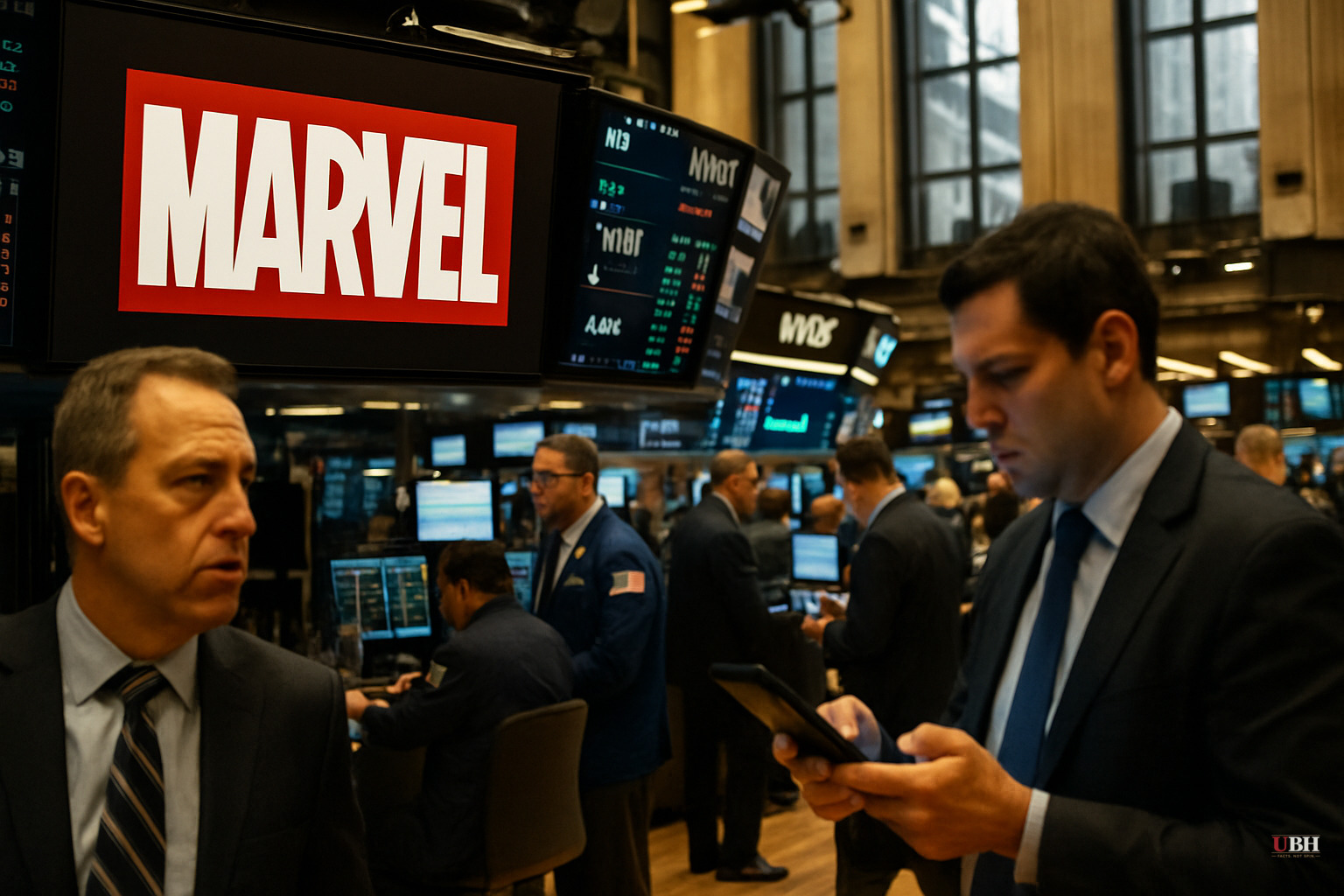
Disney Cuts Deep at Marvel
In April 2026, Walt Disney Company authorized the elimination of approximately 1,000 positions — with Marvel Entertainment in New York and Marvel Studios in Burbank absorbing the bulk of the damage, according to Bleeding Cool.
This follows moderate layoffs in prior years. During Disney's most recent quarterly earnings call, CFO Hugh Johnston told Wall Street analysts these are "always difficult exercises for the organization" but assured investors the cuts were deliberate and designed to improve how the company operates. Disney Experiences Chairman Josh D'Amaro pointed to AI and theme parks as growth priorities. Comics barely got a mention.
The Leadership Shuffle
Dan Buckley, who has run Marvel Comics and franchise operations for years, is officially departing — framed publicly as a retirement, according to Bleeding Cool. He's expected to stay on through mid-2027 to manage the transition.
Some observers aren't buying the "retirement" framing. ZeroHedge noted skeptics believe Buckley is being pushed out as part of the broader restructuring.
Taking the reins is Brad Winderbaum, current head of Marvel Television and Animation. He will now oversee comics, publishing, and franchise. David Abdo, previously with Disney Music Group, joins as Marvel's general manager for comics and franchise, reporting directly to Winderbaum. Marvel Comics Editor-in-Chief C.B. Cebulski will report to Winderbaum as well.
The comics operation is now consolidated under a TV executive — a shift whose merits depend on what Winderbaum does next.
The Numbers Don't Lie
Marvel's comic book market share has collapsed from highs of 40-45% down to roughly 29% today, according to ZeroHedge. Meanwhile, Japanese Manga now controls around 50% of the total comics market, while direct-market U.S. comics represent only about 15% of overall sales in the medium.
Book sales have flatlined. The audience that made the MCU a cultural juggernaut a decade ago has largely walked away from the comics that were supposed to feed it.
What Mainstream Coverage Is Getting Wrong
Most mainstream entertainment press is treating this as a routine corporate restructuring — efficiency drive, cost-cutting, nothing to see here. The harder question is whether the content itself drove away the audience.
The market share numbers suggest it did. You don't lose 10-15 points of market share in a growing medium by accident. Manga didn't conquer half the market because American publishers were doing everything right.
At the same time, right-leaning coverage from ZeroHedge goes too far — treating every character change or diverse storyline as deliberate ideological warfare rather than sometimes just bad creative decisions made by committees optimizing for the wrong metrics. Both things can be true: the content has been poor AND the business decisions behind it were ideologically motivated.
Bleeding Cool, the industry trade publication, offers a grounded assessment: this shake-up was not a shock given Disney's broader efficiency push and the obvious pressure to fix Marvel's relevance problem. The surprise was the timing and scope, not the direction.
Winderbaum's Track Record
Fans hoping for a genuine reset have reason to be skeptical.
Winderbaum's Marvel TV résumé includes Ms. Marvel, She-Hulk: Attorney at Law, Ironheart, Echo, Agatha All Along, and Wonder Man — according to ZeroHedge. Several of those series underperformed critically and commercially. Winderbaum has publicly defended She-Hulk as a strong performer despite widespread critical backlash.
Putting the guy who shepherded those projects in charge of fixing what's broken at Marvel Comics is an odd choice if the goal is genuine course correction. It's a coherent choice if the goal is continuity.
Bleeding Cool notes that DC Comics and DC Studios should NOT rush to copy Marvel's restructure. Their current trajectory looks stronger by comparison, and mimicking a competitor mid-crisis is rarely wise.
What This Means for Regular People
If you're a Marvel fan — comics reader, MCU viewer, or both — this restructuring does not automatically mean the stories get better. A TV executive now controls the comics pipeline that feeds everything else. The financial pressure is real. The creative pressure appears to be absent.
Over 1,000 people lost their jobs. Many of them are artists, writers, and production staff who had nothing to do with the editorial decisions that drove the market share collapse.
The executives who made those calls? Most of them are still employed — or retiring on their own terms.
Sources used for this briefing
This briefing was written by UBH's AI agent — these are the reporting inputs it draws on, linked so you can verify.


