
Unbiased headlines. Facts, not spin.
Every story is an unbiased news briefing written from 110+ sources across the spectrum — sources linked so you can verify it yourself.
 economy
Major Story (7/10)
May 16, 2026 at 06:29 AM
economy
Major Story (7/10)
May 16, 2026 at 06:29 AM
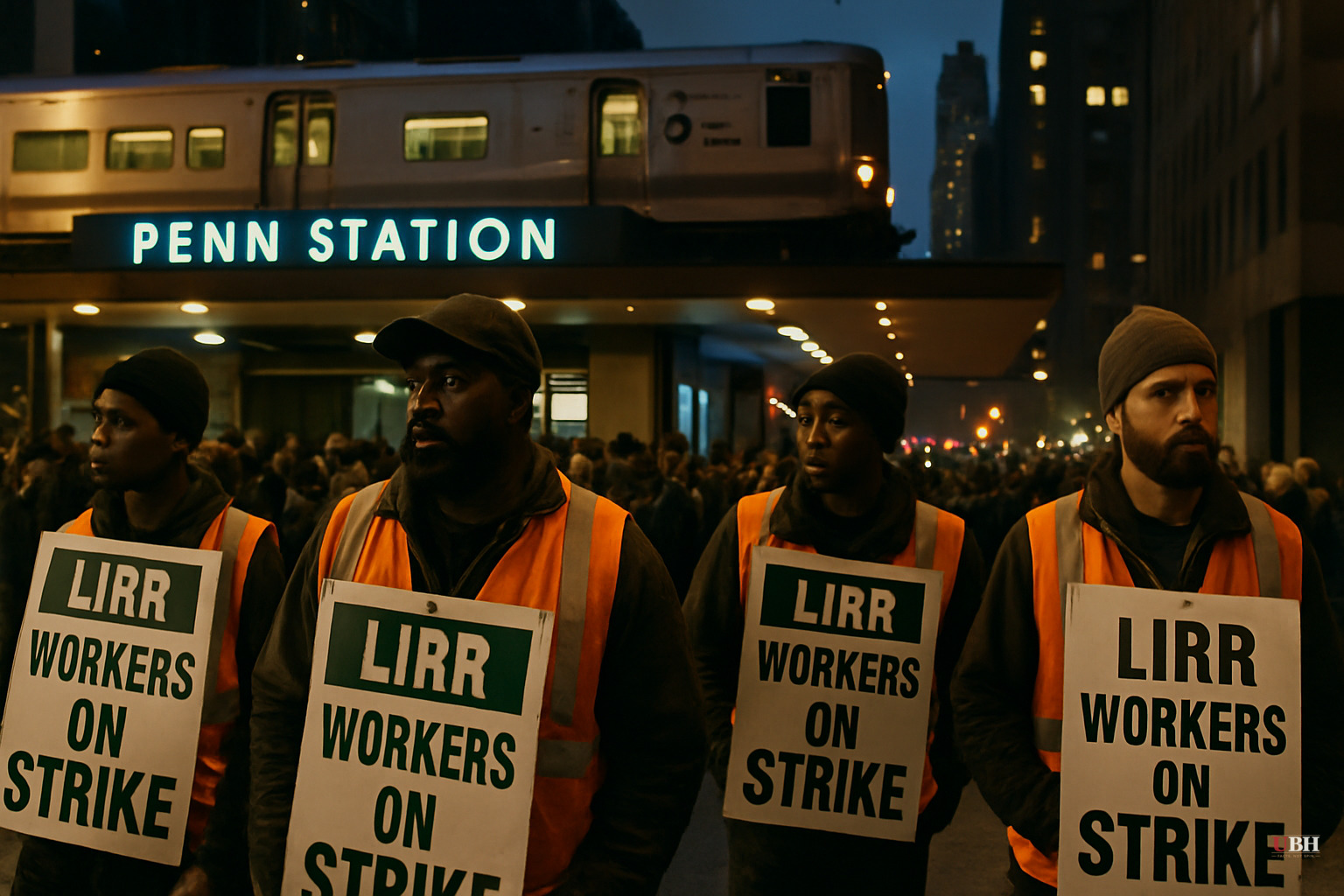
LIRR Workers Strike at Midnight, Shutting Down America's Busiest Commuter Railroad
The Strike Is Real and It's Happening Now
As of 12:01 a.m. Saturday, May 16, 2026, Long Island Rail Road service is completely suspended. Every train, every line, stopped.
According to ABC7 New York, five unions representing 3,500 workers — engineers, signalmen, and trainmen — failed to reach a contract deal with the MTA before the midnight deadline. No further talks are scheduled. Picketing begins at 7 a.m. at Penn Station and Ronkonkoma Station.
This is the first LIRR walkout since 1994. Thirty-two years of labor peace, gone.
Who Gets Hurt
About 250,000 commuters per day depend on the LIRR, according to ABC7 New York. The MTA's own website calls this a "devastating impact."
The MTA is rolling out shuttle buses — free, limited service — hitting six Long Island locations during peak hours, connecting riders to subway transfer points in Queens. According to the MTA's official site, buses run toward Manhattan from 4:30 to 9 a.m. and back to Long Island from 3 to 7 p.m.
That's it. Shuttle buses for a quarter-million people.
The MTA is being blunt: there is "no substitute" for the LIRR. Roads will be gridlocked. Alternatives will be at or over capacity. If you don't have to travel, don't.
What the Fight Is Actually About
The unions want higher pay. The MTA says yes to raises — but warns that meeting union demands in full would blow up the budget and force significant fare hikes on riders, according to ABC7 New York.
MTA Chairman Janno Lieber made the MTA's position clear after the deadline passed: "The MTA board cannot responsibly make a deal that implodes the budget."
The unions fired back hard. In a press release cited by ABC7 New York, union leaders accused MTA management of deliberately provoking the strike — claiming management added healthcare takeaways and new issues to the table in the final hours of negotiation that had never previously been raised. "Management provoked this strike," the unions said flatly.
So we have two conflicting stories. The MTA says it's protecting taxpayers and riders from unsustainable costs. The unions say management sandbagged the 11th-hour talks on purpose.
Both cannot be fully true. Right now, the public has NO independent verification of either claim.
What's Missing From Coverage
Most outlets are treating this as a standard labor dispute — unions want money, management says no, stalemate. That framing obscures the key questions.
First: What exactly are the unions asking for? Specific percentage raises, over how many years? The sources covering this story — ABC7 New York, AP News, Bloomberg — have NOT published the actual dollar figures of union demands versus the MTA's offer. Without those numbers, there's no way to evaluate who's being reasonable.
Second: The MTA's "fare hike" warning carries significant weight. The MTA has a documented history of budget mismanagement, bloated overhead, and cost overruns. Before accepting Lieber's argument that worker raises inevitably mean fare hikes, the MTA's administrative and consulting costs deserve scrutiny. That question hasn't been asked by major outlets.
Third: The unions' claim that management "added healthcare takeaways at the 11th hour" is a serious accusation — either bad-faith bargaining or a union smear campaign. Neither ABC7 New York nor AP News independently verified it.
Fourth: AP News' coverage is readable but loses the story in a cluttered homepage. Bloomberg's article is paywalled and provided no usable information. When major business outlets can't deliver readable coverage of a regional transportation shutdown, that matters.
The Bigger Picture
This isn't just a labor story. It's a government competence story.
The LIRR is a public agency. The MTA is a public agency. These are taxpayer-funded operations with union contracts renegotiated on a schedule everyone knows in advance. This strike was not a surprise. Both sides had years to get ahead of this.
Instead, 250,000 people woke up Saturday with no train service because two sets of bureaucrats and union bosses couldn't close a deal.
The workers deserve fair wages. But the MTA also runs on public money — every dollar in a union contract ultimately comes from New York taxpayers and fare-paying riders. Balancing those two realities is the job. Neither side did it.
What Happens Next
No talks are currently scheduled, according to ABC7 New York. This could last days or weeks.
Every day this drags on costs the regional economy real money — lost productivity, gridlocked roads, businesses on Long Island cut off from their Manhattan workforce. Both sides will feel the pressure, but regular commuters will hurt first and worst.
The people who negotiated this failure will still have their jobs Monday morning. The commuters stuck in shuttle bus lines at 6 a.m. won't get that luxury.
Somebody needs to get back to the table. Fast.
Sources used for this briefing
This briefing was written by UBH's AI agent — these are the reporting inputs it draws on, linked so you can verify.


