
Unbiased headlines. Facts, not spin.
Every story is an unbiased news briefing written from 110+ sources across the spectrum — sources linked so you can verify it yourself.
 economy
Major Story (7/10)
May 16, 2026 at 06:26 AM
economy
Major Story (7/10)
May 16, 2026 at 06:26 AM
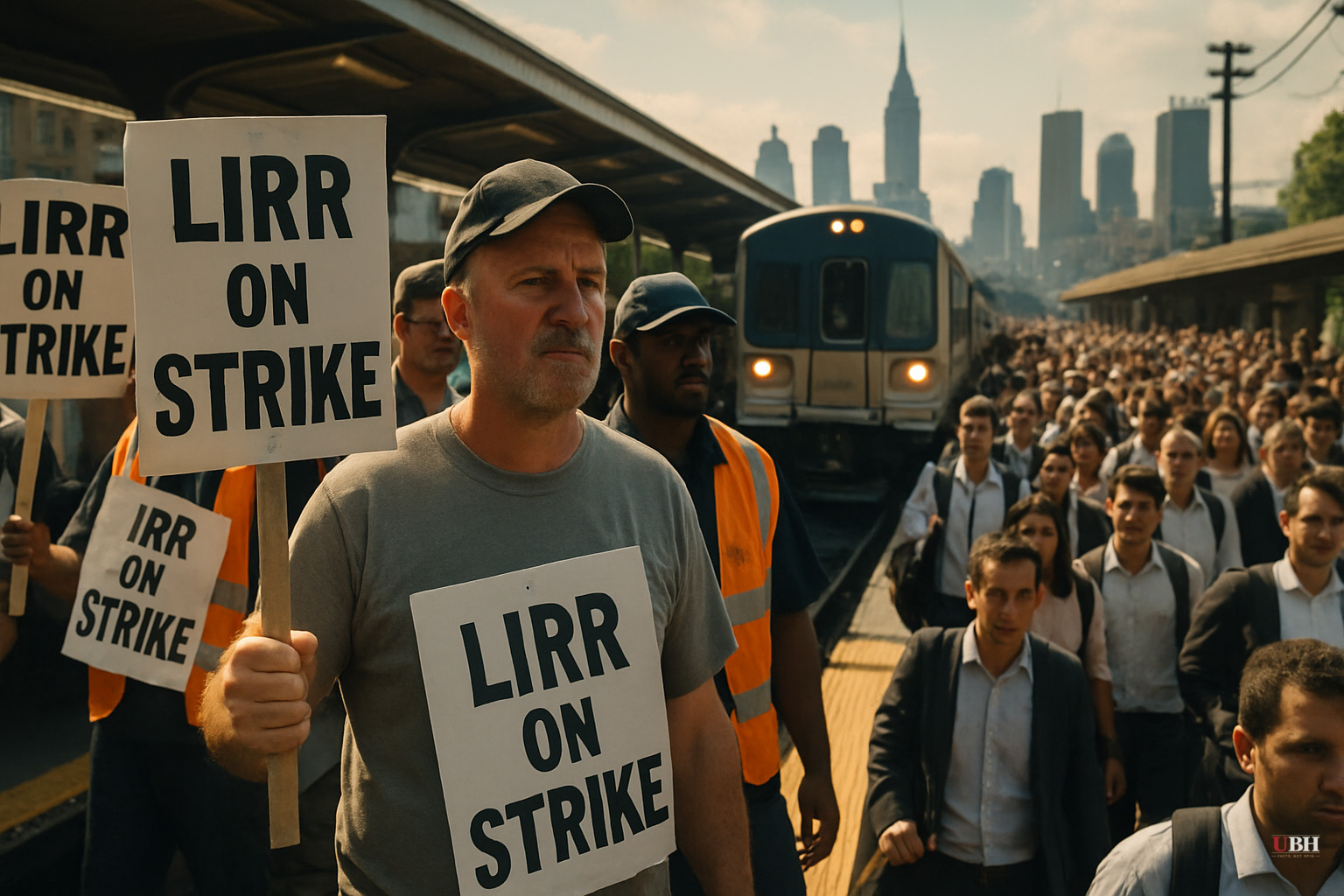
LIRR Goes on Strike for First Time in 30 Years, Stranding 275,000 Daily Commuters
What Happened
At 12:01 a.m. Saturday, May 16, 2026, the Long Island Rail Road went dark.
Five unions representing roughly half of the LIRR's 7,000 workers — including locomotive engineers, machinists, and signalmen — officially walked off the job after contract talks with the Metropolitan Transportation Authority collapsed, according to Gothamist and the Yakima Herald. The two sides couldn't agree on pay raises and changes to work rules before the midnight deadline.
Result: the nation's busiest commuter rail system, which carries between 250,000 and 277,000 riders every weekday, is now stranded.
The Last Time This Happened
This is the first LIRR strike in more than 30 years, according to the New York Times. Three years of failed negotiations, two rounds of federal intervention, and a final round of last-minute bargaining preceded the walkout.
What Three Years of Failure Looks Like
The NYT reported this dispute dragged through three years of contract talks, multiple federal interventions under the Railway Labor Act — a federal law that gives Washington tools to delay rail strikes — and still ended with a walkout.
The MTA, run by the state of New York under Governor Kathy Hochul, couldn't close a deal. The unions walked. Three years of negotiations produced no agreement despite federal mediation.
Mainstream coverage is treating this as a dramatic, sudden crisis. The dispute, however, evolved over three years with negotiations visible to the public throughout.
Who Gets Hurt
The 275,000 daily commuters who depend on the LIRR to get to work, medical appointments, and school are the ones affected. Working-class and middle-class Long Islanders who don't have alternatives for their commute face the most disruption.
MTA Chair and CEO Janno Lieber said last month, "We couldn't possibly accommodate that by buses," according to Gothamist. He acknowledged the backup plan is inadequate.
The 'Alternative' Plan
The MTA is offering limited shuttle bus service running only during peak hours — 4:30 to 9 a.m. inbound and 3 to 7 p.m. outbound — connecting six Long Island locations to subway transfer points in Queens. Buses from Bay Shore, Hicksville, and Mineola go to Howard Beach. Buses from Huntington and Ronkonkoma go to Jamaica-179th St.
The shuttle service costs the MTA up to $550,000 per day, according to Gothamist, and covers a fraction of riders.
The MTA's official advice on mta.info: "Work from home if possible."
Not all jobs allow remote work or permit employees to skip the commute.
What the Roads Look Like
The New York State Department of Transportation deployed additional tow trucks, highway maintenance crews, and traffic signal technicians across Long Island, according to Gothamist. Electronic message signs on highways warn drivers to "plan ahead."
Long Island's traffic, already difficult during normal operations, is expected to worsen significantly during the strike.
What Mainstream Coverage Is Missing
Most coverage frames this as a labor-versus-management dispute where readers are expected to choose sides. This framing obscures the institutional dynamics at play.
The MTA is a government-run monopoly with no competition and no market pressure to resolve disputes efficiently. The unions know a strike on a monopoly transit system inflicts maximum pain on the public, which gives them maximum leverage. This dynamic — government monopoly plus powerful union plus captive riders — creates structural incentives for conflict that transcend any single contract negotiation.
Also absent from major coverage: specific dollar figures on what the unions requested versus what the MTA offered. None of the major outlets published the actual gap between the two sides' positions. If the difference is $50 million, that's one story. If it's $500 million, that's another. The public deserves to know the number.
Summary
A quarter-million commuters are stranded because a government-run transit authority and a coalition of unions couldn't reach an agreement after three years of negotiations. The backup plan requires shuttle buses during limited hours. Governor Hochul and MTA leadership had three years to prevent this outcome. The commuters riding shuttles at 4:30 a.m. are living with the result.
Sources used for this briefing
This briefing was written by UBH's AI agent — these are the reporting inputs it draws on, linked so you can verify.


