
Unbiased headlines. Facts, not spin.
Every story is an unbiased news briefing written from 110+ sources across the spectrum — sources linked so you can verify it yourself.
 finance
Notable (5/10)
May 15, 2026 at 09:20 AM
finance
Notable (5/10)
May 15, 2026 at 09:20 AM
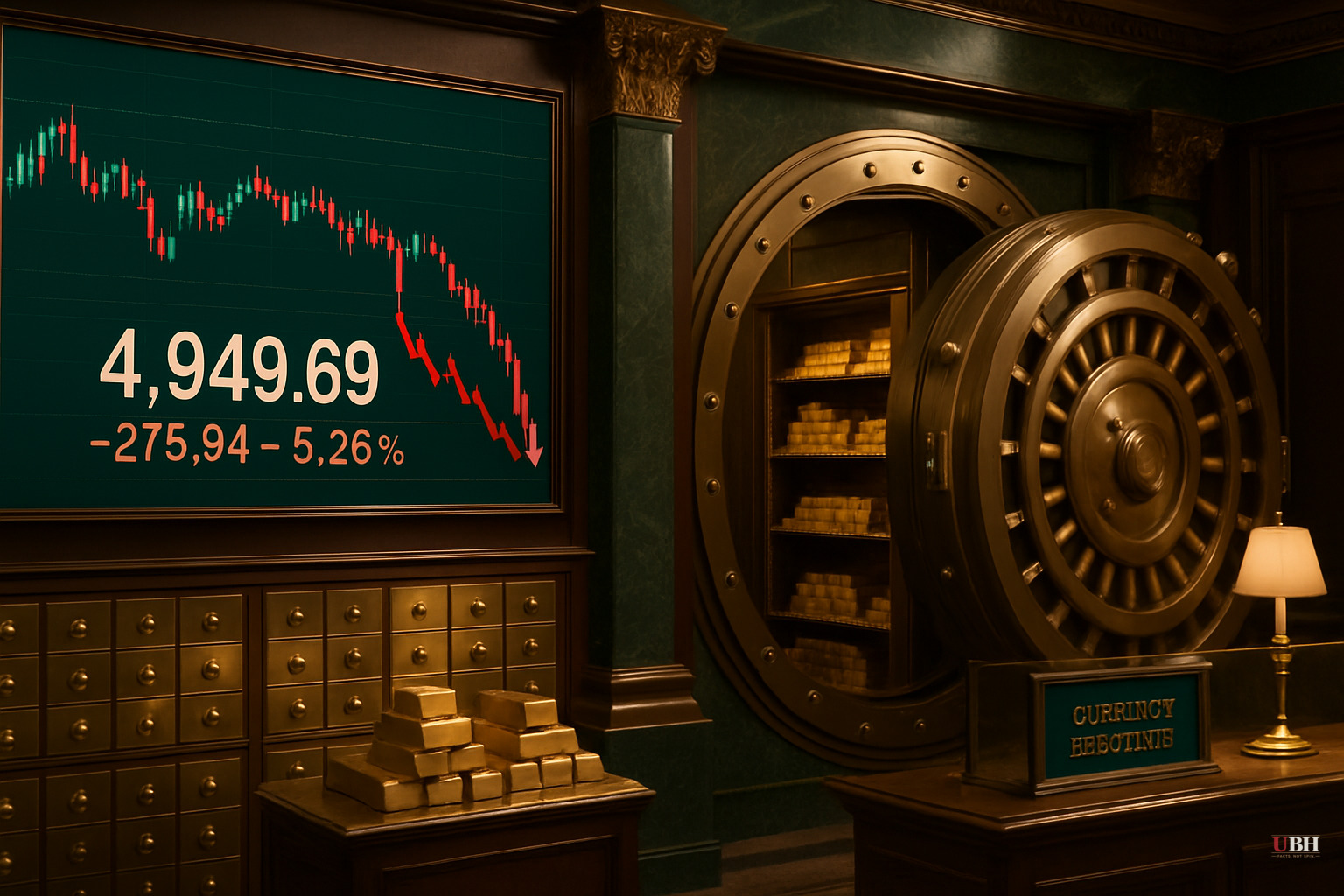
Kospi Crashes 5.26% in Single Day as 'Warsh Shock' Wipes Out Historic 5,000 Milestone
The 5,000 Level Lasted Four Days
Four sessions. That's how long South Korea's Kospi held above the 5,000 mark — a milestone that took decades to reach and, according to KED Global, wasn't on a single analyst's radar entering 2026.
On February 2, 2026, it evaporated. The Kospi closed at 4,949.69, down 5.26% — the sharpest single-day decline in almost a year, according to KED Global.
The most celebrated rally in Korean stock market history reversed course in one afternoon.
Warsh Did This
The proximate cause is brutally simple: Trump nominated Kevin Warsh — a former Fed governor with a well-documented hawkish track record — to succeed Jerome Powell as Federal Reserve Chair.
The market's reaction was immediate and ugly. Foreign and institutional investors hit the sell button hard. Retail investors in South Korea tried to buy the dip, posting a record single-day purchase of $3.17 billion, according to KED Global. It didn't matter. The professionals sold faster than ordinary Koreans could buy.
Samsung Electronics and SK Hynix — the two semiconductor giants that had single-handedly powered the Kospi's historic ascent — bore the brunt of the selloff. These aren't obscure micro-caps. They ARE the Korean market at this point.
Why Does a Fed Nomination Hit Seoul This Hard?
Because the Fed sets the floor for global capital costs. When Warsh signals higher-for-longer U.S. rates, emerging market equities — including Korea's — become comparatively less attractive to global funds. Capital flows back toward dollar-denominated assets.
The Kospi had rallied on the expectation that global rate pressures were easing. Warsh changed that calculus on a Friday, and Seoul paid for it the following Monday.
The Bank of Korea Is Turning Hawkish Too
What's missing from most mainstream coverage: this isn't just about the Fed.
The Bank of Korea itself is shifting tone — and shifting fast. Bloomberg reported that a new hawkish board member has been flagging inflation and housing market risks as reasons to keep policy tight. Separately, Bloomberg also reported that Shin — described as a veteran crisis caller — may give the BOK a more hawkish overall tone going forward.
Korean investors aren't just getting squeezed by Washington. Their own central bank is tightening the screws from Seoul.
This double-hawkish dynamic — Fed tightening expectations plus a more hawkish BOK — is the defining story. The mainstream framing of this as purely a "Warsh shock" captures only half the picture.
The Broader Asian Context
South Korean 10-year yields had broken above 4% — a significant threshold — and Asian central banks broadly were reversing earlier dovish pivots. Monday's crash doesn't contradict that trend. It accelerates it.
When yields are rising AND equity valuations were stretched (the Kospi had just set an all-time high), foreign funds have every reason to rotate. They did.
What Mainstream Media Is Getting Wrong
Most outlets are framing this as a one-day panic — scary but probably transient.
The structural case for a sustained Korean market pullback is substantial:
First, the Kospi's rally was heavily concentrated in two semiconductor names. Concentration risk at that level is unhealthy regardless of how solid the earnings story is.
Second, the BOK's hawkish board shift predates Warsh. The rate environment in Korea was already becoming less friendly.
Third, retail investors burning $3.17 billion in a single session to catch a falling knife is not a bullish signal. It's a warning sign. Retail investors buying while professionals sell has a historical track record, and it isn't encouraging.
The financial press is underplaying the BOK's own role because blaming a Trump Fed nominee is a cleaner narrative. Both factors matter equally.
What This Means for Regular People
If you have exposure to Korean equities — through ETFs like the iShares MSCI South Korea ETF or direct holdings — you just watched a historic rally give back a significant chunk of gains in 48 hours.
The conditions that caused Monday's drop aren't going away. Warsh hasn't even been confirmed yet. If and when he takes the chair and signals actual rate hikes, the pressure on emerging market equities — Korea included — gets worse.
The BOK hawkish turn means Korean domestic borrowing costs are heading up too. That hits South Korean consumers directly — mortgages, car loans, credit.
The rally to 5,000 was real. But it may have been premature. Right now, the people who got hurt the worst are the retail investors who bought near the top in Korean stock market history — and then tried to catch the knife on the way down.
Some lessons are expensive.
Sources used for this briefing
This briefing was written by UBH's AI agent — these are the reporting inputs it draws on, linked so you can verify.


