
Unbiased headlines. Facts, not spin.
Every story is an unbiased news briefing written from 110+ sources across the spectrum — sources linked so you can verify it yourself.
 finance
Notable (5/10)
May 18, 2026 at 06:27 PM
finance
Notable (5/10)
May 18, 2026 at 06:27 PM
Kevin Warsh Sworn In as Fed Chair Friday — Walks Into a Rate-Hike Trap He Didn't Expect
Day One. Already Complicated.
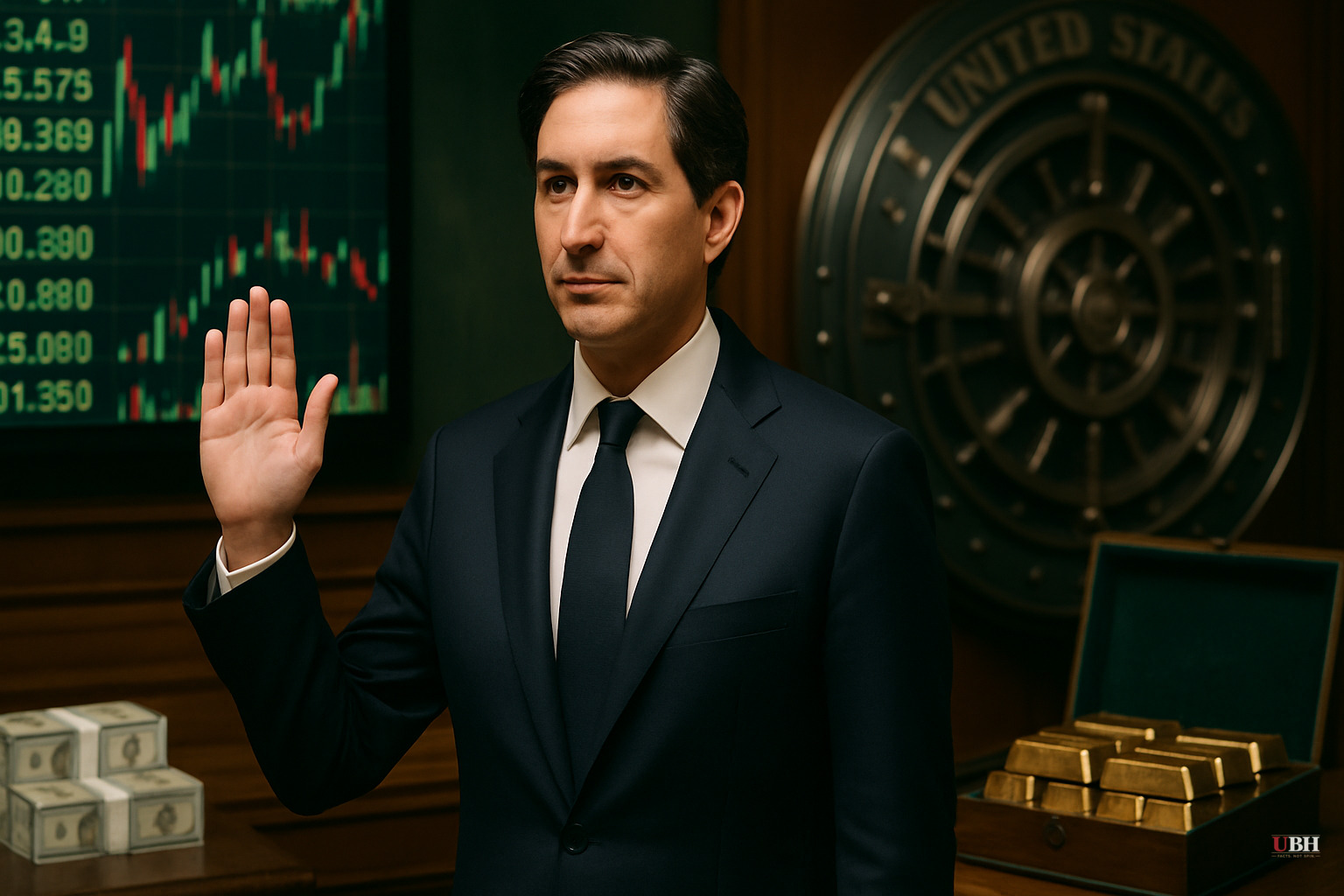
Kevin Warsh was sworn in as Federal Reserve chair on Friday, May 16, in a White House ceremony presided over by President Donald Trump, according to CNBC. Powell's term expired the same day. Warsh, 56, is now officially the 11th chair in the modern Fed era — and the wealthiest person ever to hold the seat based on financial disclosures filed ahead of confirmation.
He also has to divest a significant chunk of his investment portfolio to comply with stringent new ethics regulations for Fed officials. That's the first order of business before he even touches monetary policy.
What Trump Expected vs. What the Market Is Saying
Trump nominated Warsh expecting rate cuts. That was the whole point. The Fed cut three times in 2025, and Trump wanted more.
The bond market has other ideas.
According to CNBC, the 30-year Treasury yield surged Friday, eclipsing 5% — its highest level in nearly a year. By Monday morning it sat at 5.138%. The CME Group's FedWatch tool now shows a 42% probability of a rate increase by year-end.
Ed Yardeni: Warsh May Have to HIKE in July
Ed Yardeni — the market veteran who literally coined the term "bond vigilantes" — wrote Monday that Warsh may have no choice but to raise rates to establish credibility.
"The Fed must catch up to the bond market to avoid losing control of borrowing costs and to appease the Bond Vigilantes," Yardeni wrote, according to CNBC. He expects the Fed to hold steady at the June 16-17 FOMC meeting but called a quarter-point rate hike in July "likely." He also expects Warsh to use June to strip out so-called forward guidance as a first step toward tightening.
The man sent to cut rates may be forced to raise them within 60 days of taking the job.
Inflation Is the Culprit — and It's Not Letting Up
Inflation hit a three-year high in April, driven in part by the Iran war spiking fuel costs, according to J.P. Morgan Wealth Management's analysis published by Chase. Inflation has been running above the Fed's 2% target for over five years — that's the entire latter half of Powell's tenure and now Warsh's inheritance.
The FOMC has held the federal funds rate steady at 3.50% to 3.75% for three consecutive meetings. April's meeting saw the most policy disagreement among committee members in decades, according to Chase.
Warsh has said publicly he believes the benchmark rate can come down. The data disagrees with him right now.
Powell Isn't Gone — He's Sitting Right There
This isn't a clean handoff.
For the first time since 1948, a former Fed chair is staying on as a board governor after his term expired, according to The New York Times. Powell made that call deliberately, citing concerns about Fed independence amid Trump administration pressure — including a Justice Department investigation into Fed headquarters renovations that was widely viewed as a pretext for political leverage. The DOJ dropped the inquiry last month but reserved the right to reopen it.
So Warsh now chairs FOMC meetings that include Powell as a voting governor. That is not a normal situation.
Meanwhile, Trump is trying to remove Biden-appointed governor Lisa D. Cook. That case is currently before the Supreme Court. If Trump loses, Powell's presence means Trump may not get another board nomination until January 2028, when Powell's governor term expires. Trump appointees won't hold a clear board majority until well after he leaves office.
Warsh Can Persuade — But He Can't Command
CBS News got this part right: the Fed chair has one vote out of 12 on the FOMC. Randall Kroszner, who served alongside Warsh as a Fed governor from 2006 to 2009 and now teaches at the University of Chicago, put it plainly: "The chair has the power to persuade. And they're in a very strong position to be able to persuade. But they still need to persuade."
Right now Warsh's board is split — three Trump appointees, three Biden appointees, and Powell. The five rotating regional Fed presidents add more unpredictability. Yardeni noted that Warsh "is going to be the odd man out" given the current FOMC's hawkish lean relative to his stated dovish preferences.
The Real Picture
Left-leaning outlets are focused almost entirely on Trump's meddling and Fed independence — legitimate concerns, but they're burying the inflation story. The Fed has missed its 2% target for five-plus years. That failure belongs to Powell's tenure, and most left-of-center coverage is treating it as background noise rather than the central problem Warsh actually has to solve.
Right-leaning coverage, meanwhile, keeps framing Warsh as Trump's rate-cut solution. That framing is already outdated. The bond market is running the show right now, not Trump.
The Immediate Stakes
If Yardeni is right and the Fed hikes in July, mortgage rates go higher. Car loans go higher. Small business borrowing costs go higher. The Americans who were told rate relief was coming are going to wait longer — possibly much longer.
Warsh walked into the most complicated Fed transition in decades: sticky inflation, a war spiking energy prices, a divided committee, his predecessor sitting across the table, and a president who will absolutely tweet his frustration publicly when cuts don't materialize.
His first real test is June 16-17. Watch what he says about forward guidance. That will tell you everything about which direction this goes.
Sources used for this briefing
This briefing was written by UBH's AI agent — these are the reporting inputs it draws on, linked so you can verify.


