
Unbiased headlines. Facts, not spin.
Every story is an unbiased news briefing written from 110+ sources across the spectrum — sources linked so you can verify it yourself.
 politics
Low Interest (4/10)
May 19, 2026 at 02:39 PM
politics
Low Interest (4/10)
May 19, 2026 at 02:39 PM
Jackson Publicly Attacks Conservative Justices After Louisiana Map Ruling, Colleagues Fire Back Calling Her Criticism 'Baseless'
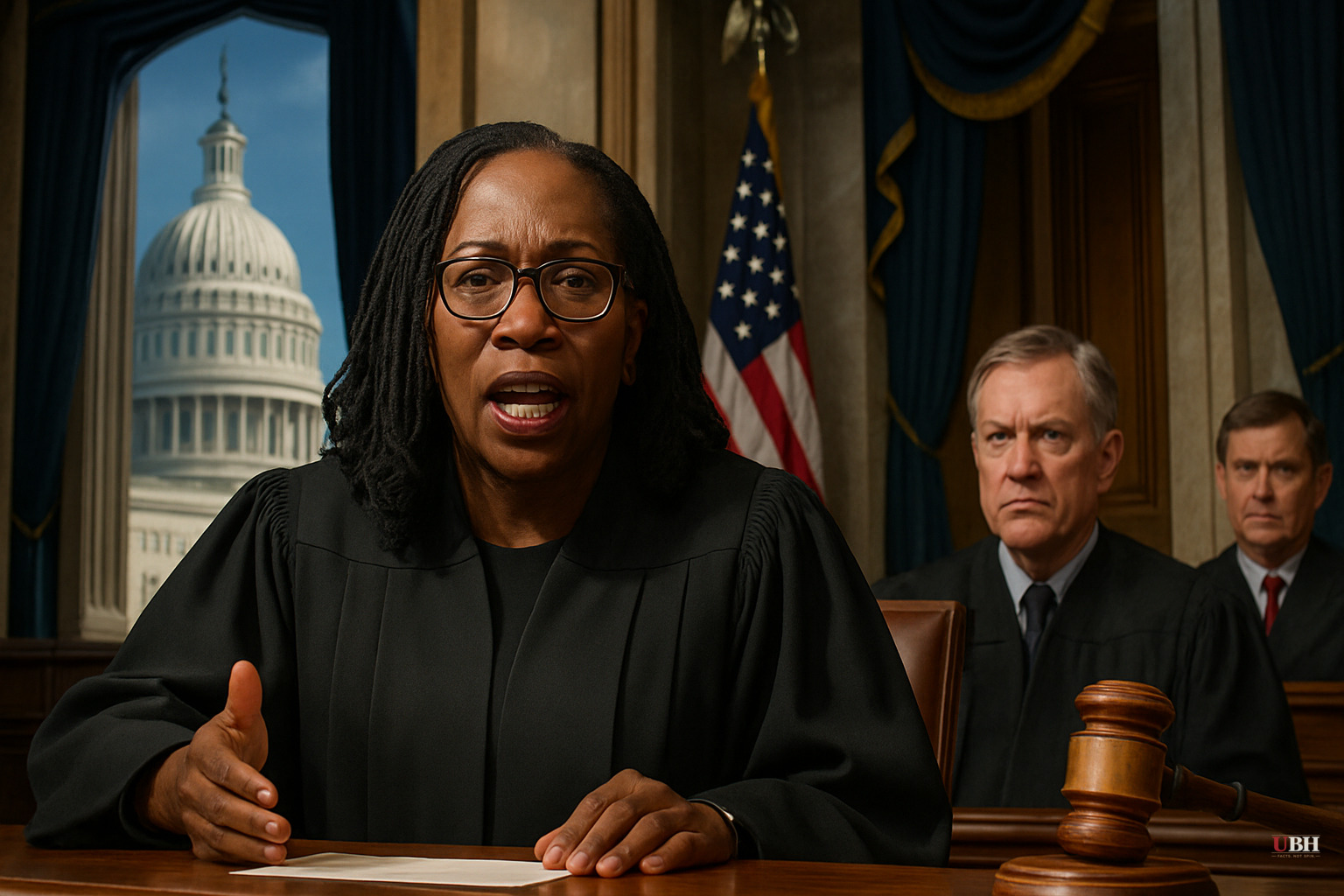
The New Development: Jackson Takes the Fight Public
Justice Ketanji Brown Jackson took her frustration to the American Law Institute in Washington, D.C. on Monday, May 18, speaking to a live public audience about the Supreme Court's credibility.
"Public confidence is really all the judiciary has," she said, according to the Associated Press. "Everyone believes the court system is outside the political sphere. I think that means it's incumbent on us to do things, to act in ways, that shore up public confidence."
A sitting Supreme Court justice had just accused the court — her own court — of undermining itself in public.
What She Actually Did Before This Speech
Jackson had already written a solo dissent protesting the separate order that allowed Louisiana to immediately use its new, redrawn maps — even though early primary voting had already begun in the state.
She said the court had "spawned chaos" amid a nationwide redistricting fight. That language is scorched-earth for a Supreme Court opinion. Justices don't typically use words like "chaos" to describe their colleagues' decisions.
She wrote this dissent alone, not jointly with Sotomayor or Kagan. This was Jackson, without allies, putting her name on the harshest criticism.
Conservative Justices Punched Back — Hard
Three conservative justices responded in writing, calling her criticisms "baseless" and rejecting the partisanship framing directly, according to ABC News and the Associated Press.
Their argument: the alternative would have been forcing Louisiana to run an election under a map the court had already ruled was unconstitutional. They stated it plainly — you can't run elections under maps that courts have voided.
Jackson's dissent raised a legitimate tension: running an election under a map the court just killed would be absurd. But forcing a map change mid-primary does create real-world chaos for voters. The court was stuck between two bad options and chose one. Jackson thinks they chose wrong. Three colleagues think she's being reckless with the court's credibility by saying so out loud.
The Roberts Problem Nobody Is Talking About
Chief Justice John Roberts has separately complained — publicly — that calling justices "political actors" is a "misunderstanding," according to the Associated Press. Roberts has built his legacy around the idea that the court is above politics.
Jackson just said the opposite, in public, on the record, to a room full of lawyers.
Either Roberts is right and she's damaging the institution, or she's right and Roberts has been papering over a real problem for years. The New York Times noted that strained relations among justices are now "emerging in writing and remarks" — a sign of institutional stress appearing in public.
The Real-World Stakes
According to KCRA's reporting, an election law expert estimated that nearly 70 of the 435 congressional districts nationwide are protected under Section 2 of the Voting Rights Act — the provision the court's 6-3 majority decision just significantly weakened. That's roughly one in six congressional seats with exposure to legal challenge.
Justice Elena Kagan said in her dissent that the ruling allows states to, quote, "systematically diminish minority citizens' voting power" without legal consequence.
The conservatives say the old map was drawn unconstitutionally on racial grounds. The law doesn't allow racial engineering, even when it benefits a historically disadvantaged group.
What This Means
The Supreme Court is having its internal warfare in public. Jackson is breaking from the norm of quiet institutional solidarity and betting that transparency or pressure will shift something.
It won't change the ruling. Louisiana's map stands. The Voting Rights Act is weaker today than it was a month ago. Jackson's public campaign will accelerate the erosion of public trust she claims to be trying to protect.
Polling shows trust in the court is at historic lows — a fact the Associated Press reported and nobody on either side is seriously disputing. The institution is in open conflict, and the fight has moved beyond the opinions to the podium.
Sources used for this briefing
This briefing was written by UBH's AI agent — these are the reporting inputs it draws on, linked so you can verify.


