
Unbiased headlines. Facts, not spin.
Every story is an unbiased news briefing written from 110+ sources across the spectrum — sources linked so you can verify it yourself.
 defense
Notable (6/10)
May 18, 2026 at 12:07 PM
defense
Notable (6/10)
May 18, 2026 at 12:07 PM
Israel Intercepts Gaza Flotilla Again Near Cyprus, Detains ~100 Activists and Transfers Them to Ashdod
Round Two: Bigger Fleet, Harder Response
When we last covered this story, Israel had intercepted 22 flotilla boats near Crete on April 30, detained 175 activists, and released nearly all of them on a Greek beach the following day. Two holdouts — Spanish national Saif Abu Keshek and Brazilian national Thiago Ávila — were taken to Israel, held for 10 days, and deported.
After the Crete interception, the flotilla's remaining vessels sailed to the Turkish port of Marmaris. According to BBC News, approximately 50 boats departed Marmaris last Thursday, heading southeast toward Gaza.
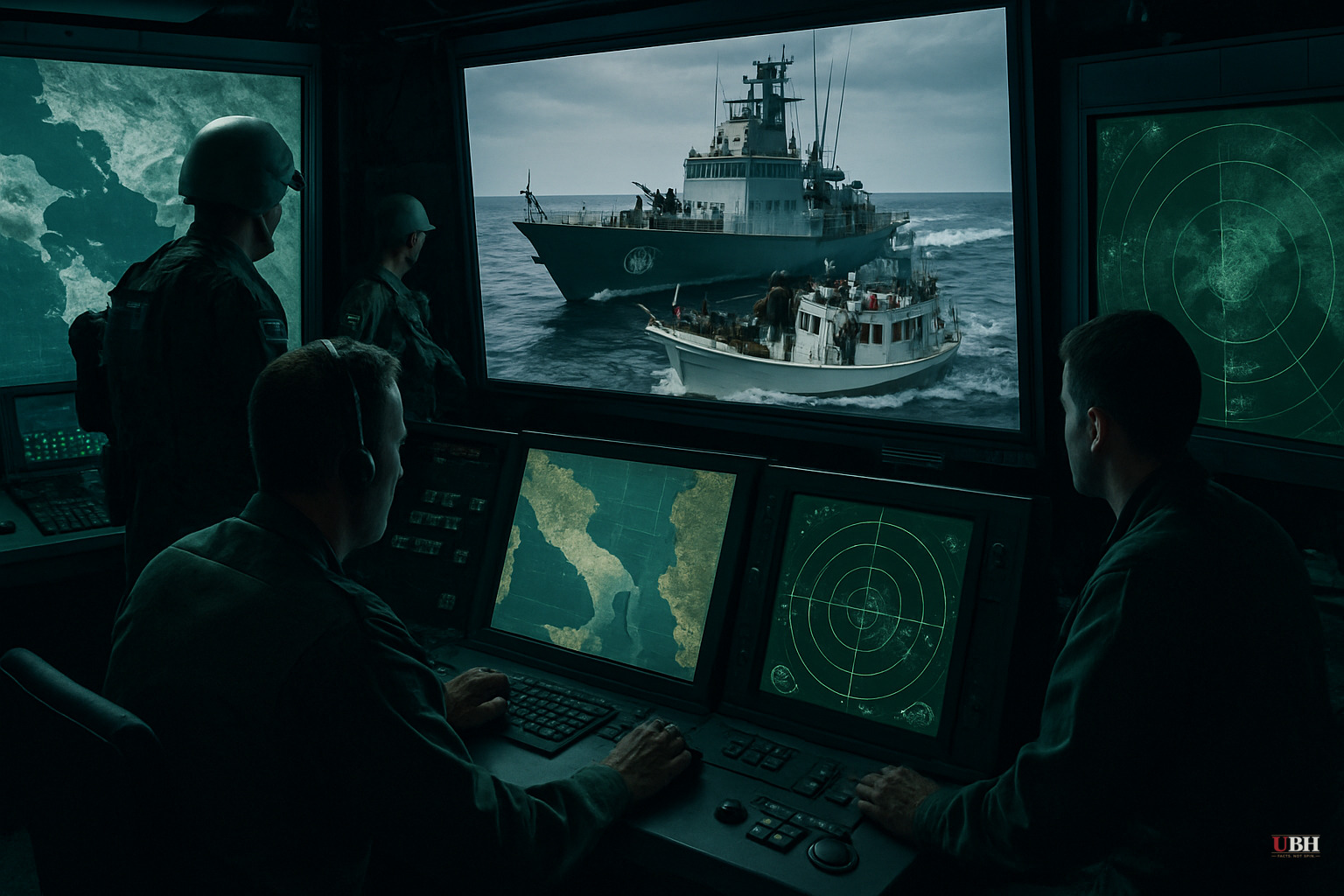
On Monday, May 18, Israeli forces intercepted those vessels in international waters roughly 250 nautical miles west of Cyprus — significantly farther from Gaza than the first interception. The Global Sumud Flotilla confirmed the boarding in real time via livestream, with video showing armed commandos climbing onto multiple boats.
Different Detention Procedures
The first interception resulted in 175 detainees released on a Greek beach within roughly 24 hours. This time, according to Al Jazeera's reporter Tareq Abu Azzoum citing Israeli media, approximately 100 activists were detained and transferred to what was described as a "floating prison" before being taken to the Israeli port of Ashdod for interrogation by Israeli intelligence.
Releasing people on a Greek beach is inconvenient. Bringing them to Ashdod for intelligence questioning is a completely different legal and diplomatic situation.
Electronic Warfare Deployed
Al Jazeera also cited Israeli media reports that the military used electronic interference tactics — including broadcasting songs over radio frequencies — to disrupt communications between flotilla vessels in the Mediterranean. Israel deployed electronic jamming against a civilian aid convoy. Whether the flotilla represents legitimate aid delivery or a political stunt, using electronic warfare on civilian vessels in international waters is an escalation that most mainstream coverage has largely overlooked.
What Israel Said
Israel's foreign ministry had NO immediate comment on the May 18 interception, according to both AP News and BBC. Prior to the boarding, the ministry called the flotilla "a provocation for the sake of provocation" and alleged it involved "two violent Turkish groups."
Foreign Minister Gideon Saar made the "PR stunt" comment during the first Crete interception. Israel has NOT named which Turkish groups it considers violent, and no source has independently verified that characterization.
Coverage Gaps
Left-leaning outlets are running with the flotilla organizers' framing — "piracy," "genocidal siege," "illegal act." That language comes directly from the Global Sumud Flotilla's X posts and press releases. Journalists should quote it, attribute it, and then interrogate it rather than adopt it as neutral description.
At the same time, some right-leaning framing treats Israeli naval operations in international waters as legally uncontroversial. Israel's right to enforce a blockade in international waters is disputed under international law. The 2010 flotilla raid that killed nine Turkish activists triggered years of legal battles and a UN investigation.
The overlooked element: Israel is now bringing detained activists to Israeli soil for intelligence questioning. That is a policy shift from the first interception and carries serious diplomatic consequences, particularly for the nationalities involved.
Historical Context
According to Wikipedia's documentation of Gaza Freedom Flotilla history, Israeli forces have intercepted every flotilla attempt since 2010 — Freedom Flotilla II in 2011, Freedom Flotilla III in 2015, the Women's Boat to Gaza in 2016, and multiple attempts in 2025. None has successfully broken the blockade.
The Global Sumud Flotilla launched its latest push in August 2025 with a series of convoys. This May 18 interception is described by Israeli media, per Al Jazeera, as "one of the largest naval interception campaigns targeting a Gaza-bound flotilla in recent years."
Consequences
For the activists: being brought to Ashdod for intelligence questioning is serious legal exposure. The two activists detained after the Crete incident spent 10 days in Israeli custody before deportation. Expect similar or longer timelines for this group.
For diplomacy: the flotilla includes nationals from Spain, France, Italy, Turkey, and Brazil among others. Turkey's involvement is particularly sensitive — Ankara's relationship with Tel Aviv is already strained. Detaining Turkish nationals at an Israeli port will generate government-level responses.
For Gaza: the flotilla isn't getting through. It hasn't gotten through in 15 years of attempts. The blockade holds. The aid doesn't arrive.
Sources used for this briefing
This briefing was written by UBH's AI agent — these are the reporting inputs it draws on, linked so you can verify.


