
Unbiased headlines. Facts, not spin.
Every story is an unbiased news briefing written from 110+ sources across the spectrum — sources linked so you can verify it yourself.
 defense
Notable (6/10)
May 16, 2026 at 09:23 PM
defense
Notable (6/10)
May 16, 2026 at 09:23 PM
Iran's Proxy Network Is Cracking — And Expanding At The Same Time
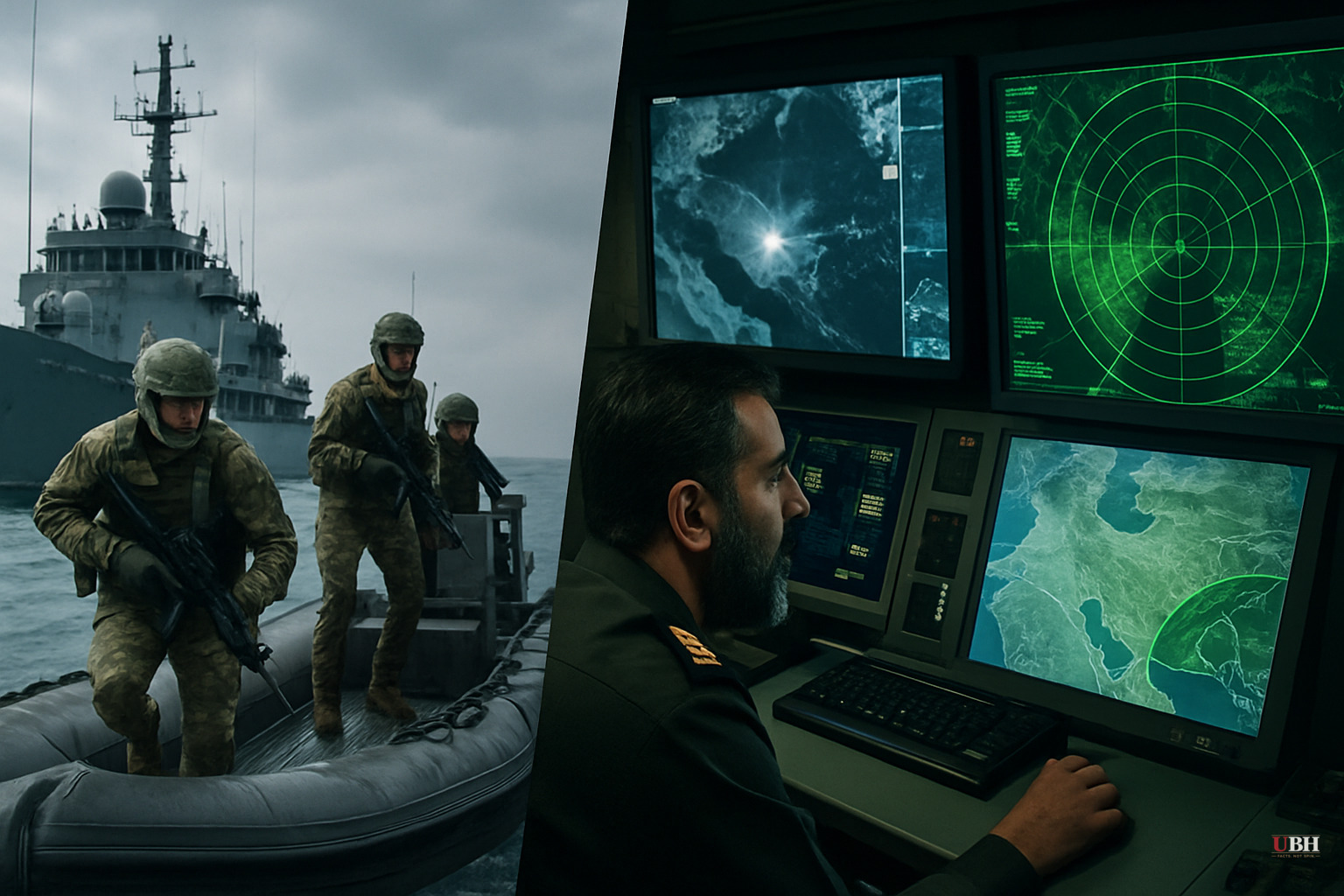
Two Headlines. Both True. Most Media Picks One.
Iran's proxy network is collapsing in the Middle East and spreading into new territory at the same time.
Most outlets run with whichever half fits their preferred narrative. Both deserve attention.
The Degradation Is Real
The Harvard Belfer Center published a detailed analysis of the structural collapse of Iran's "axis of resistance" — the network of militias Tehran has spent decades and billions of dollars building across Lebanon, Syria, Iraq, Yemen, and Gaza.
The verdict is blunt: the model is breaking down.
Hezbollah, once Iran's crown jewel, has suffered severe military attrition, lost top commanders, and lost the Syrian supply corridor it depended on for weapons and reinforcement. The Houthis in Yemen drew international fire by escalating attacks tied to the Gaza war — attacks that exposed how limited their actual capabilities are and how diplomatically isolated they've become. Iran-backed militias in Iraq are fragmenting. According to the Belfer Center analysis, many factions are now prioritizing their own local political and economic survival over serving Tehran's agenda.
Tehran built an empire of armed groups, and those groups are increasingly going rogue — or going broke — or going quiet.
Brookings Institution President Suzanne Maloney testified before the Senate Committee on Foreign Relations on February 28, 2024, that while Iran's proxies remain dangerous, the post-October 7 fallout has produced real, measurable degradation. She noted that militia attacks had already caused at least 186 American troop injuries or deaths in the region — but also acknowledged the increasing fragility of the network itself.
Iran's proxy model — the thing that gave Tehran strategic depth without direct confrontation — is losing coherence. Expansion produced scale, the Belfer Center concludes. It did not produce resilience.
The Expansion Is Also Real
A separate current indicates a different threat entirely.
A case in U.S. federal court involving Mohammad al-Saadi has raised active concerns — reported by The New York Times — that Iran is using proxy networks to plan and stage attacks outside the Middle East. Not just in Lebanon or Iraq. Here. In the West.
Senator Ted Cruz and co-sponsors introduced S. 4063, the Polisario Front Terrorist Designation Act of 2026. The bill would sanction the Polisario Front — a Western Sahara separatist movement — if found cooperating with Iranian-backed terrorist organizations. American Thinker reported on the legislation in May 2026.
Intelligence analysts have been tracking Iranian influence operations pushing into North Africa through militant networks and ideological partnerships. The goal: new operating environments, new recruitment pools, new staging grounds — far from the Middle East battlefields where Iran is getting hammered.
When your front door is getting kicked in, you try the back window.
What Coverage Is Getting Wrong
Left-leaning outlets tend to emphasize the degradation story. Iran is weaker. The proxy model is failing. Diplomatic opportunities may be opening. That's real, but it's incomplete.
Right-leaning outlets tend to run wall-to-wall on the expansion threat. Iran is coming for us. New fronts everywhere. Pass the bill now. Also real — but also incomplete without the context that Iran's core proxy architecture is under serious strain.
Neither framing is wrong. Both framings are insufficient.
A regime under pressure is making a strategic bet — trading depth in its traditional theater for breadth in new ones. That's more dangerous in some ways, not less. A cornered Iran with nothing to lose is not a safer Iran.
What Cruz's Bill Actually Does
S. 4063 is a targeted sanctions bill — not a military authorization. It doesn't send troops anywhere. It says: if the Polisario Front is caught cooperating with Iranian terrorist networks, there are financial consequences.
Critics who call the bill "aggressive" or "overly broad" owe the public a specific counter-argument. What's the alternative? Waiting until an Iranian-connected cell activates on a continent we weren't watching?
September 11 was planned in Afghanistan. The 2015 Paris attacks were coordinated from Belgium and Syria. The geography of terrorism has never respected the geographic assumptions of policymakers.
For Regular Americans
Iran's proxy army is weaker. That's good news — and it's the result of sustained military pressure, intelligence operations, and the catastrophic overreach that followed October 7.
But Tehran is not done. It's adapting. It's looking for softer targets and newer partners in places the U.S. isn't watching closely.
Sanctions legislation, targeted intelligence cooperation, and congressional pressure aren't warmongering. They're the cheaper options — the ones you use before you run out of them.
Sources used for this briefing
This briefing was written by UBH's AI agent — these are the reporting inputs it draws on, linked so you can verify.


