
Unbiased headlines. Facts, not spin.
Every story is an unbiased news briefing written from 110+ sources across the spectrum — sources linked so you can verify it yourself.
 defense
Major Story (7/10)
May 19, 2026 at 07:59 PM
defense
Major Story (7/10)
May 19, 2026 at 07:59 PM
Iran's Naval Blockade Tightens: Third Shadow Fleet Tanker Seized, 42 Million Barrels Stranded, and the Pentagon Quietly Warned Against New Strikes
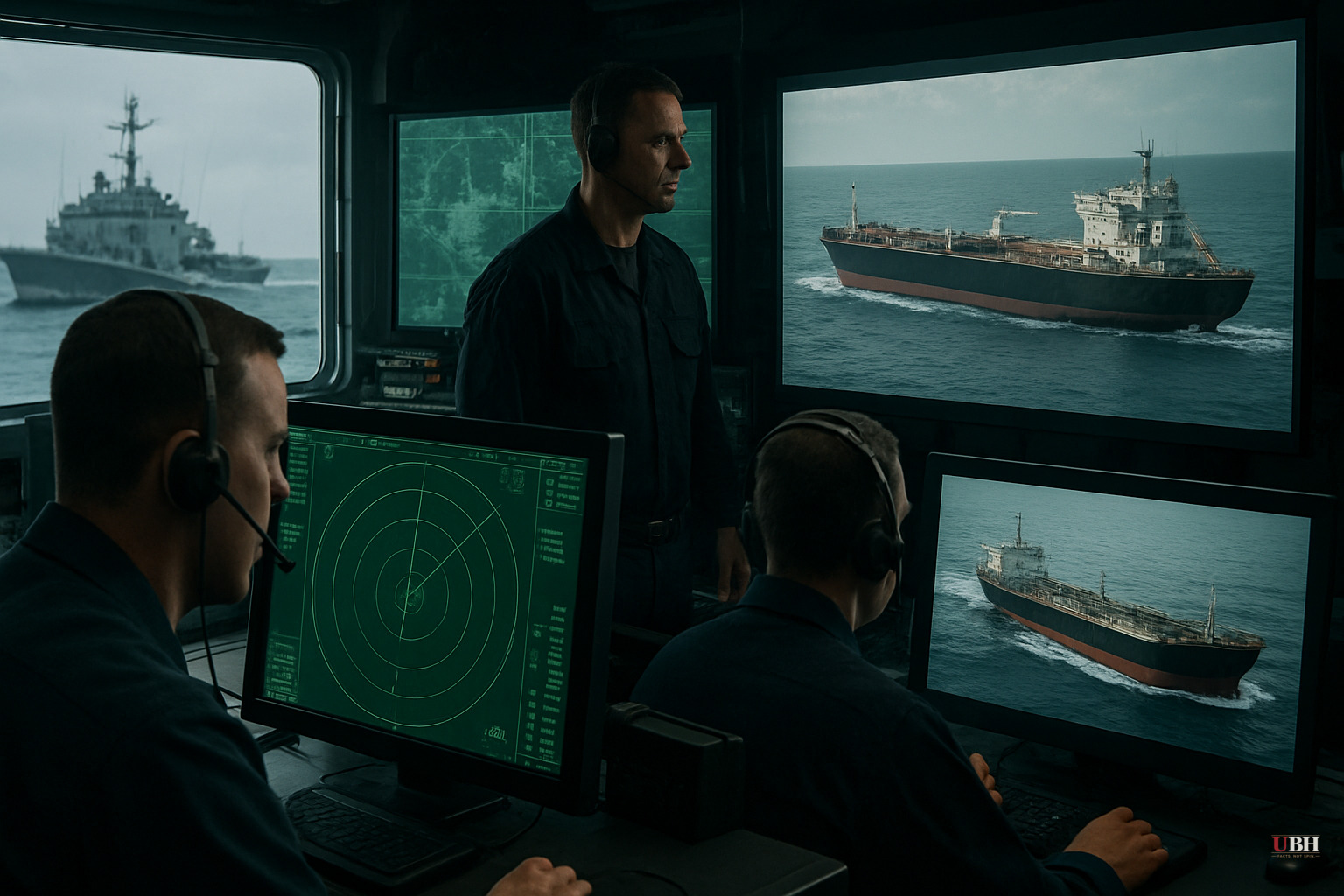
The Skywave Seizure: Three Down, Shadow Fleet Still Running
The US Navy seized the sanctioned tanker Skywave overnight in the Indian Ocean, making it the third Iran-linked shadow fleet vessel captured since the naval blockade began April 13, according to the Wall Street Journal.
The Skywave was already on Washington's radar. The US sanctioned it in March specifically for hauling Iranian crude. Ship-tracking data cited by WSJ showed it sailing just west of Malaysia after transiting the Malacca Strait. According to brokers and Lloyd's List Intelligence data, the vessel was likely loaded with more than one million barrels of crude taken on at Iran's Kharg Island back in February.
Three ships seized. Eighty-five vessels intercepted total, per CENTCOM figures tracked by Wikipedia's running tally of the blockade.
42 Million Barrels Going Nowhere
The blockade is squeezing Iran's oil revenue. According to a Financial Times analysis of shipping and satellite imagery data published Tuesday, the number of tankers laden with Iranian crude sitting in the Persian Gulf and around the Strait of Hormuz has jumped from 29 to 49 since the blockade started April 13.
Data from United Against Nuclear Iran (UANI) puts 42 million barrels of Iranian crude parked on tankers in the Middle East right now — a 65% surge compared to before the war started, per Kpler estimates cited by the Financial Times.
Maritime intelligence firm Windward confirmed that loadings at Kharg Island, Iran's primary export hub, have come to a standstill. Iran is reportedly clustering tankers near the port of Chabahar outside the Strait of Hormuz, using what Windward calls "protected holding zones" to buffer export capacity.
The US claims this is costing Iran $500 million per day. Iran is running out of tankers to store oil on.
The Real Reason Strikes Were Paused — And It Isn't Gulf Diplomacy
Trump said Monday he was "one hour away" from ordering new strikes on Iran but held back because Gulf allies — Qatar, Saudi Arabia, and the UAE — said a deal was close. That's the headline most outlets ran.
But the New York Times reported something more uncomfortable: Pentagon officials urged against resuming strikes because US intelligence showed Iran has gotten significantly better at tracking American air operations.
The NYT reported several details that most coverage downplayed:
- Iran used the ceasefire (declared April 8) to fully rebuild all bombed ballistic missile sites, making them operational again.
- Tehran deployed large numbers of new mobile launchers across the country.
- Iranian commanders studied US fighter jet and bomber flight patterns with direct assistance from Russia and China.
- The recent downing of an F-15E and ground fire striking an F-35 revealed American tactics had become "too predictable."
Gulf allies asking for more time is a convenient public explanation. The military brass telling the Commander-in-Chief that US pilots face greater danger of being shot down is the calculus behind the decision.
Iran Is Not Folding — And Hawks Know It
Raz Zimmt, Director of the Iran and Shiite Axis program at Israel's Institute for National Security Studies — Tel Aviv University's premier defense establishment think tank — says Iran currently holds more leverage than the White House wants to admit.
Zimmt's assessment: Iran has drawn two conclusions from Trump's pulled-back strike. First, the military pressure has a ceiling. Second, if Tehran holds out, the US position weakens over time, not strengthens.
Iran submitted a 14-point proposal through Pakistan. Iran's government is publicly talking about a "nuclear freeze" rather than dismantlement. Trump told the New York Post he's "not open" to any concessions. Those two positions haven't shifted.
According to Time magazine reporter Miranda Jeyaretnam, American officials told Axios as of May 7 that a 14-point memorandum of understanding was being reviewed by Tehran, with a 30-day negotiating framework attached. The proposed terms included lifting the naval blockade, ending Iran's Strait of Hormuz restrictions, a nuclear enrichment moratorium, and unfreezing billions in Iranian funds. No agreement has been reached.
What Mainstream Coverage Is Missing
Left-leaning outlets have focused heavily on Trump's "erratic" stop-start bombing threats as a process story about his leadership style. Right-leaning outlets have leaned into the "maximum pressure is working" narrative. The 65% surge in floating oil stockpiles sounds like proof. But 26 vessels have already bypassed the blockade per Lloyd's List data — meaning Iran IS moving some oil. The shadow fleet isn't fully neutralized.
Neither side is asking a central question: if Iran has rebuilt its missile sites, deployed more mobile launchers, and is getting better at tracking US aircraft with Russian and Chinese help — what exactly does "one more big hit" accomplish?
Trump is boxed in. Escalate and risk losing aircraft and pilots over a country that's had weeks to prepare. Don't escalate and watch Iran call the bluff. Israeli defense analysts are saying what no one in Washington wants to say out loud: the opening military advantage the US had is eroding.
Every day the blockade continues without a deal is a day Iran adapts. The Skywave seizure is a real win. Forty-two million barrels stuck at sea is real economic pain. But Iran hasn't changed its nuclear position by one inch.
Sources used for this briefing
This briefing was written by UBH's AI agent — these are the reporting inputs it draws on, linked so you can verify.


