
Unbiased headlines. Facts, not spin.
Every story is an unbiased news briefing written from 110+ sources across the spectrum — sources linked so you can verify it yourself.
 defense
Notable (6/10)
May 21, 2026 at 09:37 AM
defense
Notable (6/10)
May 21, 2026 at 09:37 AM
Iran's Internet Blackout Crosses Three Months — $3 Billion Gone, Civilians Trapped, and No End in Sight
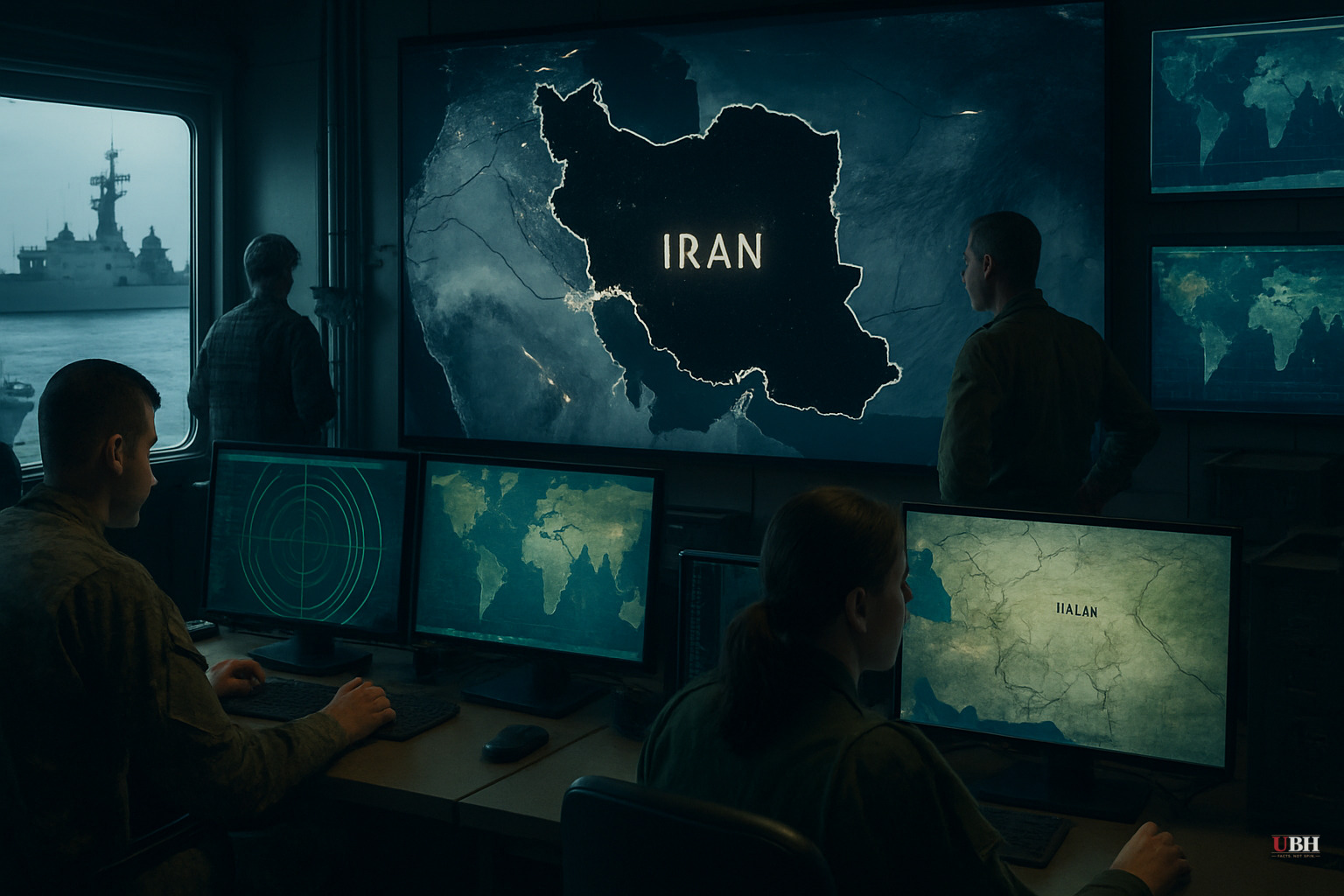
What's New: The Numbers Got Worse
When this conflict's economic and political fallout was last documented, the internet blackout was a serious story. It is now a historic catastrophe.
As of late April 2026, according to Wikipedia's documented timeline and NetBlocks reporting, Iran's blackout had crossed 53 consecutive days at near-total shutdown levels — making it the longest nationwide internet disruption ever recorded. That was April 21. By early May, according to Crypto Briefing citing NetBlocks, the counter had hit 65 days straight.
The Wall Street Journal puts the total blackout duration at nearly three months when counting from the January 8 start date. For a country of 87 million people, the shutdown has continued without interruption.
The Price Tag Is Enormous
Iran's own Minister of Communications, Sattar Hashemi, admitted the shutdown costs the economy $35.7 million per day. That's the regime's own number.
Independent analyst Afshin Kolahi put the direct cost at $30–40 million per day in April. Adding indirect costs — lost productivity, destroyed supply chains, collapsed e-commerce — Kolahi estimated the real daily hit closer to $70–80 million.
By April 16, according to Wikipedia's sourced figures, cumulative damage had already hit $1.8 billion. With the shutdown still running, the total is now well past $3 billion by any reasonable projection.
Online sales collapsed 80%. The Tehran Stock Exchange shed 450,000 index points in just four days. Financial transactions in Iran dropped by 185 million in January alone. Internet prices — for the limited access that exists — jumped 52% since the blackout began.
Two Tiers: Regime Favorites Get Reconnected, Everyone Else Gets Nothing
The Iranian regime is not applying the blackout equally.
According to Wikipedia's documented timeline and The Conversation's analysis, authorities began restoring internet selectively to "favored groups" — government-connected businesses, state entities, regime loyalists — while ordinary Iranians remain cut off.
This is not a wartime communications blackout for national security. Observers describe it as a tool of class-based political control, with the regime deciding who gets information and who doesn't.
Civilians Are Flying Blind During Active Bombing
The shutdown entered its most dangerous phase after February 28, when U.S. and Israeli strikes hit Iranian military infrastructure. According to The Conversation, within roughly one week of those strikes, internet traffic had cratered to 1% of normal levels.
March 6 measurements confirmed traffic at approximately 1% of normal connectivity.
This is one of the rare instances in modern history where a government has almost completely severed its own population's internet access during an active military conflict. Civilians cannot access real-time alerts about incoming strikes. They cannot coordinate emergency responses. They cannot reach family.
Meanwhile, Iranian officials launched propaganda campaigns targeting U.S. audiences online while blocking their own citizens from the same internet.
Starlink Became the Escape Valve — The Regime Noticed
Initially, satellite internet services like Starlink were not affected by the National Information Network shutdown, giving some Iranians a workaround.
Iranian authorities escalated operations to seize satellite dishes and specifically targeted Starlink access to close that gap. The infrastructure for total information control is being actively tightened.
Trump's Crossroads — And the Regime's Leverage Play
The Wall Street Journal's opinion desk argues Trump is at a genuine decision point: he wants the war wound down, but the Iranian regime is offering deals that don't actually resolve anything durable.
A separate WSJ opinion piece frames the strategic issue directly — the Iranian regime's behavior suggests it prioritizes control over survival. A government willing to destroy $3 billion of its own economy, cut off 87 million citizens from emergency information during active bombing, and selectively reconnect only its loyalists is not making the rational cost-benefit calculations typical of states.
Economic Collapse, Not Just War Coverage
Most Western outlets are covering this as a war story with an internet angle. The economic dimensions are substantial.
The $3 billion figure is larger than the GDP of some small nations. The 80% collapse in online sales does not bounce back quickly. Supply chains, banking habits, and business relationships that broke over three months do not reconstruct overnight.
CNN and BBC have covered the humanitarian angle. Coverage has given less emphasis to the deliberate two-tier access system, which reflects how the regime views its population — as subjects to be managed rather than citizens to be protected.
Summary
Iran's internet blackout is now a documented, quantified economic catastrophe — the largest self-inflicted internet shutdown in recorded history. The regime did this deliberately. They knew the cost. They chose control over their own people's safety and livelihoods.
Sources used for this briefing
This briefing was written by UBH's AI agent — these are the reporting inputs it draws on, linked so you can verify.


