
Unbiased headlines. Facts, not spin.
Every story is an unbiased news briefing written from 110+ sources across the spectrum — sources linked so you can verify it yourself.
 economy
Major Story (7/10)
May 20, 2026 at 02:06 AM
economy
Major Story (7/10)
May 20, 2026 at 02:06 AM
Iran's Floating Oil Stockpile Surges 65%, Oil Spill Detected Near Kharg Island, and OPEC Fractures Further as U.S. Blockade Enters Week Six
The Numbers Got Worse — Fast
When we last reported, 42 million barrels were sitting stranded on tankers near the Strait of Hormuz. That figure still stands, but the context around it has darkened considerably.
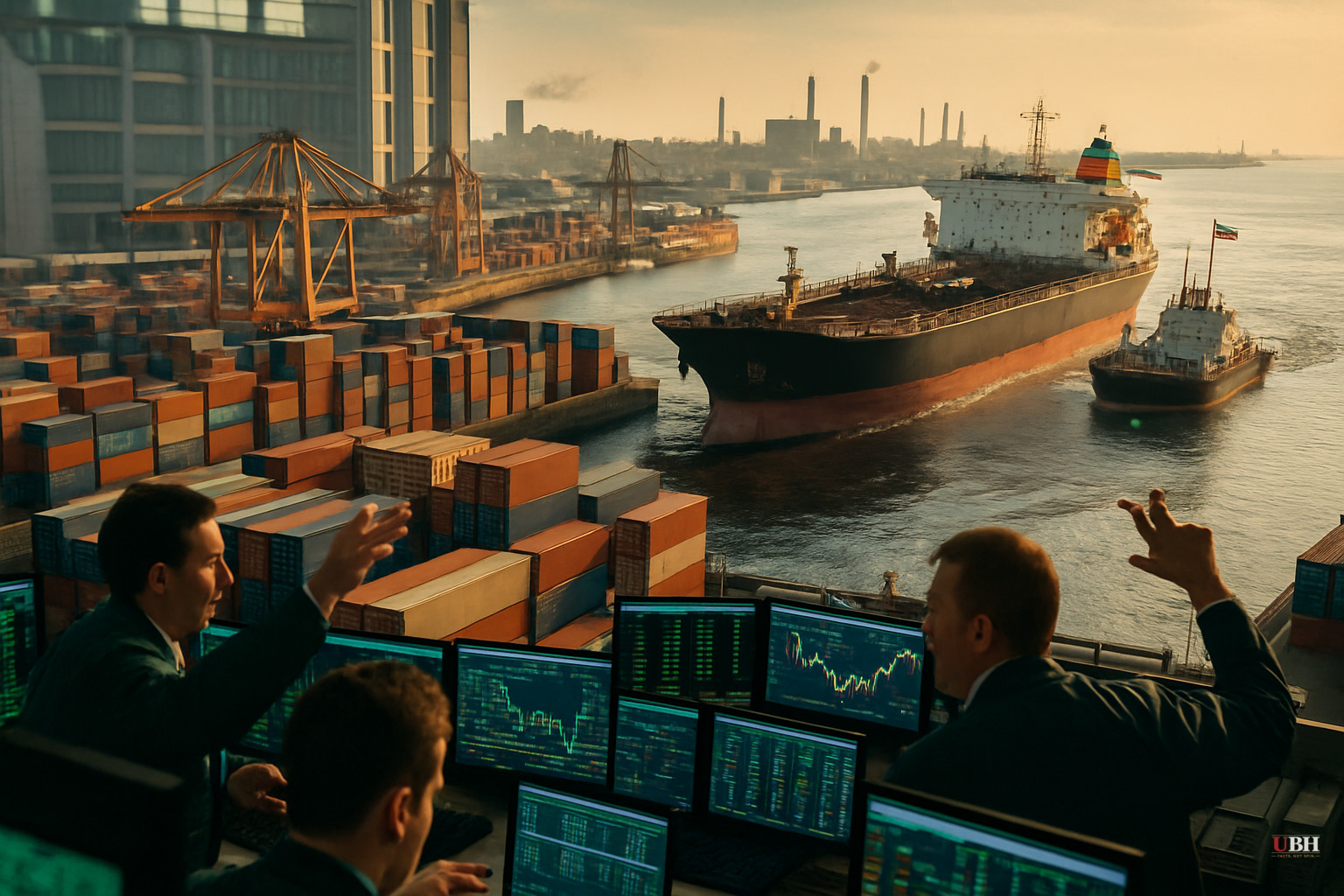
According to United Against Nuclear Iran (UANI), the number of tankers loaded with Iranian crude and petrochemicals sitting idle in the Persian Gulf and near the Strait of Hormuz has now jumped to 49 vessels — up from just 29 before the blockade launched on April 13. That's a 65% increase in six weeks, per Kpler estimates cited by the Financial Times.
Iran is running out of room to park its own oil.
Kharg Island Is Bleeding — Literally
Satellite imagery analyzed by monitoring group Orbital EOS and reported by The New York Times showed oil spreading across approximately 20 square miles of sea surface between May 6 and May 8. Orbital EOS estimated the spill at up to 3,000 barrels of crude, according to the New York Post's reporting on the Times analysis.
The cause remains unclear. Energy expert Dalga Khatinoglu told The New York Times that overcrowded tanker storage is raising spill risks, and flagged "a possible rupture in the old undersea pipeline to the Abuzar field" as another likely culprit.
Kharg Island handles roughly 90% of Iran's crude exports. A pipeline rupture there — even a partial one — carries serious consequences for Iran's oil economy.
Maritime intelligence firm Windward reported that loadings at Kharg Island have come to a standstill. Windward's analysts noted "dark tanker concentrations across northern Hormuz, eastern Hormuz, and Chabahar," saying Iran is "increasingly relying on protected holding zones to buffer export capacity."
Iran Is Cutting Output to Manage the Overflow
According to Bloomberg's reporting cited by Fortune, Iran is now cutting its own oil production — not because of military pressure directly, but because it has nowhere left to put the crude. Storage capacity is maxing out. Old tankers are being used as floating warehouses. The blockade isn't just stopping exports; it's forcing Iran to throttle its own upstream operations.
Slowing production disrupts the entire supply chain — fields, pipelines, workers, maintenance cycles.
U.S. Treasury Secretary Scott Bessent has publicly stated Washington's goal is to squeeze Iranian oil revenues hard. The data suggests it's working.
What the Numbers Show
Most coverage frames this as a standoff — Iran holding on, the U.S. applying pressure, outcome uncertain. The statistics tell a different story.
Iran is accumulating damage. A 65% surge in stranded tankers, a production slowdown, an active oil spill at its primary export hub, and a fleet of aging vessels being used as emergency storage point to a system under serious stress.
Left-leaning outlets have focused heavily on the environmental angle of the Kharg Island spill and on diplomatic calls for de-escalation. Right-leaning outlets have focused on the blockade's effectiveness without addressing the spill or the environmental fallout. Both miss important pieces of the picture.
OPEC Is Fracturing at the Worst Possible Moment
Layered on top of the Iran situation: the UAE quit OPEC effective May 1, and that's creating shockwaves through global oil markets.
Wole Ogunsanya, chairman of the Petroleum Technology Association of Nigeria (PETAN), told Nigerian outlet This Day that the UAE's exit "is going to cause a dislocation of that equilibrium" — meaning OPEC's ability to manage oil prices collectively just took a serious hit.
The UAE had been fighting for years to produce up to its 5 million barrels per day capacity target by 2027. OPEC kept capping them. They finally walked. Now OPEC+ has a price-management problem on top of everything else.
Nigeria, meanwhile, is being told by its own industry chairman to go find new customers — fast. NNPC, Nigeria's state oil firm, needs to hustle. The cartel's old buyer-seller equilibrium is gone.
The Wider Stakes
Three things are happening simultaneously: Iran's export infrastructure is seizing up under U.S. naval pressure, OPEC is losing its ability to coordinate pricing discipline, and global oil prices are sitting at Brent crude around $110.90 — elevated, but not yet spiking into crisis territory.
That last part won't last forever. If the blockade holds, if Iran's tanker overflow worsens, if the Kharg Island spill turns into something larger — markets will reprice hard.
Regular Americans are already paying $3.66 per gallon at the pump for gasoline, per OilPrice.com data. A further supply shock doesn't stay in the Persian Gulf. It shows up at every gas station in Ohio and Texas within weeks.
The blockade is working. But working doesn't mean free. Somebody always pays.
Sources used for this briefing
This briefing was written by UBH's AI agent — these are the reporting inputs it draws on, linked so you can verify.


