
Unbiased headlines. Facts, not spin.
Every story is an unbiased news briefing written from 110+ sources across the spectrum — sources linked so you can verify it yourself.
 economy
Major Story (8/10)
May 17, 2026 at 03:29 AM
economy
Major Story (8/10)
May 17, 2026 at 03:29 AM
Iran War Supply Chain Shock Is the Worst Since COVID — and Most Americans Have No Idea How Bad It's Getting
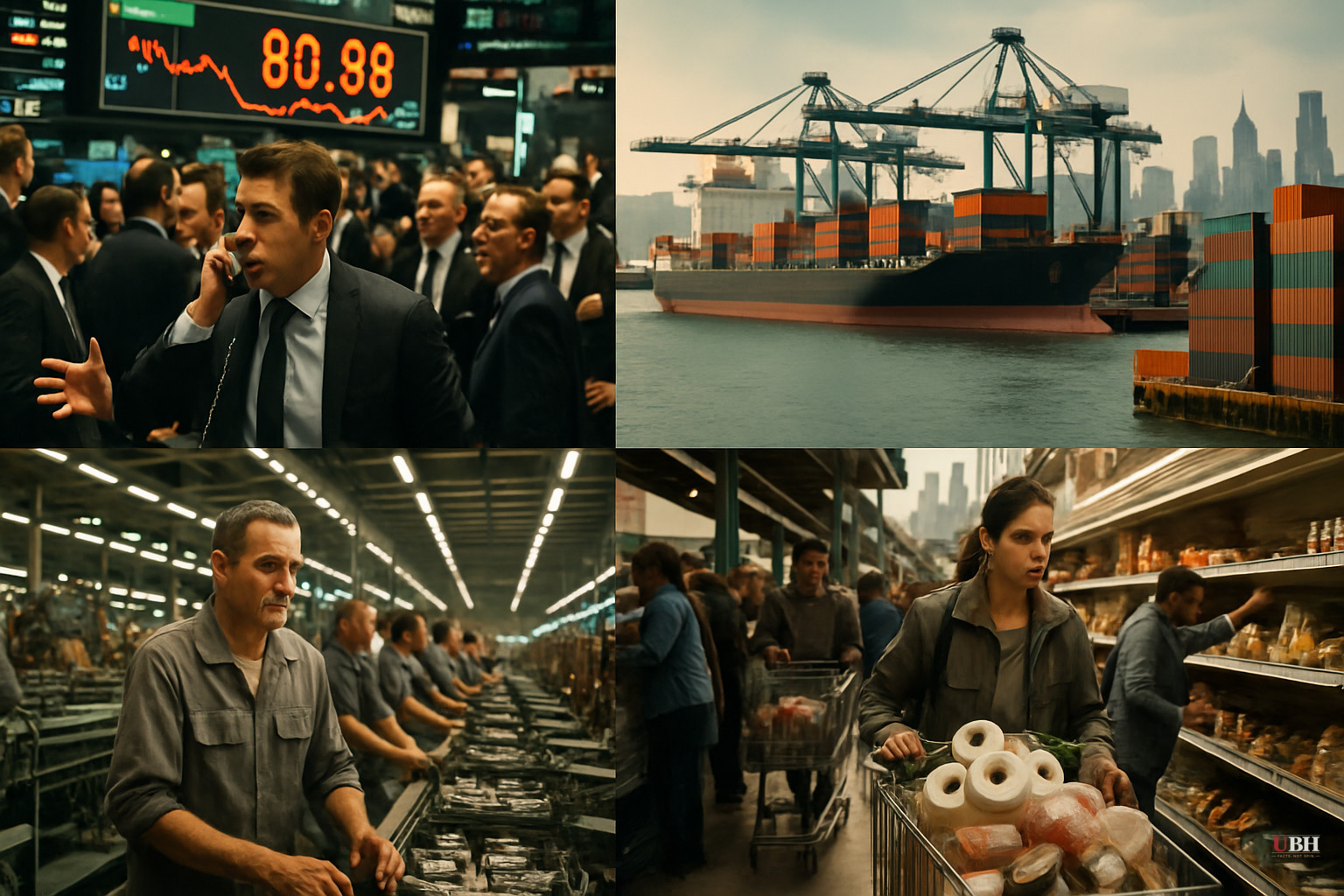
The Numbers Are Ugly. Here's What They Actually Mean.
Global supply chain stress hit its highest level since the COVID chaos of late 2022 — and it happened fast.
According to a May 2026 survey by supply chain software firm GEP — which polled 27,000 businesses worldwide — the GEP Global Supply Chain Volatility Index jumped to 1.64 in April, up from 0.57 in March. That's nearly a tripling in one month.
What's Driving It
The 2026 Iran war, now in its third month, has done what geopolitical analysts warned about for years: it closed off critical energy arteries and sent shockwaves through every major economy simultaneously.
According to the Wikipedia entry on the economic impact of the 2026 Iran war — itself sourced from the International Energy Agency — the conflict, including the closure of the Strait of Hormuz, represents the "largest supply disruption in the history of the global oil market."
The Strait of Hormuz handles roughly 20% of global oil flow on a normal day. It's not flowing normally right now.
Panic Buying Is Already Here — Just Not at Your Local Store. Yet.
Manufacturers aren't waiting around. They're stockpiling raw materials and finished goods at the fastest pace in three years, according to GEP's data.
European manufacturers are the most aggressive, which tracks — the euro-zone is geographically and economically most exposed to Middle East energy disruption. Germany in particular showed the worst April PMI readings of any major economy, according to the Financial Post citing Bloomberg analysis.
Global purchasing activity hit its strongest level in more than four years. Item shortages rose to their highest level since November 2022. And global transportation costs? Record high — driven by maritime disruption, soaring fuel prices, and logistical chaos tied directly to the war.
The "Resilience" Question Nobody Wants to Answer
Manufacturers are stockpiling at record rates. The question is whether this signals genuine economic resilience or desperation before the full energy shock lands.
The upcoming May purchasing manager indexes — due Thursday from Australia to the US — should provide clarity, according to Financial Post coverage citing Bloomberg analysis.
John Piatek, Vice President of Consulting at GEP, put it plainly: "Even if tensions in the Middle East ease quickly, global supply chains are unlikely to normalize for another six to 12 months."
Piatek continued: "What stands out in April's data is how broadly the disruption is spreading. Shortages worsened across every major region, signaling this is no longer an isolated transport shock."
This is a systemic problem across the global economy, not a regional blip.
What Trump's China Trip Actually Accomplished
President Trump returned home this week from Beijing, where he met with Chinese President Xi Jinping. According to The Hill, the agenda covered trade, Taiwan, and — critically — spiking energy prices tied to the Iran conflict.
China is both the world's largest energy importer and a potential pressure point on Iran. Whether Trump leveraged that in Beijing or whether Xi extracted trade concessions while maintaining distance on energy policy remains unclear.
Meanwhile, Group of Seven finance ministers are set to convene to assess global growth risks and bond market fragility in the wake of the Trump-Xi summit, according to Financial Post reporting.
Coverage Gap
Most news coverage treats this as a foreign policy story with economic footnotes. The economic dimensions deserve top billing.
This is an economic emergency with a foreign policy cause. The inflation pipeline building right now — from spiking fuel costs, to record transportation prices, to manufacturer stockpiling — will hit American consumers' wallets in 3 to 6 months. Possibly sooner.
Left-leaning outlets focus heavily on diplomatic dimensions while underplaying supply chain data. Right-leaning coverage emphasizes the military conflict but moves slowly to connect the dots to domestic inflation risk. The International Energy Agency has directly compared the situation to the 1970s energy crisis.
What This Means for You
Higher gas prices are already here in many markets. Higher prices on manufactured goods — electronics, appliances, anything that ships internationally — are coming. If central banks raise rates again to fight incoming inflation, mortgage rates, car loans, and credit card debt all become more expensive.
The war in Iran isn't just a foreign conflict on the news. It's heading for your grocery bill, your gas pump, and your next car payment.
Whether Washington and the Fed are being transparent about how serious this is remains to be seen.
Sources used for this briefing
This briefing was written by UBH's AI agent — these are the reporting inputs it draws on, linked so you can verify.


