
Unbiased headlines. Facts, not spin.
Every story is an unbiased news briefing written from 110+ sources across the spectrum — sources linked so you can verify it yourself.
 finance
Major Story (7/10)
May 19, 2026 at 09:03 AM
finance
Major Story (7/10)
May 19, 2026 at 09:03 AM
Iran-US Ceasefire on 'Life Support' as Dollar Whipsaws and Oil Tops $104
Where We Are Now
The optimism from Iran's 14-point submission through Pakistan is gone. As of Tuesday, May 12, both sides are still far apart on core issues, according to CNBC.
Trump told reporters the ceasefire — in place since April 7 — is "on life support." Christopher Wong, currency strategist at OCBC, told CNBC that Trump's rejection of Iran's response "has kept markets cautious" but that "USD gains were contained, suggesting markets are not yet treating the latest headlines as a full risk-off shock." Investors aren't fully betting on a deal, but they're not counting on collapse either.
The Dollar's Wild Week
- Thursday, May 7: The dollar index slipped below 98, per Trading Economics, as markets priced in rising odds of a deal. Reports of a near-final one-page memorandum of understanding drove optimism.
- Monday, May 11: The dollar index fell to 99, pulling back from one-month highs, after Iranian media reported Washington proposed a temporary oil sanctions waiver, per Trading Economics.
- Tuesday, May 12: Dollar index sitting at 97.98, per CNBC, effectively flat — caught between peace hopes and war fears.
The euro was at $1.1775. Sterling at $1.3602. Both steady.
Oil Is the Real Story Mainstream Coverage Is Burying
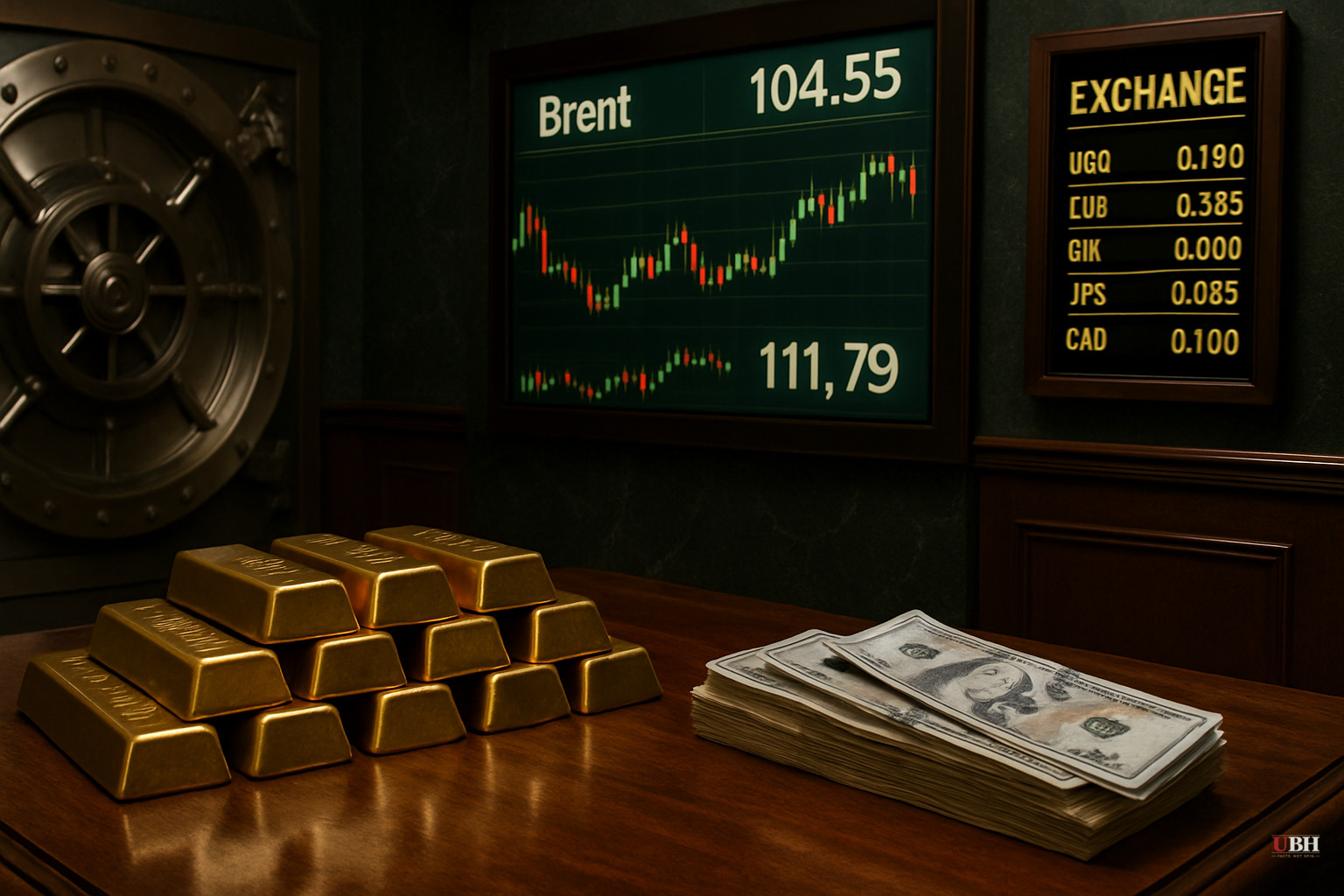
Brent crude hit $104.55 a barrel as of Tuesday morning, per CNBC. West Texas Intermediate at $98.17.
The Strait of Hormuz is still largely closed. That's roughly 20% of global oil supply running through a choke point that's effectively shut.
Trading Economics flagged it plainly: oil prices "continue to rise and are expected to stay elevated, adding to global inflationary pressures and limiting central banks' scope to ease monetary policy."
Mainstream financial coverage is framing this as a currency story. A closed Hormuz plus $100+ oil equals a supply shock that hits every American who drives a car, heats a home, or buys anything that gets shipped.
The Fed Is Boxed In
Before this war broke out, markets were pricing in two Fed rate cuts this year. Those are gone, per CNBC.
Chicago Fed President Austan Goolsbee struck a cautious tone, per Trading Economics: inflation has NOT continued its descent toward the Fed's 2% target. It's moved in the wrong direction since the conflict started.
The May inflation report — due later Tuesday — was forecast by Reuters to show consumer prices rising 0.6% last month after a 0.9% jump in March.
Prior to the recent pullback, the dollar had actually been strengthening as traders ruled out rate cuts entirely and began speculating the Fed might hike before year-end. A potential rate hike in 2026 — driven in significant part by a Middle East war.
What Trump Did and Didn't Do
Trump suspended a planned strike on Iran scheduled for Tuesday, May 6, after direct appeals from Saudi Arabia, Qatar, and the UAE, per Trading Economics. The Gulf states believed a deal was still reachable.
But the ceasefire he's now calling "on life support" is the same ceasefire his administration negotiated. The 14-point proposal Iran submitted didn't close the gap. Trump rejected Iran's response.
Trump also warned explicitly, per Trading Economics, that military strikes could resume if Tehran fails to comply. That's a real contingency with real consequences for oil prices, inflation, and anyone holding dollar-denominated assets.
What the Different Coverage Gets Wrong
WSJ framed the story mostly as a positive dollar-fall narrative — "prospects of a deal improve." That was Thursday. By Tuesday it looked very different. The WSJ's optimism didn't hold up in 72 hours.
CNBC gave the most complete picture of the current stalemate but buried the oil price implications in the middle of the piece. The inflation angle — which hits working-class Americans hardest — deserved more prominence.
Channel News Asia noted that the ceasefire remains "fragile" but U.S. and Iranian forces are still "trading fire in the region" and the UAE came under renewed attack. That detail is almost entirely absent from U.S. domestic financial coverage. Allies are getting hit. The ceasefire is a ceasefire in name only in some sectors.
What This Means
Gas prices stay high. Grocery prices stay high. The Fed can't cut rates. Mortgages aren't getting cheaper. Every week this drags on means continued inflation pressure on American households.
A deal would change everything — oil drops, inflation eases, the Fed gets room to breathe. But as of May 12, 2026, that deal doesn't exist. What exists is a ceasefire that the President himself is describing as barely alive.
Watch the inflation print. Watch Hormuz. The diplomats can talk all they want — the price of oil tells you the truth.
Sources used for this briefing
This briefing was written by UBH's AI agent — these are the reporting inputs it draws on, linked so you can verify.


