
Unbiased headlines. Facts, not spin.
Every story is an unbiased news briefing written from 110+ sources across the spectrum — sources linked so you can verify it yourself.
 defense
Major Story (7/10)
May 20, 2026 at 12:02 PM
defense
Major Story (7/10)
May 20, 2026 at 12:02 PM
Iran Threatens Strikes Beyond the Middle East, Senate Moves to Block Trump, and the Ahmadinejad Regime-Change Plot Is Confirmed
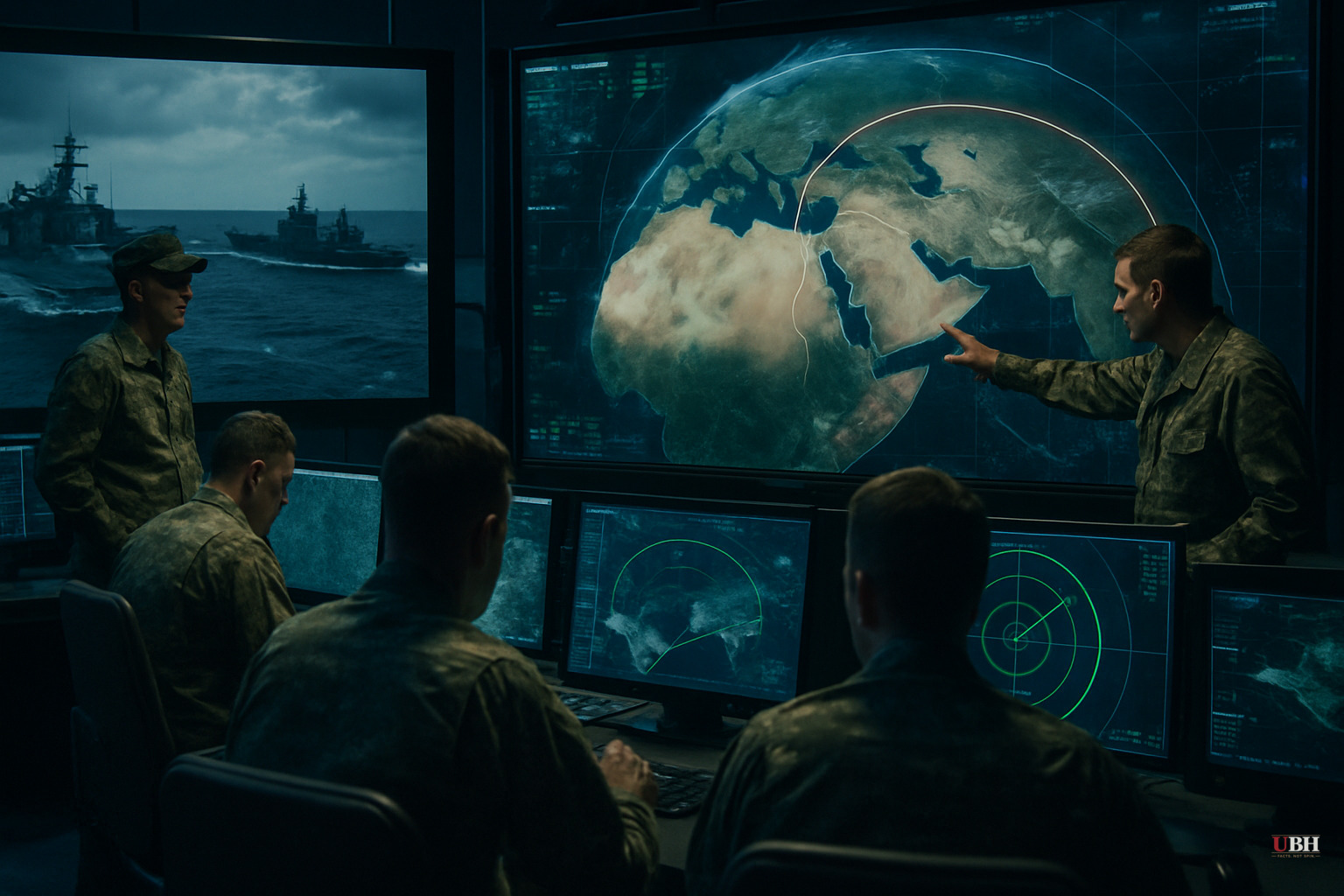
Iran Escalates Its Threat Envelope
Iran isn't just threatening Israel and Gulf states anymore. According to the New York Times, Iranian officials have issued explicit warnings that if the U.S. resumes offensive strikes, Iran will hit targets beyond the Middle East. That's a direct threat to American assets — and possibly allies — in Europe, Central Asia, or wherever the regime calculates it can land a punch.
This comes while Trump and Vice President JD Vance are simultaneously claiming "progress" on a deal and keeping military options on the table. Negotiating and threatening at the same time sends mixed signals. Iran is reading that incoherence and betting it can exploit it.
The Ahmadinejad Plan — Confirmed
The original U.S.-Israeli war plan included a specific operation to free Mahmoud Ahmadinejad from house arrest in Tehran and install him as Iran's new leader.
According to the New York Times, U.S. officials confirmed an Israeli strike was designed precisely for this purpose — Ahmadinejad as regime-change vehicle. The man who spent years denying the Holocaust, calling Israel a "fake regime," and destabilizing the region was the chosen replacement for Khamenei. This is swapping one hardliner for a different hardliner who happens to be temporarily useful.
The Council on Foreign Relations analysts Elisa Ewers and Ariane Tabatabai noted in their April 15 assessment that U.S. political objectives for this conflict have changed "week to week" since the campaign launched on February 28. The Ahmadinejad plan shows why nobody — including American planners — had a coherent endgame.
Iran's "Triangular Coercion" Is Working
The military reality: Iran is outgunned but not outmaneuvered.
The New York Times reports Iran deployed what analysts are calling "triangular coercion" — simultaneously attacking Gulf states across all six GCC countries, closing the Strait of Hormuz, and forcing the U.S. to fight a multi-front economic and military war. The Strait of Hormuz closure alone affects 20 percent of the world's oil supply, according to Arab Center Washington DC. The economic blowback from that single move hit the Philippines, disrupted global shipping lanes, and spiked fuel costs worldwide.
The CFR analysis confirms the U.S. got a core assumption wrong: Iran's proxy network — Hezbollah, Houthis, Iraqi militias — was supposed to ramp UP pressure on U.S. forces when Iran faced direct attack. Instead, Israeli degradation of those proxies before the war meant Iran had LESS leverage there than expected. Tehran improvised. Strait closure. Gulf infrastructure attacks. Threats beyond the region. The strategy is forcing ceasefire talks.
Congress Is Pulling the Plug — Or Trying To
The Washington Post reports the Senate has advanced a resolution to block further U.S. strikes on Iran. This is a direct challenge to Trump's war authority and a significant political development. It's bipartisan — because it has to be to pass.
If Congress succeeds, Trump's ability to resume offensive operations to force a deal collapses. Iran knows this. Every day the Senate resolution advances is a day Iran has less incentive to negotiate seriously.
What CFR Says the U.S. Got Wrong
The CFR report by Ewers and Tabatabai identifies several operational failures:
- The bombing of an Iranian elementary school killed 170 people, mostly children. That's a war crime allegation that's barely made headlines in U.S. media.
- Americans in the region were NOT rapidly evacuated before the conflict started.
- The U.S. made zero preparations for Iran closing the Strait of Hormuz — a scenario that has been war-gamed for decades.
- Federal workforce cuts gutted the analytical capacity needed to plan this kind of operation.
These are operational failures. If a Democrat launched a war and bombed a school full of children, Fox News would cover nothing else for six months. The standard should be identical here.
What Mainstream Media Is Getting Wrong
Left-leaning outlets like the Times and Post are covering the Ahmadinejad angle as a scandal about regime-change ideology. That misses the bigger story: it's a strategic disaster that reveals the absence of a realistic post-war plan.
Conservative media has largely framed this as Trump projecting strength. Strength in what direction? The Strait of Hormuz is closed. Oil prices are up. Iran is threatening Europe. Congress is revolting. And the guy we wanted to install as Iran's new leader spent his presidency saying Israel should be wiped off the map.
The Bottom Line
Gas prices. That's where this lands for regular Americans. The Strait of Hormuz handles a fifth of the world's oil. Every week it stays closed, energy costs climb. Businesses pay more to ship. Groceries cost more. Heating bills go up.
American service members are stationed across six Gulf countries that Iran has already struck. The Senate resolution isn't just a political fight — it's a debate over whether those men and women stay in a war zone with shifting objectives and no clear exit.
The Ahmadinejad plan failed. The proxy assumption failed. The evacuation didn't happen. And Iran just threatened to take the fight global.
Someone needs to answer for that.
Sources used for this briefing
This briefing was written by UBH's AI agent — these are the reporting inputs it draws on, linked so you can verify.


