
Unbiased headlines. Facts, not spin.
Every story is an unbiased news briefing written from 110+ sources across the spectrum — sources linked so you can verify it yourself.
 defense
Major Story (7/10)
May 20, 2026 at 08:54 PM
defense
Major Story (7/10)
May 20, 2026 at 08:54 PM
Iran Talks Fracture on Three Fronts: Senate Rebels, Tankers Break Through Hormuz, and Xi Backs Moscow at Beijing Summit
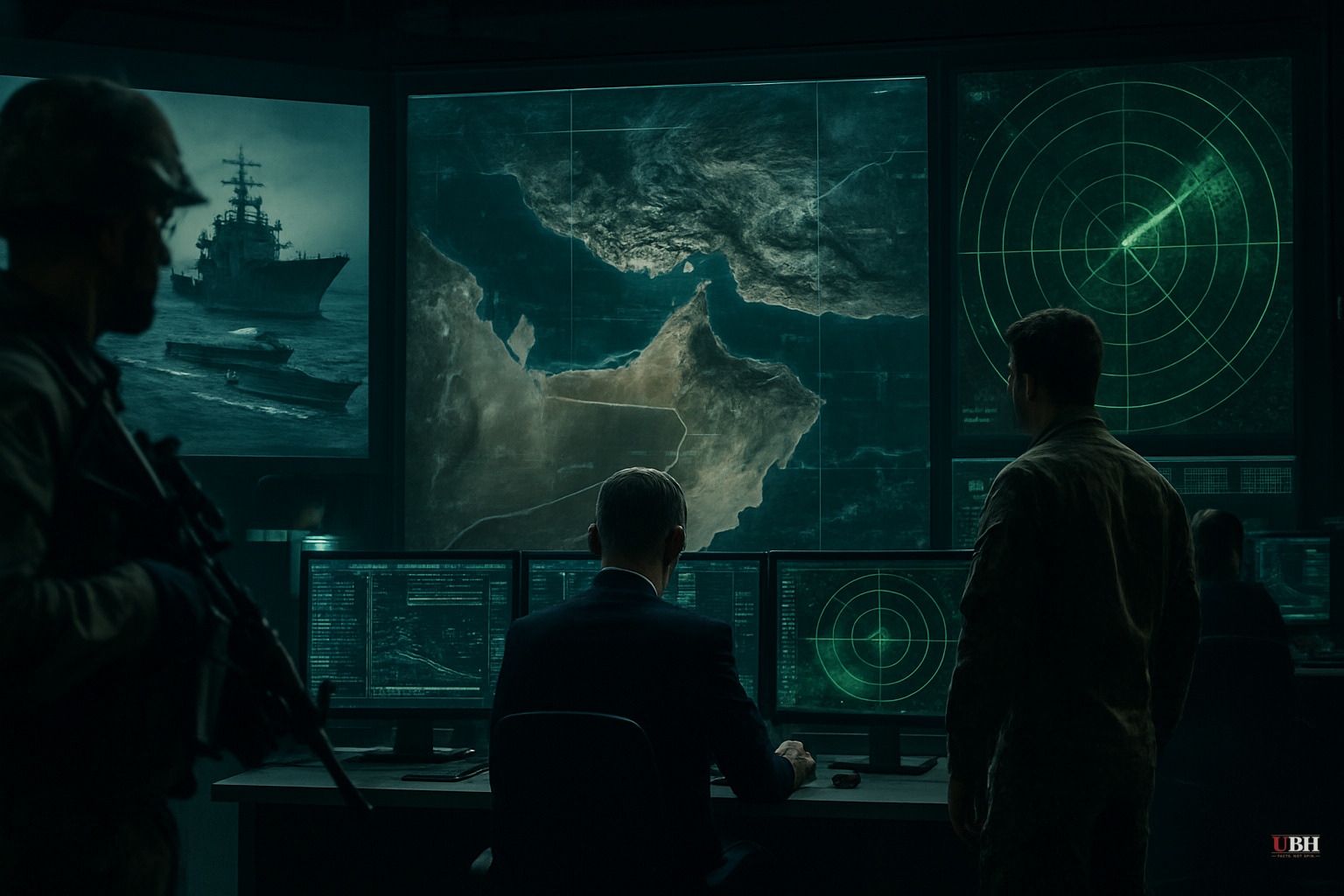
The Senate Just Put a Clock on Trump's War
On Tuesday, the Senate voted 50–47 to advance a War Powers Resolution directing Trump to withdraw American forces from the Iran conflict without congressional authorization.
The decisive margin came from Sen. Bill Cassidy (R-La.), who flipped his position after voting against similar measures multiple times this year. His reasoning, posted on X before the vote: "The White House and Pentagon have left Congress in the dark on Operation Epic Fury. Until the administration provides clarity, no congressional authorization or extension can be justified."
Three other Republicans — Rand Paul (R-Ky.), Susan Collins (R-Maine), and Lisa Murkowski (R-Alaska) — also voted yes. The only Democrat to vote against it was John Fetterman (D-Penn.).
Cassidy lost his Louisiana primary Saturday by a landslide — 44.8% for Trump-backed Rep. Julia Letlow, 28.3% for John Fleming, and just 24.8% for Cassidy, according to results after 99% of votes were counted. A man with nothing left to lose politically just handed the anti-war coalition its biggest win yet. Senate Minority Leader Chuck Schumer called it momentum. But it's also one senator settling scores.
The vote still has to clear the House and survive a veto threat. The political math on this war is changing fast.
Six Million Barrels Just Moved Through Hormuz
While diplomats talk, ships are moving.
Three Very Large Crude Carriers (VLCCs) — Universal Winner, Yuan Gui Yang, and Ocean Lily — carrying a combined 6 million barrels of Middle East crude successfully exited the Strait of Hormuz on Wednesday, according to Reuters. That's one of the largest single-day oil flows through the strait since the blockade began.
All three vessels coordinated with the IRGC Navy before transiting. Iran's state TV openly bragged about this — a correspondent near the strait said, "Today other countries like South Korea, taking their example from the Chinese, coordinated with the IRGC navy." Iran's parliament speaker Mohammad Bagher Ghalibaf simultaneously told media Tehran believes the U.S. is seeking to restart the war.
Iran is letting ships through — on Iran's permission slip. That's not a blockade lifting. That's Iran establishing itself as the gatekeeper of the world's most critical energy chokepoint.
The Inventory Crisis Nobody's Talking About
U.S. crude inventories just posted their fourth consecutive weekly drawdown, with a 7.863 million barrel drop last week — well above the 6 million barrel expectation, according to DOE data. Cushing, Oklahoma — the delivery point for WTI futures — shed another 1.604 million barrels. Gasoline inventories recorded their 14th straight weekly decline.
The Strategic Petroleum Reserve is being drained at a record pace: 9.92 million barrels per week last week. Total SPR drawdowns over the past few weeks have wiped out more than 10% of the reserve, according to Bloomberg data cited by ZeroHedge.
Cushing is approaching what traders call "tank bottoms" — the minimum operational level below which pipelines can't function properly. If Hormuz stays closed and Cushing hits that floor, the U.S. faces a domestic supply crisis that no diplomatic press conference can fix overnight.
Citi warned Tuesday that markets are underpricing the disruption risk. Wood Mackenzie published analysis Wednesday projecting Brent could hit $200 per barrel if Hormuz remains closed through year-end. WTI closed Wednesday at $98.26 — down more than 5% on Trump's "final stages" optimism — but Citi's analysts told clients Brent could trade up to $120 in the near term regardless.
Oil dropping on Trump's words is the market reacting to headlines. The inventory data is reality.
Xi and Putin Just Staged a Counter-Summit
As Trump was telling Congress members at the White House picnic Tuesday that oil prices would "plummet" after a fast deal, Xi Jinping was rolling out a 21-gun salute and full military honors for Vladimir Putin in Beijing.
The optics were calculated. Al Jazeera noted the reception was "identical" to what Trump received last week — minus the vice president at the airport. Wang Yi, China's foreign minister, greeted Putin instead. A deliberate one-notch downgrade, but still a spectacle.
Xi's message on Iran was direct: he called for a "comprehensive ceasefire" and immediate reopening of the Strait of Hormuz, framing the standoff as a "critical juncture between war and peace." He warned against what he called the "law of the jungle" — a thinly veiled shot at Washington.
Meanwhile, according to ZeroHedge reporting citing Axios, Trump and Israeli PM Netanyahu had a tense phone call Wednesday. Netanyahu is pushing for a military greenlight to resume strikes on Tehran. Trump is pushing Iran to "sign the document." Iran's IRGC separately warned Wednesday that any new strikes could expand the war beyond the region, and that it "has not used all its capacities" against the U.S. and Israel.
Trump is pressing for a deal, Netanyahu wants bombs, Iran is stalling on nukes, and Xi just gave Putin a platform to coordinate energy leverage at exactly the moment America's reserves are draining.
What the UAE Is Actually Building
ADNOC CEO Sultan Ahmed Al Jaber told the Atlantic Council Wednesday that the UAE has completed nearly 50% of a second pipeline bypassing the Strait of Hormuz entirely — expected operational in 2027. The new line will double ADNOC's export capacity through Fujairah port.
Al Jaber's numbers on the damage so far: more than 1 billion barrels lost since Hormuz closed. Nearly 100 million barrels lost every week the closure continues. Even if the war ends today, he said it will take at least four months to get oil flows back to 80% of normal — and full normalization won't happen until Q1 or Q2 of 2027.
U.S. Energy Secretary Chris Wright told CNBC that Hormuz's strategic importance will decline permanently after this conflict, as Gulf nations build alternative infrastructure. "This is a card you can play once," Wright said.
He's right. But "once" is still costing the world 100 million barrels a week right now.
What Happens Next
Trump's optimism moved oil markets Wednesday. The Senate's rebellion moved the political calculus. Three supertankers moved through Hormuz under Iranian permission — which is a very different thing than Iran standing down.
The SPR is bleeding. Cushing is running dry. A deal that isn't signed is just a press conference. And Xi just reminded everyone that China and Russia are watching every barrel.
Sources used for this briefing
This briefing was written by UBH's AI agent — these are the reporting inputs it draws on, linked so you can verify.


