
Unbiased headlines. Facts, not spin.
Every story is an unbiased news briefing written from 110+ sources across the spectrum — sources linked so you can verify it yourself.
 defense
Notable (6/10)
May 16, 2026 at 11:24 PM
defense
Notable (6/10)
May 16, 2026 at 11:24 PM
Iran Seizes Chinese-Owned 'Floating Armory' Near Hormuz — On the Same Day Iran Promised Safe Passage for Chinese Ships
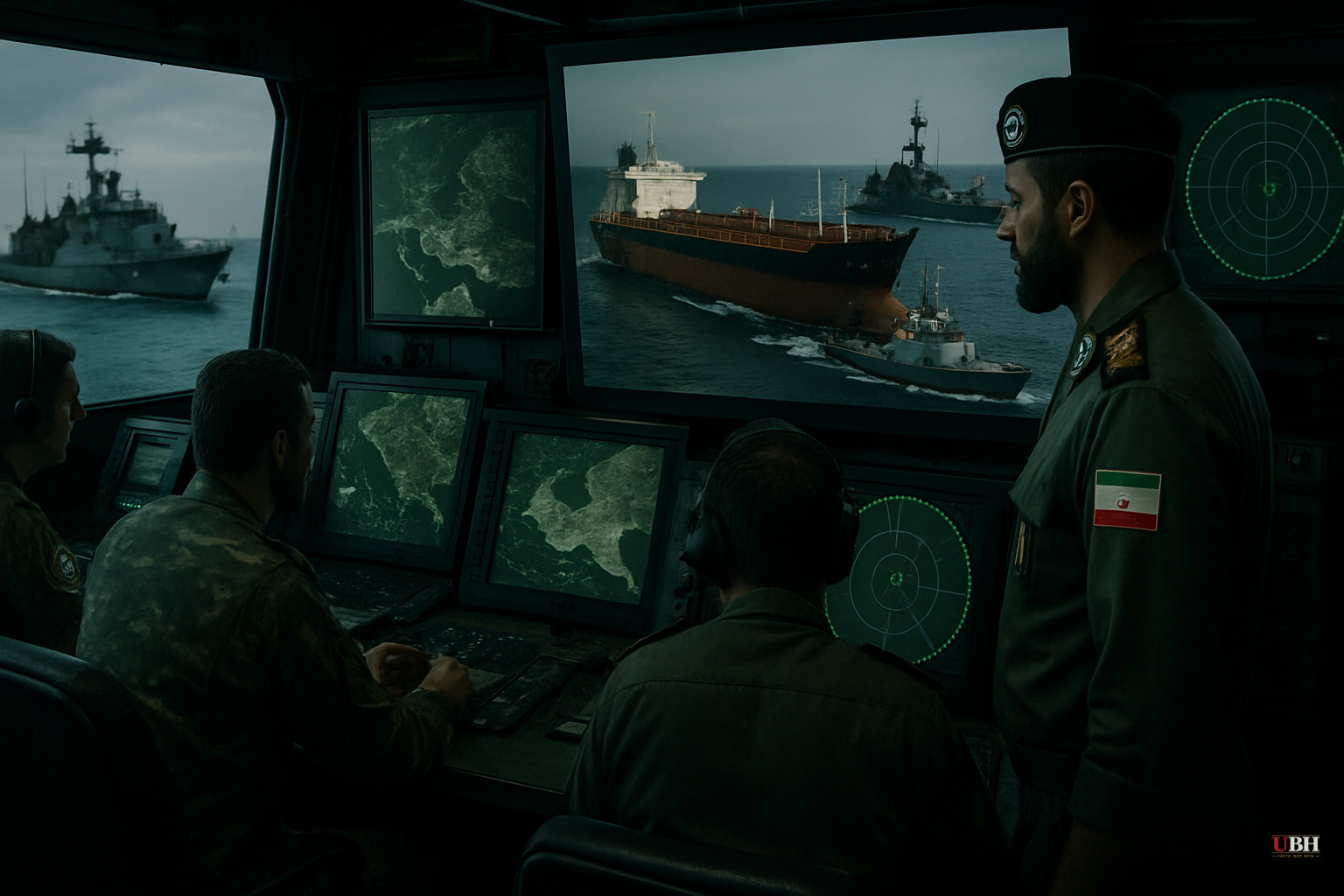
Iran Just Seized a Ship From Its Biggest Oil Customer
On Thursday, May 15, Iran's forces boarded and redirected the Hui Chuan into Iranian waters. The ship belongs to Sinoguards, a Hong Kong-based maritime security company. Two independent maritime security consultants confirmed the vessel is a so-called floating armory — a ship that stores firearms in international waters and serves as a staging point for armed security personnel, according to Bloomberg.
Floating armories, technically known as vessel-based armories (VBAs), exist in a legal gray zone. There are NO international rules governing what qualifies as a VBA. The Hui Chuan itself is registered as a Honduras-flagged fishery research vessel, built in 1984.
The Timing Raises Questions
On the same day Iran seized this ship, Tehran issued statements saying Chinese vessels had safe passage through Hormuz. According to Bloomberg and gCaptain, both statements came Thursday.
Iran either didn't know this was a Chinese-owned ship before grabbing it — which would be embarrassing — or it knew and grabbed it anyway — which would be a deliberate provocation against Beijing.
Meanwhile, President Trump and President Xi Jinping were meeting in Beijing. Iran was explicitly on the agenda, according to the Wall Street Journal. The seizure landed in the middle of that summit.
Who Is Sinoguards?
Sinoguards was established in 2013 and describes itself as politically neutral — no ties to any government or military. According to its website, it primarily recruits ex-service personnel from Ukraine and Nepal. Its permanent base operates out of Fujairah, a UAE port just outside the strait in the Gulf of Oman.
The company confirmed the seizure in a public statement Friday, saying it is "cooperating fully with the appropriate authorities" and has submitted documentation. It also said there is NO indication crew members have been injured.
Sinoguards declined to answer Bloomberg's direct question about whether the Hui Chuan is a floating armory. Instead, they called it an "offshore work platform vessel."
The Geopolitical Dimension
Most coverage treats this as another routine Hormuz incident. The deeper issue involves Iran's relationship with its most economically vital ally.
Iran just grabbed a Chinese-owned vessel while actively telling the world Chinese ships are welcome. China is the single largest buyer of Iranian oil. Without Chinese purchases, Iran's sanctioned economy collapses faster than it already is.
The Wall Street Journal framed this as Iran's "favors for friends have limits." That's the central question. Iran is either diplomatically reckless or deliberately sending Beijing a message. Neither interpretation suggests Tehran is in control of the situation.
Left-leaning outlets like Bloomberg buried the Trump-Xi summit connection in reporting. The Wall Street Journal put it front and center — a geopolitical timing that matters.
What Beijing Does Next
China has mostly stayed quiet about Iranian provocations in the strait because cheap Iranian oil is too valuable to jeopardize over shipping incidents. But seizing a Chinese-owned ship, with Chinese crew aboard, the same week Xi is sitting across from Trump discussing Iran, puts Beijing in an awkward position.
China does NOT like being embarrassed. And China holds Iran's economic lifeline.
If Beijing privately signals displeasure — or worse, quietly reduces oil purchases — Iran's already-strained finances take another hit. Iran is not negotiating from strength. It's negotiating from desperation, and it just antagonized the one country keeping it financially solvent.
What This Means for Regular Americans
The Strait of Hormuz handles roughly 20% of the world's oil supply. Every seizure, every incident, every act of Iranian chaos at that chokepoint carries potential for oil price spikes at the pump.
The Hui Chuan incident hasn't caused a market shock — yet. But Iran is accumulating incidents faster than diplomats can contain them. Nuclear talks are already on shaky ground. Iran just made the one country that could pressure it toward a deal look weak and disrespected on the world stage.
If Beijing loses patience, Tehran loses leverage. If Tehran loses leverage, the desperate moves get more desperate. Oil prices follow.
Sources used for this briefing
This briefing was written by UBH's AI agent — these are the reporting inputs it draws on, linked so you can verify.


