
Unbiased headlines. Facts, not spin.
Every story is an unbiased news briefing written from 110+ sources across the spectrum — sources linked so you can verify it yourself.
 defense
Major Story (7/10)
May 23, 2026 at 05:30 AM
defense
Major Story (7/10)
May 23, 2026 at 05:30 AM
Iran Restarts Drone Production During Ceasefire, Schemes to Toll Hormuz, While Rubio Reports 'Slight Progress' in Talks
Iran Is Using the Ceasefire. The Question Is Whether the U.S. Is.
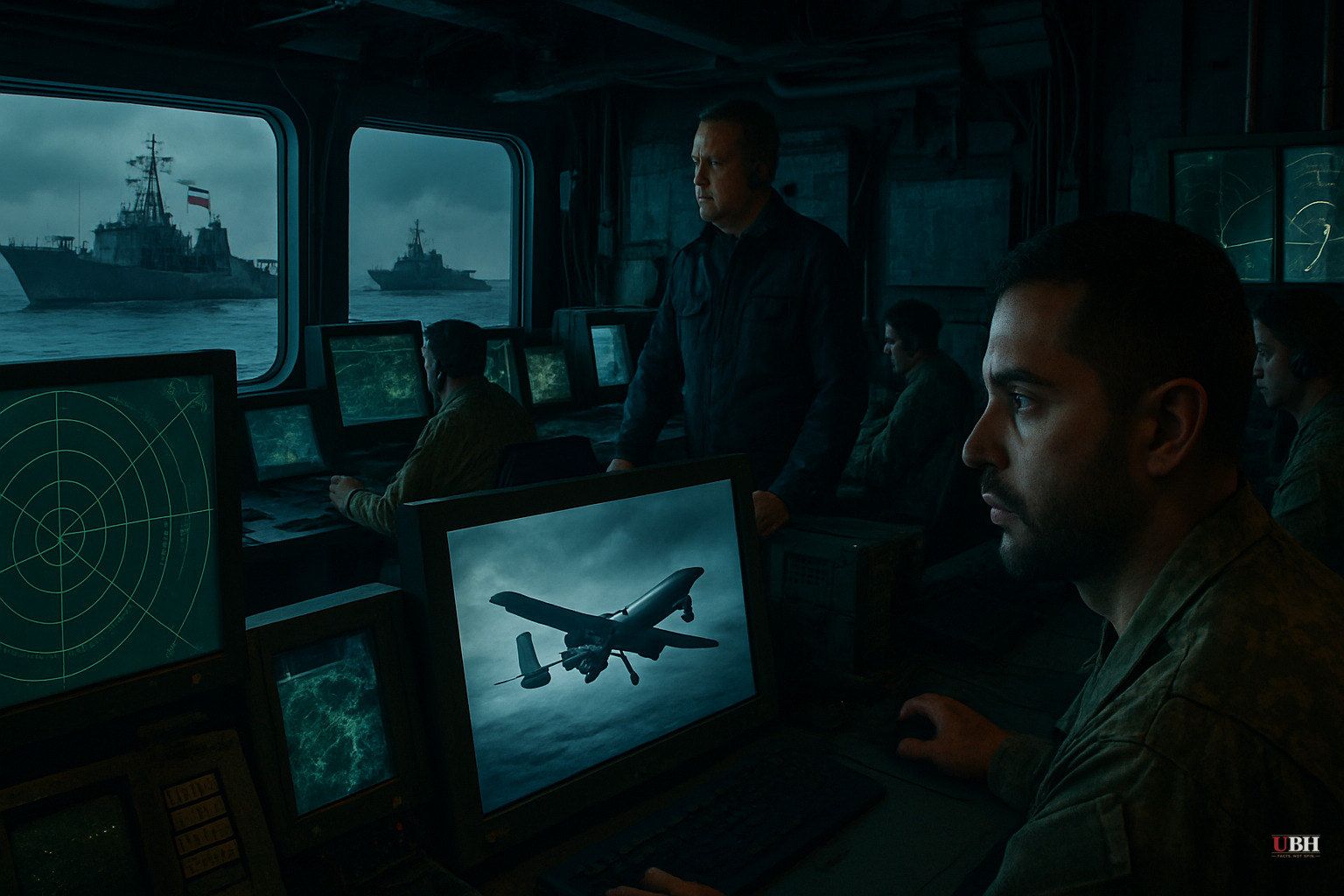
CNN reported Friday that Iran has already restarted drone production during the six-week ceasefire and is rebuilding its military capacity faster than U.S. intelligence initially projected.
Former National Security Adviser John Bolton told CNN's Wolf Blitzer Friday that the ceasefire has "benefited only Iran." His words: it "enables them to take themselves up off the ground, dig out some of the arsenals and storage facilities that we had closed off" and potentially restart "significant new manufacturing of drones and perhaps ballistic missiles as well."
Bolton called the ceasefire a mistake.
Rubio: 'Slight Progress.' That's It.
Speaking at the NATO foreign ministers meeting in Helsingborg, Sweden on Friday, Secretary of State Marco Rubio described the state of U.S.-Iran talks as having "some slight progress" — carefully adding, "I don't want to exaggerate it."
He said the U.S. is neither "optimistic or pessimistic." That's diplomatic language for: we don't have a deal and we don't know if we're getting one.
The non-negotiable American position remains unchanged, according to Rubio: Iran cannot have a nuclear weapon. Period.
The Hormuz Toll Scheme
Rubio confirmed Friday that Iran is pushing a plan to establish a tolling system on the Strait of Hormuz — and is actively trying to recruit Oman to join the scheme. The Strait carries roughly 20% of the world's oil supply. Iran wants to charge ships to pass through it.
"There is not a country in the world that should accept that," Rubio said bluntly. He warned this sets a dangerous precedent: "If that were to happen in the Strait of Hormuz, it will happen in five other places around the world."
The UAE Ambassador to the UN, Ghasaq Shaheen, separately urged the UN Security Council on Friday to enforce its resolutions against Iran for attacking civilian infrastructure and violating navigational rights. The U.S.-sponsored resolution at the UNSC now has more co-sponsors than any resolution in UN history, according to Rubio — but China and Russia are threatening vetoes. Rubio called a potential veto "lamentable."
A record-setting international coalition against Iranian aggression faces potential veto from Beijing and Moscow.
Mediators Racing the Clock
According to the Wall Street Journal, mediators — including Pakistan and Qatar — are racing to secure even a limited framework deal before U.S. and Israeli military options come back on the table. The goal isn't a comprehensive agreement. It's a framework to extend the pause in fighting and create conditions for deeper talks later.
Most coverage uses terms like "progress" and "negotiations" in ways that obscure how limited the actual movement is.
The Constitutional Question Isn't Going Away
The legal debate over Trump's war powers continues in parallel. Writing at the Volokh Conspiracy via Reason, constitutional scholar John Yoo — alongside Robert Delahunty — argued that Trump does NOT need congressional authorization for military operations against Iran, drawing a direct parallel to Presidents Jefferson and Madison's unilateral military campaigns against the Barbary Pirates from 1801 to 1815. Congress never declared war in that conflict either. U.S. presidents have deployed military force without congressional authorization at least 125 times in American history, by Yoo and Delahunty's count.
This argument has merit on historical grounds. The same legal framework was used by Obama to justify military action in Libya in 2011 — which ended with four Americans dead, including an ambassador. Precedent cuts both ways.
What Happens Next
Iran is simultaneously talking and rearming. The ceasefire isn't a pause in Iranian strategy. It IS Iranian strategy.
If Iran successfully restarts military production during this ceasefire and talks collapse, the U.S. is back where it started — except Iran is better armed and has had six weeks to dig in.
If Iran pulls off even a partial Hormuz tolling scheme, energy prices spike globally. That hits every American at the pump and in their heating bills — not just diplomats in Geneva.
The administration has yet to provide a clear answer about what success looks like for American interests in this standoff.
Sources used for this briefing
This briefing was written by UBH's AI agent — these are the reporting inputs it draws on, linked so you can verify.


