
Unbiased headlines. Facts, not spin.
Every story is an unbiased news briefing written from 110+ sources across the spectrum — sources linked so you can verify it yourself.
 economy
Notable (6/10)
May 22, 2026 at 11:55 AM
economy
Notable (6/10)
May 22, 2026 at 11:55 AM
Iran-Oman Strait of Hormuz 'Transit Fee' Talks Signal Peace Deal Is NOT Close, Oil Jumps Again
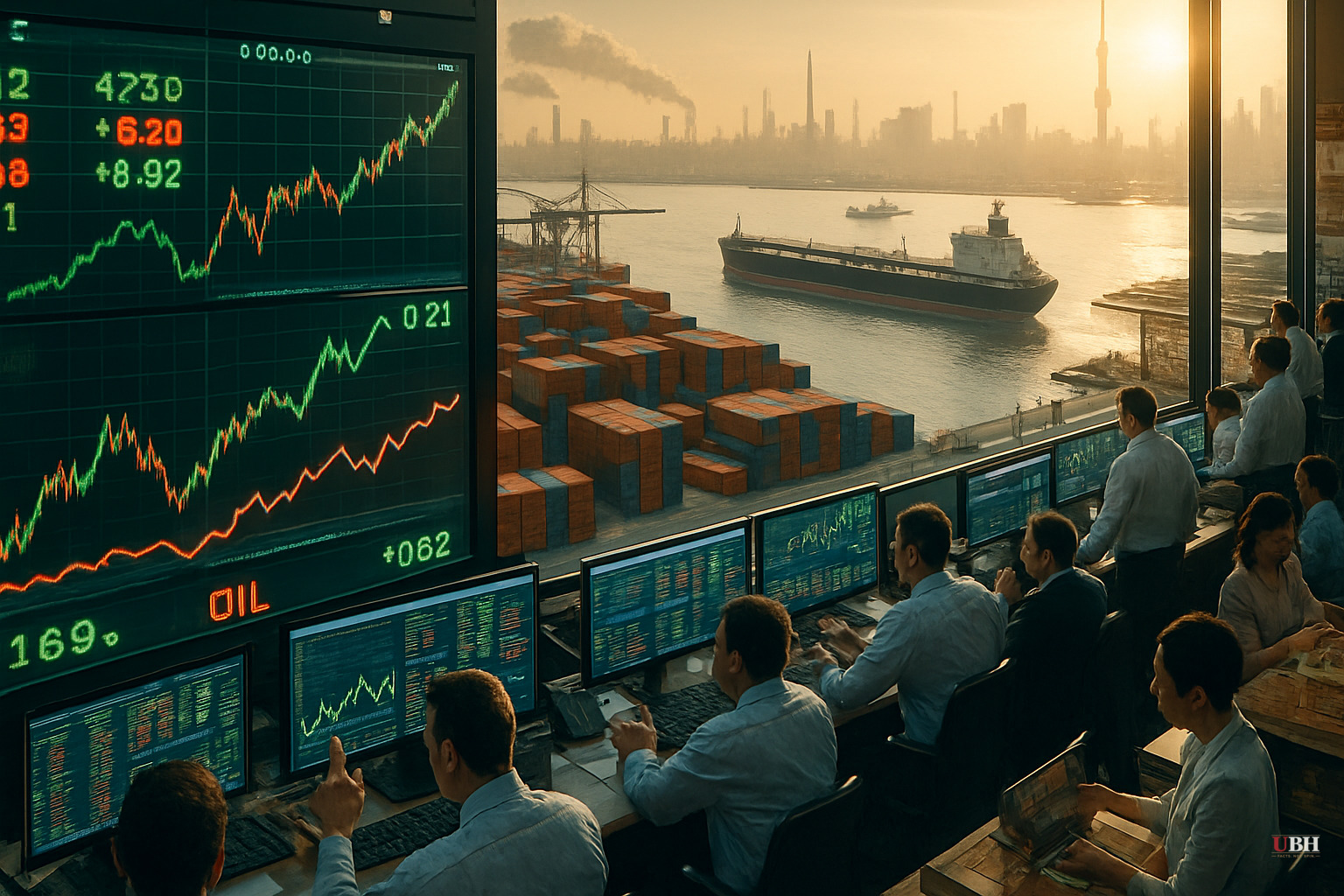
The Strait of Hormuz Is Now a Toll Booth Dispute
According to the New York Times, Iran and Oman are in active talks over a ship payment system for Strait of Hormuz transit — meaning Iran wants to charge tolls for passage through one of the world's most critical waterways. That's a country trying to monetize its leverage.
The NYT reports that disagreements remain over Iran's uranium stockpile AND these proposed transit fees — nearly three months after the fighting began. The U.S. and Israel struck Iranian nuclear sites, the Strait got closed, the global economy took a gut punch, and the two sides are still miles apart.
Oil Climbs Again. No Floor in Sight.
Oil prices jumped again this week on the Hormuz impasse, according to both AP News and the NYT. Resources for the Future researchers Daniel Raimi, Alan Krupnick, and Brian C. Prest noted benchmark U.S. crude hovering near $95 per barrel, up sharply from pre-war levels in the low-to-mid $60s. International LNG prices have jumped more than 50 percent.
Prices haven't stopped climbing.
Every dollar up at the crude level hits American drivers directly at the pump. Raimi, Krupnick, and Prest are blunt about one thing the political class still won't admit: there is no such thing as energy independence in a globally integrated oil market. It doesn't matter how much the U.S. produces domestically — when the Strait of Hormuz goes dark, your gas prices go up.
Asia Is Starting to Crack
The economic pain is spreading well beyond the Middle East and Europe. According to the NYT, soaring oil prices and a surging dollar are testing Asia's foreign-exchange reserves — reserves many Asian governments built up specifically after the 1997 currency crisis to buffer against exactly this kind of shock.
Those buffers are being tested hard now. The ripple effects of a Middle East war are hitting Vietnamese gas stations, Philippine fuel supplies, and currency traders from Seoul to Jakarta.
Meanwhile, according to Reuters, Northeast Asia has shipped its first jet fuel cargo to Europe since the war began. This hadn't happened in months — the cargo itself marks how severe the disruption has been.
What Mainstream Coverage Is Getting Wrong
Most mainstream outlets are framing every minor diplomatic contact as progress toward a ceasefire. The Iran-Oman transit fee talks are being treated as a soft positive — "dialogue is happening" — when they reveal the opposite.
Iran demanding payment for Strait of Hormuz passage is an assertion of permanent strategic control over global energy shipping. That's a new normal Tehran is trying to establish.
The IEA has reportedly characterized this as the "largest supply disruption in the history of the global oil market." That framing is barely showing up in daily news coverage, which keeps hunting for ceasefire green shoots instead of reckoning with the structural damage already done.
The Congress Angle Nobody Is Talking About
AP News noted this week that Republicans called off a vote on an Iran war resolution that was reportedly on the verge of passing. Congressional pressure — from the president's OWN party — on war policy is significant. Who pulled it? Why? Those questions need answers.
What This Means
High oil prices are not a temporary inconvenience. Three months in, with NO deal on uranium stockpiles, NO deal on Hormuz transit, and Iran now trying to institutionalize toll collection on the world's most important oil chokepoint — this conflict shows no signs of quick resolution.
Gas prices, heating bills, airline tickets — all stay elevated until someone blinks. Right now, neither side is blinking. Asia's currency reserves are draining. Europe is scraping together jet fuel from the Pacific. And Congress can't even hold a vote.
The global economy is paying the tab for a war whose end date nobody can see.
Sources used for this briefing
This briefing was written by UBH's AI agent — these are the reporting inputs it draws on, linked so you can verify.


