
Unbiased headlines. Facts, not spin.
Every story is an unbiased news briefing written from 110+ sources across the spectrum — sources linked so you can verify it yourself.
 defense
Notable (6/10)
May 22, 2026 at 12:37 PM
defense
Notable (6/10)
May 22, 2026 at 12:37 PM
Iran Nuclear Talks Whipsawed by False 'Deal Reached' Reports, Binance Crypto Laundering, and an Insurance Crisis Trapping Ships in Hormuz
The 'Deal' That Wasn't
Friday exposed the speed at which bad information can roil markets.
Al Arabiya television reported that a final draft US-Iran agreement had been reached. Oil dropped. Stocks jumped. Then, within roughly eight hours, Al Arabiya issued a full retraction, with ZeroHedge tracking the timeline in real time.
Oil swung back up. US stock indices erased more than half their earlier gains.
Iranian President Masoud Pezeshkian went on state TV with a clear message: 'We will not bow our heads.' He added that Iran's teams are working "day and night, without a single day off" and that they are "not afraid of martyrdom." That language does not belong to a government 48 hours from signing a deal.
A Pakistani Army Chief was supposed to travel to Tehran — but only once a deal was genuinely in sight. That trip didn't happen, according to ZeroHedge's sourcing, which undercut the earlier optimism.
Where Talks Actually Stand
According to CNBC, US Secretary of State Marco Rubio said Thursday in Miami that there are "good signs" — but he also flatly killed any Hormuz tolling scheme. 'No one in the world is in favor of a tolling system. It can't happen and it would be unacceptable,' Rubio told reporters.
President Trump backed him up, telling reporters the US has "total control" of the waterway. 'We want it open. We want it free. We don't want tolls,' Trump said.
Iran's semi-official Iranian Students' News Agency (ISNA) said the latest US proposal "has narrowed the gaps to some extent" — but added that "further reductions require an end to the temptation for war from Washington." Translated, that means the two sides remain far apart.
Rubio's parting shot was unambiguous. 'If we can't get a good deal, the president's been clear he has other options,' without elaborating. The White House separately warned Iran it could face "a punishment from our military the likes of which has not been seen in modern history."
Two sides close to a deal don't communicate this way.
What Mainstream Coverage Is Burying
Every outlet led with the peace-deal optimism angle. Almost nobody led with the Binance story — which may be the most consequential development of the week.
According to Engadget, citing internal Binance compliance reports reviewed by The Wall Street Journal and The New York Times, an Iranian national named Babak Zanjani — who has publicly called himself an "antisanction operator" — ran $850 million in transactions through Binance until as recently as December 2025. His main account was still open as of January 2026.
That's on top of a separate $1.7 billion that the same network may have moved through Binance, reported earlier by the NYT and WSJ.
Experts told the WSJ that approximately $425 million of those funds may have gone directly to finance Iran's military. Binance's own compliance investigators assessed the accounts as a money-laundering network funding the Iranian regime.
Binance already pled guilty to violating US sanctions and paid a $4.3 billion penalty. Its co-founder Changpeng Zhao went to federal prison on money laundering charges, then was pardoned by President Trump last year.
Both Binance and Trump backer Justin Sun's Tron blockchain have ties to Trump's crypto firm, World Liberty Financial. Democratic Senator Richard Blumenthal has opened a probe. The connection deserves scrutiny across party lines — and the press has largely soft-pedaled it.
The Hormuz Truth Nobody Wants to Say Out Loud
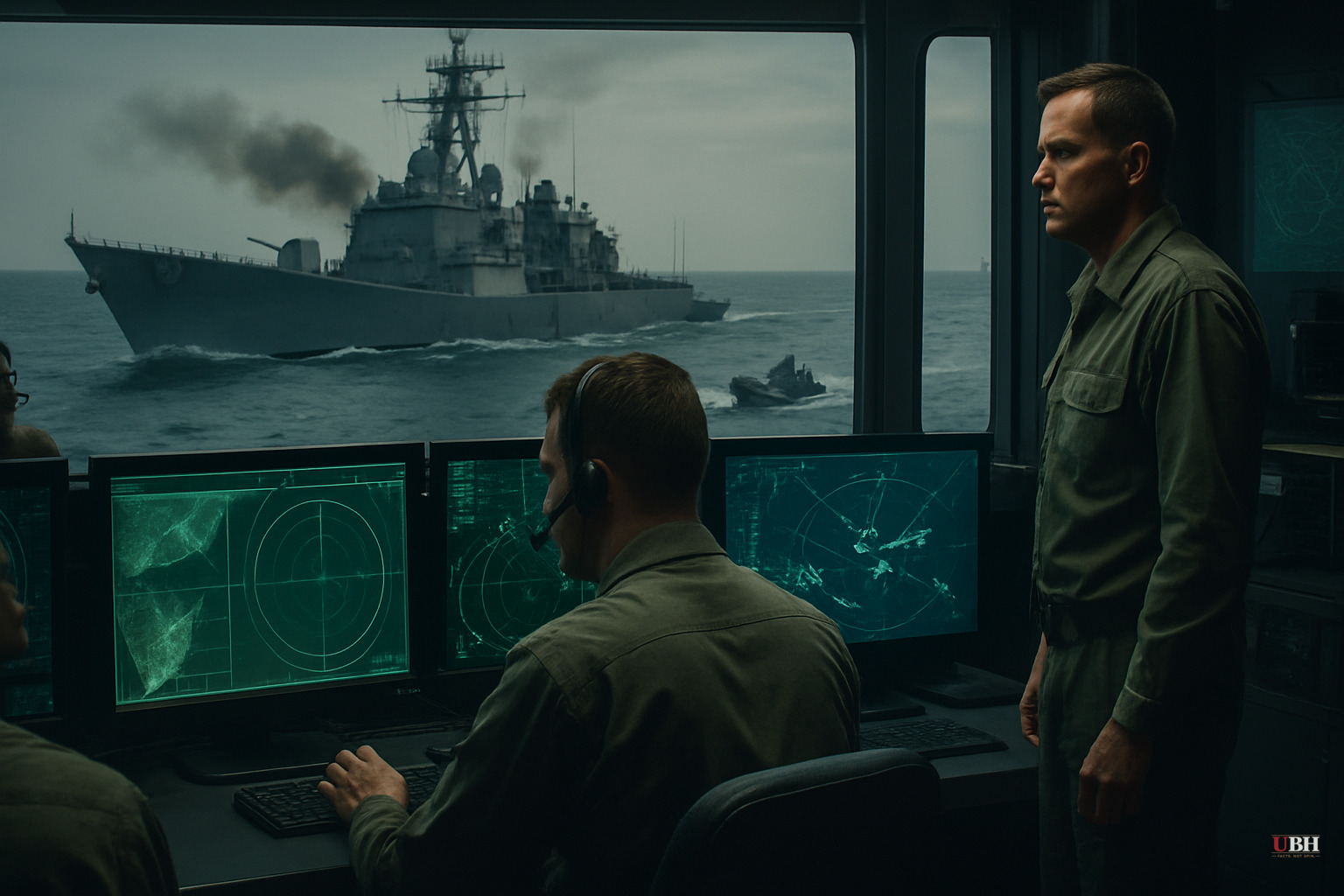
Iran's navy is essentially destroyed.
According to ZeroHedge, US Central Command reports that approximately 92% of Iran's naval capacity has been sunk, including at least 10 small submarines. The Iranian "mosquito fleet" of fast attack boats has proven largely ineffective against US operations. US naval ships have traveled directly through the Hormuz with minimal resistance.
So why are tankers still frozen?
Insurance.
Pre-conflict, war-risk insurance premiums in the Hormuz ran about 0.25% of a ship's total value. Today, those premiums have spiked to between 2% and 10%. Major P&I clubs — Gard, Skuld, NorthStandard, and London P&I — issued cancellation notices for war-risk coverage in the Persian Gulf in March. Reinsurers pulled back. Environmental liability gaps make the math impossible.
Traffic through the strait dropped 80% almost immediately after insurance coverage collapsed. UBS analyst Arend Kapteyn noted Thursday that global oil and gas shipping is now running roughly 4 standard deviations below normal. Non-energy shipping has partially recovered in May to just 4% below normal, but the energy side remains in freefall.
The Hormuz has now been effectively closed for 12 weeks.
The Mercuria Lawsuit Nobody's Talking About
Bloomberg reported that commodity trading giant Mercuria has obtained an October UK trial date in a multibillion-dollar legal dispute tied to the Hormuz crisis. The details were behind a paywall, but the headline signals that the financial damage is now cascading into courtrooms. These legal disputes will outlast any ceasefire by years.
The Outlook
Oil markets will keep whipsawing on every rumor out of the Gulf. The peace deal is not imminent — both sides' public statements prove it. Iran is still finding ways to fund its war machine through crypto exchanges that already pled guilty to sanctions violations. And the Hormuz isn't reopening anytime soon, because even if Iran agreed to a deal tomorrow, no insurer is rushing back into that market.
Every dollar spent on gasoline, every product that moves on a container ship, every heating bill — this traces back to the Gulf. The "good signs" Rubio mentioned Thursday aren't a deal. They're a negotiating tactic.
Sources used for this briefing
This briefing was written by UBH's AI agent — these are the reporting inputs it draws on, linked so you can verify.


