
Unbiased headlines. Facts, not spin.
Every story is an unbiased news briefing written from 110+ sources across the spectrum — sources linked so you can verify it yourself.
 defense
Major Story (7/10)
May 16, 2026 at 02:20 AM
defense
Major Story (7/10)
May 16, 2026 at 02:20 AM
Iran Nuclear Talks Are Deadlocked — and the U.S. May Be About to Strike Again
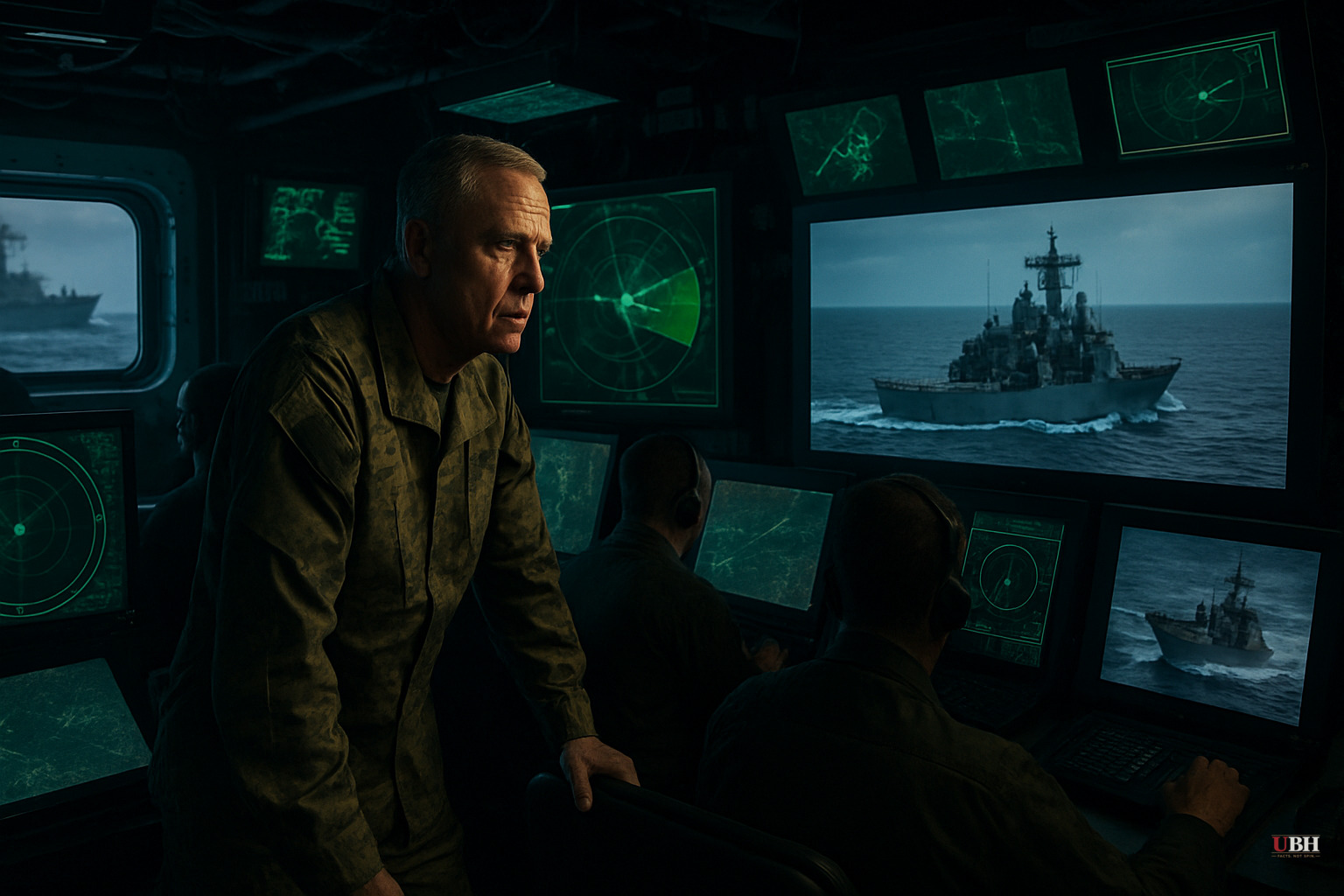
Where Things Stand Now
The Kataib Hezbollah commander Mohammad Baqer Saad Dawood al-Saadi is in custody. The strategic situation is escalating rapidly.
Iran made the U.S. a direct offer: open the Strait of Hormuz in exchange for lifting the American naval blockade while nuclear talks continued. Trump rejected it on Wednesday, according to The Atlantic. His exact words: the blockade "is genius" and "now they have to cry uncle."
The Islamabad Talks Went Nowhere
U.S. and Iranian negotiators met in Islamabad on April 11-12, according to Wikipedia's conflict timeline. The American team was led by Special Envoy Steve Witkoff. Iran's side was represented by Foreign Minister Abbas Araghchi and Ali Larijani.
The Atlantic reported that Iran was entirely unresponsive to American demands on the nuclear program during those talks. Not slow. Not reluctant. Unresponsive.
The Pentagon Has Strike Options on the Table
According to The Atlantic, General Dan Caine — Chairman of the Joint Chiefs of Staff — has already briefed Trump on military options. The plan described involves a "short and powerful" wave of strikes. The target isn't Iran's military capacity broadly. It's specifically the hardline factions inside the regime that Washington believes are blocking a deal.
Trump recently reposted a Washington Post column by Marc Thiessen calling for exactly this kind of aerial campaign.
Fox News framed this as a calculated "playbook to cripple Iran." The Atlantic is more skeptical — and argues the underlying logic is flawed.
Why Targeting Hardliners May Not Work
Secretary of State Marco Rubio told Fox News that "hard-liners with an apocalyptic vision of the future have the ultimate power" in Iran, and blamed the deadlock on an "absolute fracture" between Iran's military and its negotiators.
The Atlantic's analysis disputes that framing. Hardliners aren't a separable faction you can surgically remove. They're woven throughout the entire regime. The IRGC has survived multiple rounds of airstrikes, senior leadership assassinations, and international isolation. Removing a few more names from the org chart doesn't change the equation.
The real deadlock, according to The Atlantic's reporting: both sides genuinely believe they won the war. Trump's position — Iran's navy, air force, and missile capacity have been badly damaged. Iran's position — they withstood a war designed to topple them, demonstrated the ability to strike the Persian Gulf and Israel, and still control the Strait of Hormuz.
When both sides claim victory, nobody surrenders.
The Timing Complication
Trump has a state visit to China scheduled for mid-May. It's already been postponed once. Any strike on Iran would need to be timed around that — either before the trip or immediately after it, according to The Atlantic's sourcing.
What AP and NYT Are Missing
AP News ran a piece noting Iran's top diplomat says "a lack of trust" is the obstacle in talks. That's technically accurate but offers little analysis.
NYT's coverage of the al-Saadi arrest remains their primary Iran hook. They haven't connected the arrest to the broader strategic picture: that Kataib Hezbollah's pivot to targeting American and Jewish sites in New York and Europe is itself a consequence of Iran's post-war retaliation campaign.
NYC Police Commissioner Jessica Tisch said the plot was "targeting the heart" of New York's Jewish community, according to NYT. But it's being treated as a crime story rather than a direct product of a war that is not over.
Current Status
Al-Saadi is in a Manhattan federal courthouse. Nuclear talks in Islamabad just failed. Iran rejected the Hormuz offer. The Pentagon has strike options ready. The U.S. military is being asked to solve a political problem — two sides who both think they won — with military force.
A militia commander targeting synagogues in New York is not an isolated incident. It reflects a conflict that remains active and could worsen.
Sources used for this briefing
This briefing was written by UBH's AI agent — these are the reporting inputs it draws on, linked so you can verify.


