
Unbiased headlines. Facts, not spin.
Every story is an unbiased news briefing written from 110+ sources across the spectrum — sources linked so you can verify it yourself.
 defense
Major Story (7/10)
May 20, 2026 at 03:32 PM
defense
Major Story (7/10)
May 20, 2026 at 03:32 PM
Iran Displays Missiles at Weddings, Senate War Powers Vote Passes, and the Ceasefire Is Holding — Barely
Where Things Stand Now
The shooting has slowed. But nobody is calling this peace.
A temporary ceasefire is in place after what Wikipedia's ongoing conflict log — sourced from U.S., Israeli, and Iranian figures — describes as nearly three months of fighting since February 28, 2026. The numbers are grim. Iran has suffered 3,468 confirmed deaths by Iranian government count. The human rights group HRANA puts it at 3,636 killed, including 1,221 military personnel and 1,701 civilians. The U.S. has lost 15 soldiers killed and 538 wounded. Israel: 22 soldiers and 1 contractor dead, 28 civilians killed, over 8,600 injured.
Iran Is Sending a Message Domestically — and It's Not Subtle
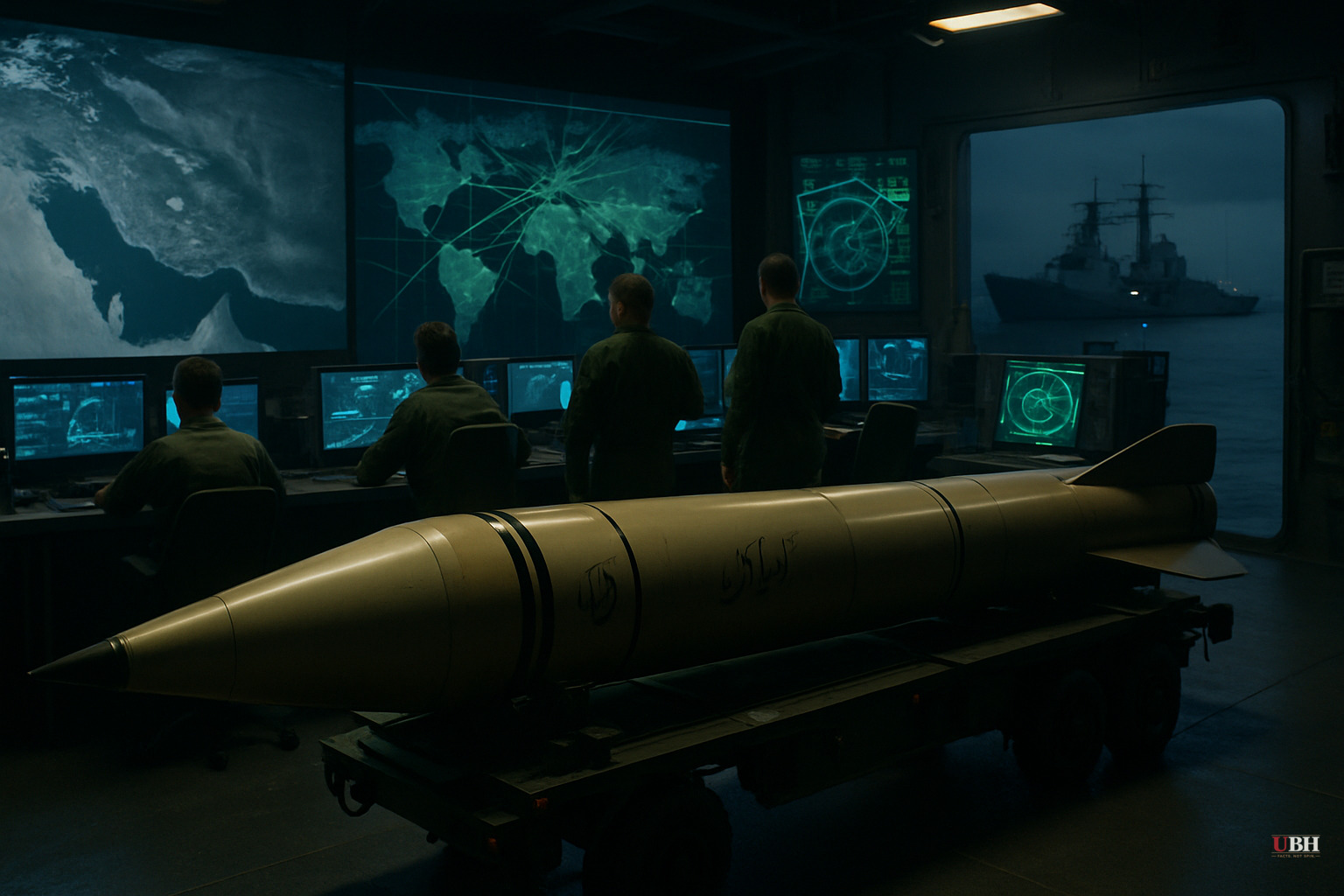
AP News reported this week that Iran's capital is seeing public weapons demonstrations. Missiles displayed at weddings. This isn't accidental. The Iranian government is staging these displays for two audiences simultaneously: its own population, to project strength after three months of getting hammered by U.S. and Israeli strikes, and the outside world, as a warning that Iran still has firepower left.
This is a regime that had its Supreme Leader, Ayatollah Ali Khamenei, killed in the opening strikes on February 28, according to Arab Center Washington DC's analysis published March 2, 2026. His son Mojtaba Khamenei was wounded. The regime is running on fumes of legitimacy. Public weapons displays are what governments do when they need people to believe the state is still strong.
Parking a missile next to a wedding cake doesn't change the military balance. But it signals how rattled Tehran is.
Senate Moves to Clip Trump's Wings
According to AP News and The Washington Post, the Senate advanced a resolution this week aimed at blocking further U.S. strikes on Iran without congressional authorization. Senator Bill Cassidy of Louisiana — who flipped his position after losing his primary — provided a key vote to advance the measure.
This is a war powers fight, plain and simple. Trump launched the February 28 strikes without a formal congressional declaration of war. The Senate is now pushing back.
This is not automatically anti-war. It's a constitutional argument that's been building since the War Powers Resolution of 1973. Congress has been rubber-stamping presidential military action for decades. Some senators are finally deciding enough is enough — and that cuts across party lines.
Trump and Vice President JD Vance have said, according to The New York Times, that progress is being made toward a deal while keeping the threat of renewed strikes on the table. That's called negotiating with a gun in your hand. Whether it works depends entirely on what Iran is willing to concede.
The Ahmadinejad Regime-Change Plot: Confirmed and Moving
Prior reporting flagged the confirmed plot to install former Iranian President Mahmoud Ahmadinejad as a U.S.-backed leader post-regime-change. The New York Times has continued reporting that an Israeli strike was specifically designed to free Ahmadinejad from house arrest in Tehran as part of a coordinated effort to put him in power.
The plan is not gaining traction. The ceasefire is holding in a stalemate — Wikipedia's conflict status explicitly reads "Stalemate." Regime change requires a power vacuum. Right now, Iran's government is wounded but functional enough to display missiles at weddings. Ahmadinejad isn't walking into Tehran as a liberator yet.
What the Coverage Is Missing
Left-leaning outlets — The New York Times, Washington Post, AP — are covering the Senate war powers vote as a win for institutional checks on executive power. Fine. But they are underplaying the casualty data on the Iranian civilian side and barely touching the strategic question of whether the ceasefire can hold without a political framework.
The Arab Center Washington DC analysis makes the legal case that the initial U.S.-Israeli strikes violated Article 2(4) of the UN Charter. That's a legitimate international law argument worth engaging seriously — not dismissing and not uncritically adopting. The U.S. has NOT been attacked by Iran on American soil. The legal justification for the war remains contested and thin.
Right-leaning media, meanwhile, is soft-pedaling the Senate rebellion. This isn't a fringe vote — Cassidy's flip shows the coalition for restraint is growing even among Republicans who just lost primaries and have nothing left to lose politically.
The Strait of Hormuz Problem Nobody Is Solving
The conflict forced the effective closure of the Strait of Hormuz, through which 20 percent of the world's oil supply moves, according to Arab Center Washington DC. The U.S. has a naval blockade in place. There is an ongoing global fuel crisis with documented impact in countries as far as the Philippines.
The ceasefire didn't reopen the Strait. That's the economic story that's getting buried under the weapons-at-weddings imagery and Senate procedural votes.
Every American paying at the pump right now is paying a war tax that nobody in Washington is calling a war tax.
The State of Play
The ceasefire is real but fragile. Iran is performing strength it may not fully have. Congress is belatedly trying to assert authority it should have demanded three months ago. And the Strait of Hormuz remains a choke point with no clear resolution in sight.
This war is not over. It's in halftime. And nobody has shown the American public a plan for what winning actually looks like.
Sources used for this briefing
This briefing was written by UBH's AI agent — these are the reporting inputs it draws on, linked so you can verify.


