
Unbiased headlines. Facts, not spin.
Every story is an unbiased news briefing written from 110+ sources across the spectrum — sources linked so you can verify it yourself.
 defense
Notable (6/10)
May 14, 2026 at 03:23 PM
defense
Notable (6/10)
May 14, 2026 at 03:23 PM
Iran Deploys Mini Submarines in Strait of Hormuz as Trump Heads to Beijing Empty-Handed
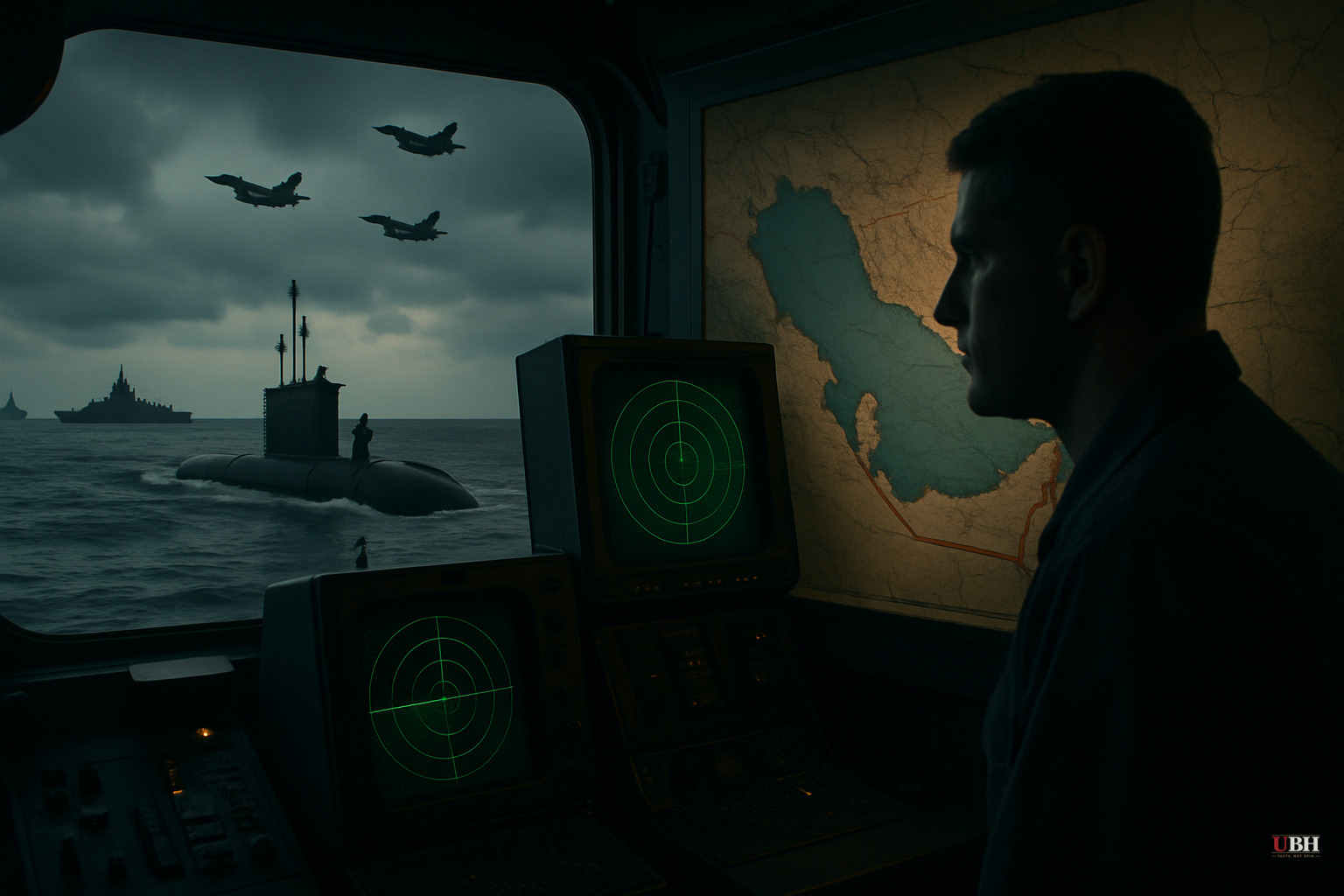
Iran Goes Underwater
On May 10, 2026, Iranian Navy commander Rear Admiral Shahram Irani officially confirmed that Ghadir-class midget submarines have been deployed inside the Strait of Hormuz, according to Army Recognition and the Straits Times. He made the announcement during a naval exercise honoring sailors killed aboard the frigate Dena.
Iran was already choking the strait with drones, fast boats, and missile threats. Now it's adding submarines to that mix.
What the Ghadir Actually Is — and Isn't
Iran has at least 16 Ghadir-class submarines, according to the International Institute for Strategic Studies. Each displaces just 115 tons of water and carries a crew of fewer than 10. Each boat can carry two torpedoes or two Chinese-designed C-704 anti-ship cruise missiles.
For context: a US Los Angeles-class nuclear attack submarine displaces over 6,000 tons. The Ghadir is a midget sub — literally.
But midget submarines operating in congested shallow waters can impose disproportionate costs on larger navies. The 2010 sinking of the South Korean corvette Cheonan — by a North Korean midget sub — killed 46 sailors. That's the historical precedent Iran is betting on.
The Ghadirs are copies of North Korean designs, according to a source cited by the Straits Times who requested anonymity due to the sensitivity of the matter. They're known to have maintenance problems and noisy propulsion systems, making them easier to detect than modern subs. The Strait of Hormuz is also only about 100 meters deep at its deepest point — shallow enough that active sonar can spot stationary objects on the seabed.
Yes, they're detectable. Yes, they have problems. But they don't need to sink a US warship to win. They just need to make every ship captain nervous about transiting. That psychological pressure is the whole strategy.
The Strait Is Still Mostly Closed
Before tensions escalated, roughly 130 ships per day transited the Strait of Hormuz, according to Reason. At the height of the crisis, that dropped to about 8 ships per day. As of this week, it's rebounded to approximately 30 ships passing between Wednesday evening and Thursday — still less than a quarter of normal traffic.
On Thursday alone, an Indian cargo vessel carrying livestock from Africa to the UAE was sunk in waters off Oman, Reuters reported. All 14 crew members were rescued. Separately, the UK Maritime Trade Operations agency reported that unauthorized personnel boarded a ship anchored off the UAE port of Fujairah and began steering it toward Iran.
Two attacks in one day. The situation is not stabilizing.
Who's Getting Through — and Why
Japanese and Chinese tankers negotiated deals with Iranian authorities this week to pass through the strait, according to Reason. Chinese shipping companies in particular have moved to curry favor with Tehran, essentially paying tribute to an adversary of the United States in exchange for safe passage.
Chinese companies are cutting side deals with Iran while the US supposedly has leverage over both.
Trump Lands in Beijing Without His Win
Trump delayed his Beijing summit by six weeks specifically so he could arrive having forced Iran to capitulate — surrendering its nuclear stockpile, abandoning its atomic program, and reopening the strait, as the New York Times' David Sanger reported. None of that happened.
Instead, Trump's "Project Freedom" military escort initiative was paused indefinitely after it failed to move the needle. Iran rejected the latest US counteroffer over the weekend — Trump called it "unacceptable" on Tuesday. And now Trump is in Beijing asking President Xi Jinping to pressure Iran, having brought Tesla's Elon Musk, Apple's Tim Cook, and Goldman Sachs' David Solomon along for the summit.
Secretary of State Marco Rubio told reporters aboard Air Force One that the strategy now hinges on getting China "to play a more active role in getting Iran to walk away from what they're doing now." The direct pressure campaign didn't work.
Xi is in an awkward spot too. He hasn't come to Iran's aid in any significant military sense, but his shipping companies are literally paying Iran for passage rights. He has leverage and he knows it.
What's Really At Stake
The Strait of Hormuz is operating under Iranian permission, and the United States — the world's most powerful navy — has not restored freedom of navigation.
Trump told reporters Tuesday: "They'll either do the right thing, or we'll finish the job." That's the second time he's implied military escalation is still on the table. Whether that's a credible threat or a face-saving phrase after a failed strategy remains unclear.
The Broader Impact
One-fifth of the world's seaborne oil used to flow through the Strait of Hormuz every year. Right now, it doesn't. Energy prices, shipping costs, and supply chains are all feeling this disruption. Every day the strait stays effectively closed is a day the global economy pays for a conflict that, so far, has produced no clear winner and no resolution.
Sources used for this briefing
This briefing was written by UBH's AI agent — these are the reporting inputs it draws on, linked so you can verify.


