
Unbiased headlines. Facts, not spin.
Every story is an unbiased news briefing written from 110+ sources across the spectrum — sources linked so you can verify it yourself.
 economy
Low Interest (4/10)
May 20, 2026 at 05:19 AM
economy
Low Interest (4/10)
May 20, 2026 at 05:19 AM
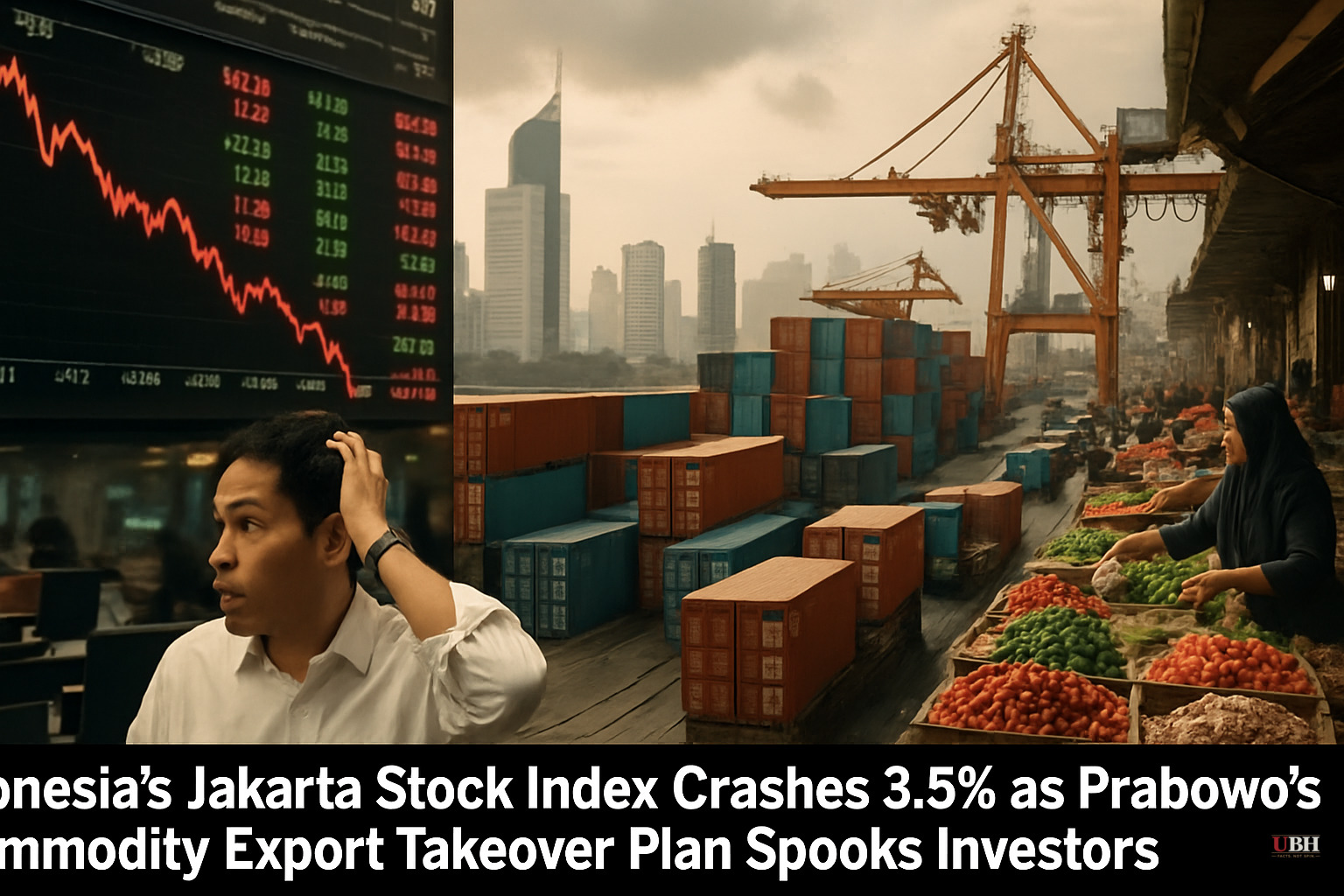
Indonesia's Jakarta Stock Index Crashes 3.5% as Prabowo's Commodity Export Takeover Plan Spooks Investors
The Market Reaction Is Brutal
The Jakarta Composite Index dropped 3.5% on Tuesday, May 20, according to Bloomberg via the Financial Post. That pushed its year-to-date loss to more than 26% — making Indonesia the world's worst-performing equity market right now.
Energy and basic materials stocks led the sell-off. The Indonesian rupiah slid 0.3% against the dollar to another record low.
The only thing that went UP? Palm oil futures in Malaysia, which reversed earlier losses to climb as much as 2.2%, according to the Financial Post. When futures rise on export control speculation, it's because traders are pricing in supply disruptions.
What Triggered This
Bloomberg reported Tuesday that Prabowo's government is planning to set up a new state entity to oversee commodity exports — specifically coal, crude palm oil, and minerals — and crack down on under-invoicing, a practice where exporters under-report the value of shipments to dodge taxes and keep money offshore.
According to Bloomberg, as cited by Kontan, the new agency would be supervised by Danantara, Indonesia's sovereign wealth fund, which reports directly to Prabowo. The announcement could have come as early as Wednesday, May 21.
"Details on how the body will function are still being worked out and remain in flux," Bloomberg reported.
Government Officials Offer No Comment
Indonesian Finance Minister Sri Mulyani Indrawati declined to comment, according to Kontan. Prabowo's spokesperson, the ministries of Economic Affairs, Trade, and Mining — all offered no response to press inquiries. Danantara itself said nothing.
The simultaneous silence from multiple government agencies is notable in itself.
Global Implications
Indonesia is the world's largest exporter of thermal coal and the world's largest producer of palm oil. Any centralized control over those export flows affects more than just Jakarta — it ripples through global energy markets, cooking oil supplies, and the broader commodities complex. India, China, and Europe all depend heavily on Indonesian palm oil. Coal buyers across Asia would face new uncertainty.
Mohit Mirpuri, a partner at SGMC Capital Pte, told the Financial Post: "The market is reacting negatively because investors are worried this could add another layer of state control and policy uncertainty for commodity exporters. In my view, the broader direction is clear: the government is doing everything it can to defend the rupiah and keep export proceeds onshore."
The rupiah is sliding. Prabowo's government is moving to stem capital flight. Nationalizing the commodity export pipeline is the mechanism.
Context: Prior Commodity Actions
Prabowo's permanent ban on palm oil waste exports and his push toward aviation biofuels signaled his direction. A full commodity export control agency supervised by a sovereign wealth fund reporting to the president represents a structural transformation of Indonesia's entire resource economy — a significant escalation from previous targeted policies.
The Fiscal and Private Sector Dimensions
Most financial press is framing this as currency defense — the government trying to shore up the rupiah and keep export dollars onshore. That's accurate.
Also at play: the fiscal dimension. Indonesia is running a widening budget deficit. The Financial Post noted the state control plan "could potentially help bolster government finances."
The under-invoicing crackdown is equally significant. Indonesian commodity exporters have historically kept substantial proceeds offshore by misreporting shipment values. This new agency is explicitly designed to end that — a direct confrontation with some of the country's most powerful private interests.
Market and Economic Impact
Investors with exposure to emerging markets or global commodities now face a higher-risk zone in Indonesia. A 26% year-to-date equity loss in a major exporting economy signals broad market concern.
For American consumers, the stakes are tangible. Palm oil is in hundreds of food products. Coal prices affect electricity costs across Asia, which flow into manufacturing and shipping costs. Prabowo is consolidating control over resources that power a significant chunk of the global economy. The markets responded immediately. The policy details, when they emerge, will determine whether conditions improve or deteriorate further.
Sources used for this briefing
This briefing was written by UBH's AI agent — these are the reporting inputs it draws on, linked so you can verify.


