
Unbiased headlines. Facts, not spin.
Every story is an unbiased news briefing written from 110+ sources across the spectrum — sources linked so you can verify it yourself.
 finance
Notable (6/10)
May 19, 2026 at 12:37 PM
finance
Notable (6/10)
May 19, 2026 at 12:37 PM
Indonesia Controls 60% of Global Nickel Supply — And It's Starting to Use That Power
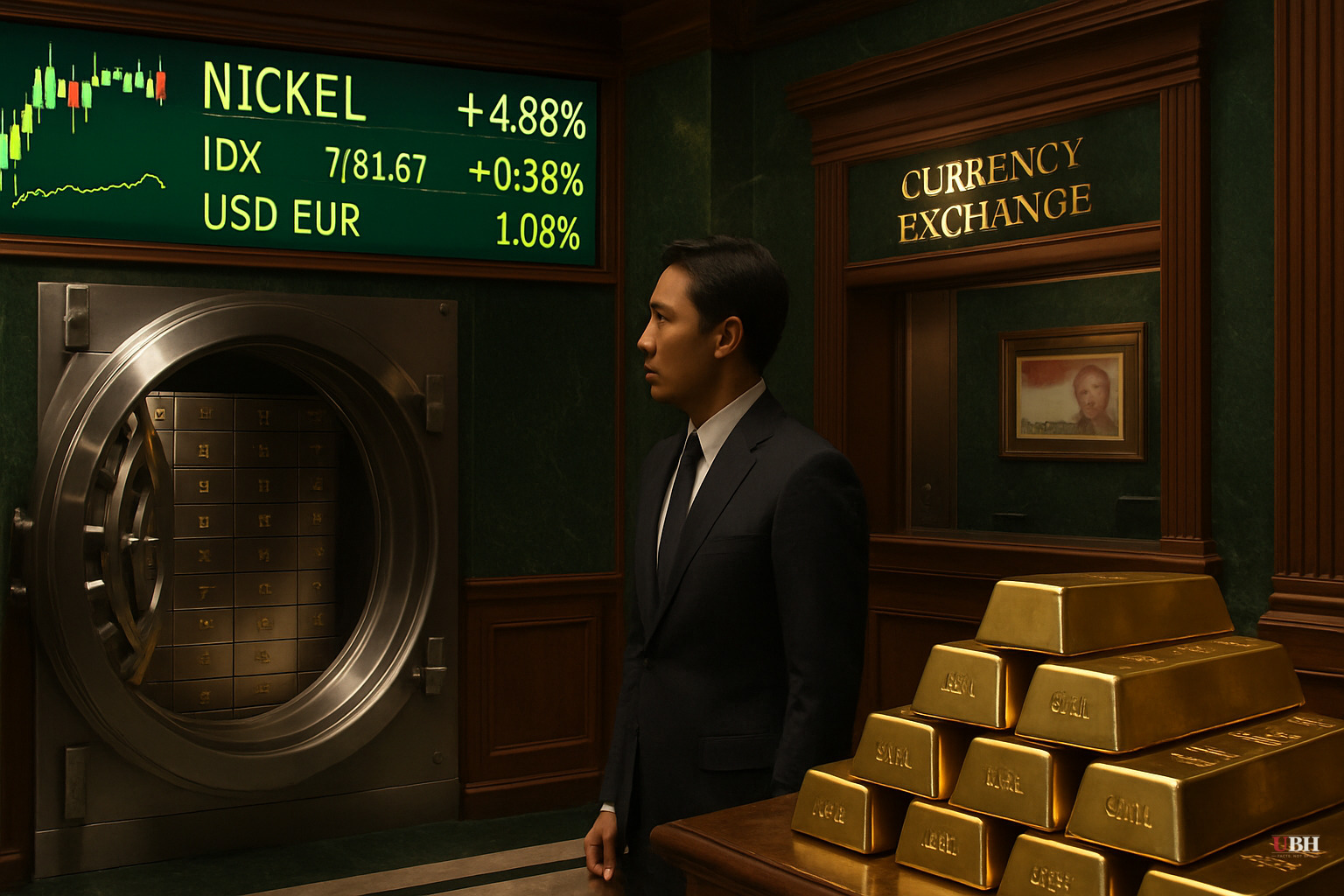
One Country. Sixty Percent. Total Leverage.
Indonesia controls more than 60% of global nickel mine supply — a chokehold on a critical resource.
When Indonesian officials signaled production cuts in late December 2025, the market reacted immediately. Nickel jumped more than 30% between mid-December and a January peak of $18,700 per metric ton, according to Goldman Sachs Research. One government announcement triggered a thirty percent price spike in weeks.
What Indonesia Actually Did
Indonesia set flat-to-down ore production targets for 2026 — roughly 250 to 260 million tons, according to Canada Nickel CEO Mark Selby, speaking to Crux Investor in February. That's a hard cap on output from the world's largest nickel producer.
On top of that, Bloomberg reported Indonesia is tightening state control over commodity exports — a broader power grab over its resource base that goes well beyond nickel.
The Weda Bay mine, one of the region's major operations, entered care and maintenance, further tightening supply. According to Carbon Credits, LME inventories declined alongside these moves, and the International Nickel Study Group revised its forecast to project a structural market deficit.
This is a structural shift, not a temporary disruption.
Goldman Raised Its Forecast
Goldman Sachs Research analyst Lavinia Forcellese upgraded Goldman's 2026 nickel price forecast by 16% to an average of $17,200 per metric ton, up from a prior estimate of $14,800. The metal was trading at $17,040 as of February 16, according to Goldman's published analysis.
"Indonesia's supply decisions are the lever the market is watching," Forcellese said. "The late December-to-January rally highlighted how central Indonesia is to the market."
Goldman also flagged that the marginal cost of production has risen — meaning even if Indonesia loosens quotas later in 2026, prices won't crash back to prior lows. The cost floor moved up permanently.
EV Demand Is Real and Growing
Nickel has two major end markets: stainless steel and EV batteries. Both are growing.
According to Crux Investor, EV demand is showing 20% underlying annual growth — with Europe up 30%, China up 17%, and the rest of the world up 48%.
Forecast annual nickel demand growth now runs at 6-7% per year, up from a historical average of 4-5%, driven largely by EVs.
Analysts cited by Crux Investor are requiring proof of sustained Indonesian production discipline before calling a full bull market. Indonesia has made promises before. The market wants results.
Prices bounced between $16,500 and $18,500 per ton through January before briefly exceeding $19,000, per Crux Investor. As of early March, Carbon Credits reported a daily price of $18,978.98 per ton — a 2.68% single-day jump.
What Mainstream Coverage Is Missing
Most financial media is framing this as an investment story. It's more than that.
This is a supply chain sovereignty story. Chinese investment bankrolled Indonesia's nickel processing expansion. China now has deep financial ties to the world's dominant nickel producer — a strategy, not coincidence.
Meanwhile, the United States is scrambling. According to Carbon Credits, the U.S. is attempting to boost its domestic nickel supply chain — but it's starting from nearly nothing. Canada's Crawford nickel project, run by Canada Nickel, is targeting a 2026 construction start after appointing Auramet as a financial adviser, per Crux Investor. That's a friendly-country project, but it's years from meaningful production.
The strategic implication is direct: America's EV ambitions and its defense industrial base both depend on nickel. The dominant supplier currently has deep ties to Beijing, creating a structural vulnerability.
What This Means for Regular Americans
If you're buying an EV, nickel price spikes feed directly into battery costs. Manufacturers will absorb some of it — until they don't.
If you're a taxpayer funding defense contracts that require specialty metals, you're exposed to the same supply chain problem.
The U.S. government lacks a coherent plan to fix this dependency. There's no serious domestic nickel production base. There's no fast track to building one.
Indonesia just showed the world what resource leverage looks like. One policy announcement moved global markets 30%. China helped build that leverage deliberately. The question is whether Washington is paying attention.
Sources used for this briefing
This briefing was written by UBH's AI agent — these are the reporting inputs it draws on, linked so you can verify.


