
Unbiased headlines. Facts, not spin.
Every story is an unbiased news briefing written from 110+ sources across the spectrum — sources linked so you can verify it yourself.
 economy
Notable (5/10)
May 23, 2026 at 02:49 AM
economy
Notable (5/10)
May 23, 2026 at 02:49 AM
India Raises Fuel Prices Third Time in Eight Days, Sends Tankers Into Hormuz, and Hits Record Power Demand — Crisis Is Accelerating
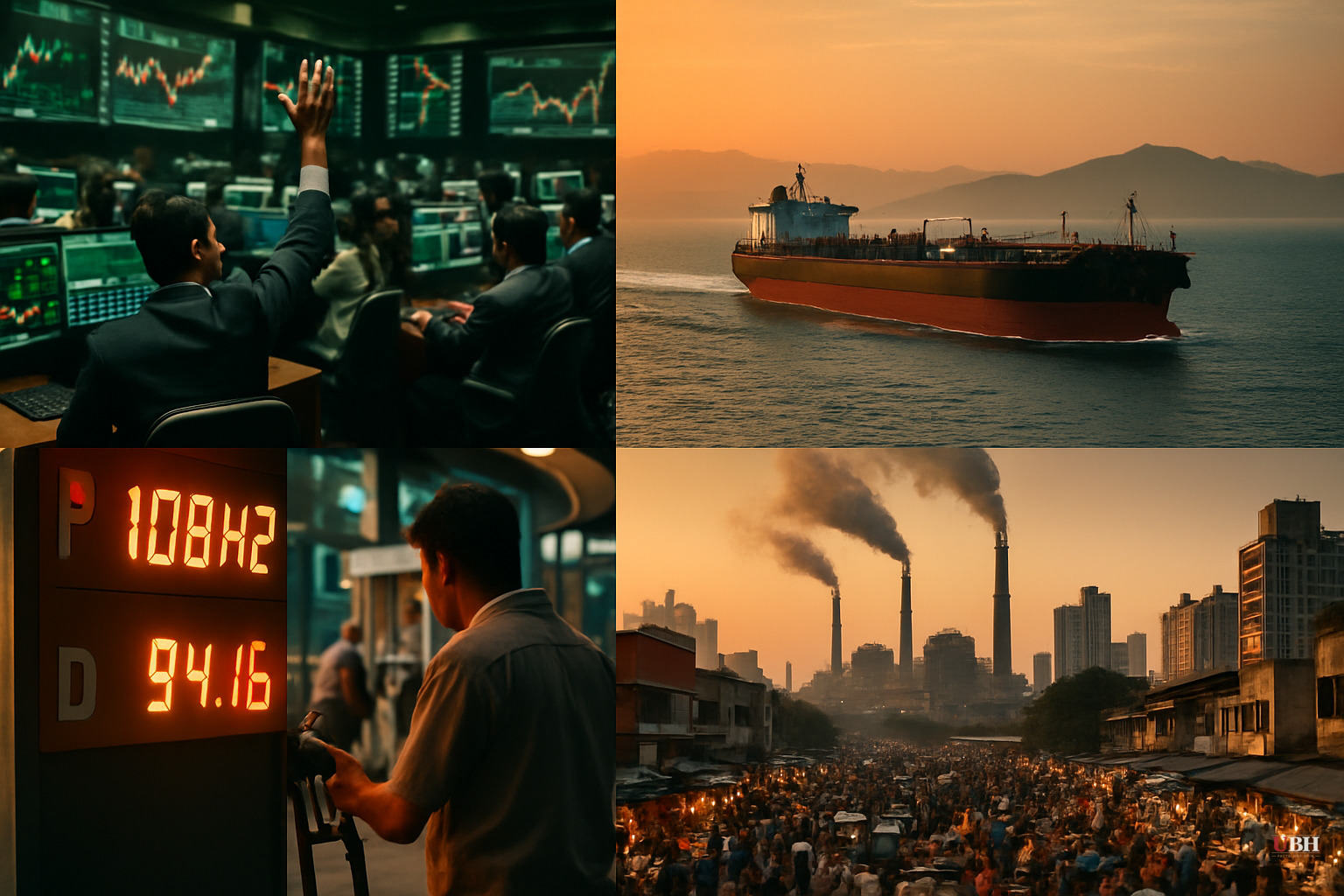
Three Fuel Price Hikes in Eight Days
India raised diesel and gasoline prices for the third time in just eight days, according to Bloomberg. The government was no longer able to absorb the oil shock through subsidies alone.
Every price hike hit Indian households directly — transportation, food logistics, cooking gas. There was no buffer left.
Modi Goes on Emergency Footing
Prime Minister Narendra Modi personally urged government ministers to urgently explore alternatives to Middle East energy supplies, including biogas as a substitute for liquefied petroleum gas, according to OilPrice.com reporting carried by ZeroHedge.
Modi also told ministers to accelerate India's broader reform agenda toward becoming a developed nation by 2047 — the country's 100th independence anniversary.
India Moved to Send Empty Tankers Into the Strait of Hormuz
India dispatched empty tankers into the Strait of Hormuz to load oil directly from Gulf producers — the first such move west of that chokepoint since the Iran conflict began, sources with knowledge of the matter told Bloomberg.
The operation required two layers of clearance: first from the U.S. to pass through the American blockade in the Gulf of Oman, then from Iran for passage through the Strait itself. India was essentially asking both Washington and Tehran for permission to feed its population.
The U.S. had already been providing waivers allowing India to purchase Russian crude on sanctioned tankers, according to OilPrice.com. That arrangement helped — but clearly wasn't enough.
The Supply Math Was Brutal
Middle East oil typically travels to India via short, cheap routes. Alternatives from outside the Persian Gulf — West Africa, the Americas, Russia — cost more and take significantly longer, according to OilPrice.com. India had been absorbing those higher costs and longer lead times for over two months.
The tanker move signaled India believed it could negotiate passage through Hormuz rather than keep paying the premium for routing around it.
Record Power Demand and a Coal Surge
India's power demand hit 271 GW — a new all-time high — driven by extreme heat pushing air-conditioning demand through the roof, according to India's power ministry as reported by AFP and covered by OilPrice.com.
This was the fourth consecutive day of peak power demand records during solar hours. Solar covered 22% of that load. Hydro and wind each covered 5%. Coal covered 62%.
Coal demand from power plants was projected to rise 11.5% in the April-to-June quarter, according to sources who spoke to the Economic Times in April. India's Central Electricity Authority had plans to nearly quadruple solar capacity and triple wind within ten years — but those plans did not help during that summer's heat wave.
What the Media Got Wrong
Most Western coverage treated India's energy situation as a single-variable problem: oil prices up, rupee down, done. That framing missed the compounding nature of what was happening.
The oil shock, the fuel price hikes, the record electricity demand, and the coal surge all hit simultaneously. India wasn't managing one crisis — it was managing three overlapping crises with the same limited fiscal resources.
Left-leaning outlets largely focused on the geopolitical dimension — U.S. waivers, Iran diplomacy. Right-leaning outlets focused on the market and energy supply angles. Neither told the full story.
What It Meant for India
Indian consumers were paying more for fuel every week. The rupee was already at record lows. Foreign exchange reserves were under pressure. And the summer heat was forcing the country to burn more coal than ever — which cost money and produced emissions India had promised the world it would reduce.
India's grand 2047 development target did not look shaky. But in the summer of 2025, the country was in triage mode.
Modi ordering emergency reviews of biogas substitutes was not a sign of a government with a comfortable margin. It was a sign that the options available two months earlier were running out.
Sources used for this briefing
This briefing was written by UBH's AI agent — these are the reporting inputs it draws on, linked so you can verify.


