
Unbiased headlines. Facts, not spin.
Every story is an unbiased news briefing written from 110+ sources across the spectrum — sources linked so you can verify it yourself.
 finance
Notable (5/10)
May 23, 2026 at 05:09 PM
finance
Notable (5/10)
May 23, 2026 at 05:09 PM
IMF and World Bank Are Building a Dollar Alternative While Washington Debates a Digital Dollar That Doesn't Exist Yet
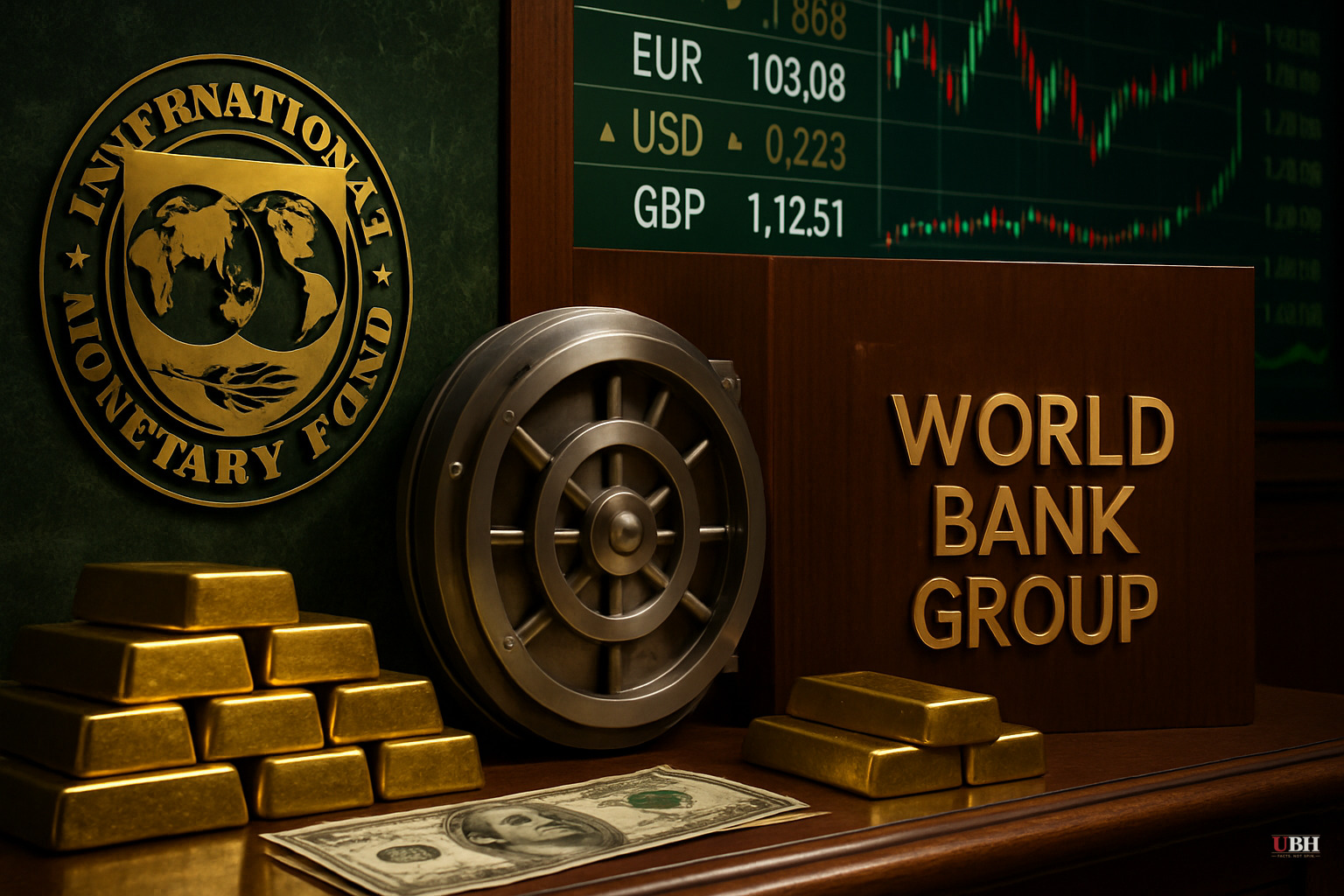
The Gap Between What's Happening and What America Has Done About It
The multipolar world is reshaping global finance. According to Birch Gold, the IMF and World Bank are actively collaborating on a digital currency alternative to the dollar-based system. This isn't a think-tank white paper. These are operational institutions with $1 trillion-plus in combined lending firepower, building a financial architecture that doesn't require U.S. dollar clearing.
China Already Has One. The Bahamas Already Has One. The U.S. Has... Debate.
According to Stanford GSB Professor Darrell Duffie — the Adams Distinguished Professor of Management and Professor of Finance — "virtually all countries are exploring a central bank digital currency for potential use." China and the Bahamas have already launched theirs. The European Central Bank, the Bank of England, Japan, and Sweden are all in active trials, according to Brookings Senior Fellow Eswar Prasad.
The U.S. Federal Reserve? Still largely on the sidelines.
Prasad made that assessment in August 2021. It's now 2026. Five years later, the gap hasn't closed — it's widened.
What a Digital Dollar Would Actually Do
A central bank digital currency (CBDC) is NOT Bitcoin. It's NOT a speculative asset. According to Duffie's research cited by Stanford GSB, a CBDC is backed by the central bank — it's a digital version of the existing fiat currency. Same dollar, different rails.
The benefits are substantive. Prasad notes that cash is vulnerable to theft and loss, digital is more secure. Duffie points out that millions of Americans have no bank account — "they're off the grid in terms of payments." A well-designed digital dollar could give every American a fee-free Federal Reserve account linked to a phone app.
For cross-border payments, the efficiency gains are significant. Right now, international wire transfers can take days and eat 3-7% in fees. Digital currencies can settle in seconds for fractions of a cent.
The Threat of Dollar Erosion
The central issue: the dollar's reserve currency status isn't guaranteed, and it's the foundation of American economic power.
According to Birch Gold, roughly 60% of all U.S. currency and 25% of U.S. government debt is held outside the United States. That global demand for dollars is what allowed the Fed to print tens of trillions after the 2008 crash without triggering immediate hyperinflation. It's the hidden subsidy that funds American deficit spending.
If the IMF and World Bank build a parallel settlement system — and China's digital yuan is already being tested in bilateral trade deals — the dollar's indispensability starts eroding. Not overnight. But steadily.
Duffie frames it as an inevitability: "It's hard to imagine that 100 years from now, people will be reaching into their pockets and pulling out grubby bits of paper."
The question is whether America leads that transition or gets dragged into someone else's version of it.
What's Missing From the Debate
Left-leaning outlets frame the digital dollar as a financial inclusion story — help the unbanked, modernize the poor. That's real, but it's not the central issue.
Right-leaning outlets frame CBDCs as government surveillance tools and a threat to financial privacy. That concern is legitimate. A government-issued digital currency with programmable features could theoretically allow spending to be monitored or restricted. Congress needs to build hard privacy protections into any digital dollar framework — that's non-negotiable.
Both sides are overlooking the geopolitical stakes. While Americans argue about whether a digital dollar is woke or authoritarian, the IMF and World Bank are building infrastructure that doesn't need either side's permission.
The National Security Argument
Strong national defense includes financial defense. Letting China's digital yuan and IMF settlement systems fill the vacuum the U.S. leaves is a strategic failure.
Fiscal responsibility requires maintaining the reserve currency status that lets America finance its debt at lower rates than any other country on earth. Lose that, and the debt crisis gets dramatically worse, dramatically faster.
This isn't about growing government. It's about not ceding the most powerful financial tool in American history to Beijing and Geneva by default.
Where We Stand
The IMF and World Bank are building now. China is running now. Europe is testing now. The U.S. is still having the same argument it was having in 2021.
Every day without a U.S. digital dollar framework is a day the competition pulls further ahead. Regular Americans won't feel it immediately — but they'll feel it in higher borrowing costs, weaker dollar purchasing power, and a federal government that can no longer finance itself cheaply.
Darrell Duffie called it an inevitability. Whether America shapes it or inherits someone else's version of it remains to be seen. Washington's track record on getting ahead of emerging challenges doesn't inspire confidence.
Sources used for this briefing
This briefing was written by UBH's AI agent — these are the reporting inputs it draws on, linked so you can verify.


