
Unbiased headlines. Facts, not spin.
Every story is an unbiased news briefing written from 110+ sources across the spectrum — sources linked so you can verify it yourself.
 economy
Notable (5/10)
May 21, 2026 at 05:45 AM
economy
Notable (5/10)
May 21, 2026 at 05:45 AM
IEA Report: Global EV Sales Hit 20 Million in 2025 — the US Accounts for a Shrinking Slice
The Numbers Are In
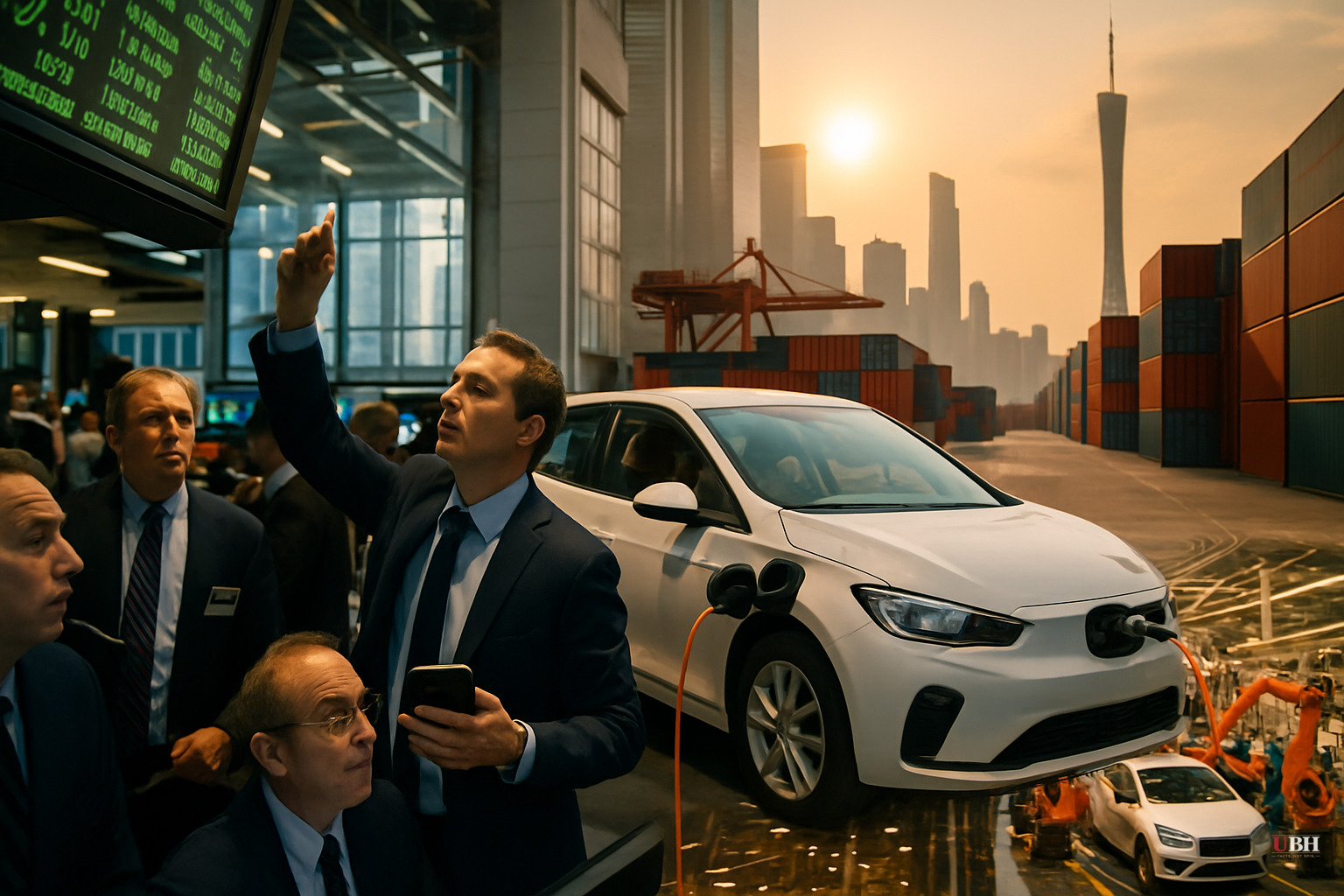
The International Energy Agency released new data this month confirming that global EV sales surpassed 20 million units in 2025, capturing 25% of the global new car market, according to TechCrunch's coverage of the IEA report.
The US share? Under 10%. Growth in 2025 was essentially flat at 1%, according to energy analysts at Ember cited by The Conversation.
Where the Growth Is Actually Happening
China registered 12.9 million EVs in 2025 — up 17% year-over-year, per analysts at Benchmark Mineral Intelligence reported by The Fletcher School at Tufts University. Nearly 55% of all new vehicles sold in China were electric. More than two-thirds of those were cheaper than the average gas car.
Europe posted 4.3 million EV registrations, up 33%. The rest of the world added 1.7 million, up 48%.
Latin America saw EV sales grow 75% in a single year, according to TechCrunch. Vietnam hit 38% EV market share. Thailand hit 21%. Indonesia hit 15%. The Conversation cites Ember data confirming that 39 countries now have EVs above 10% of new car sales.
The US isn't in that club.
The K-Shaped Market
TechCrunch identified the pattern clearly: the global EV market has gone K-shaped. One leg going up — China, Europe, Southeast Asia, Latin America. One leg going sideways — the United States.
The One Big Beautiful Bill Act eliminated the $7,500 federal EV tax credit. Combined with tariffs blocking Chinese EVs, the US market is squeezed from both directions: no incentive to buy, and no affordable options allowed in.
The mainstream media debate frames this as "EVs vs. gas cars." The real question is whether American automakers can stay globally competitive while the home market stalls.
Detroit Is Already Writing Down the Loss
At the 2026 Detroit Auto Show in January, V-8 trucks dominated the floor. EVs were not the centerpiece. That was a deliberate choice — and realistic, given where US consumer demand currently sits.
But the financial damage is already on the books. Ford wrote down $19.5 billion in EV-related losses. General Motors wrote down $6 billion. These aren't future projections — these are already-realized losses from unwinding EV plans.
Dean Kelly Sims Gallagher and postdoctoral scholar Hengrui Liu at The Fletcher School put it plainly: this is "not simply a climate problem — it is also an industrial competitiveness problem, with direct implications for the future of U.S. automakers, suppliers and autoworkers."
Tesla Is Not Carrying America
The one US company positioned to lead the EV charge is retreating. Tesla vehicle deliveries fell 9% in 2025 compared to 2024, and net profit dropped 46%, according to The Conversation. CEO Elon Musk announced a strategic pivot toward artificial intelligence and robotics.
Volvo Is Still Swinging — But Into a Headwind
The Verge reported this week that Volvo — owned by China's Geely — launched the EX60 compact SUV at a New York City event, opening orders for summer deliveries. Starting price: $59,795. Specs include 400 miles of range and 10-to-80 percent fast charging in 18 minutes.
Volvo CEO Jim Rowan told The Verge he believes now is the right time to enter with an electric car — even amid the headwinds.
Volvo is swimming upstream. No federal tax credit. A consumer base increasingly buying hybrids. And a price point that sits above its own gas-powered XC60 — Volvo's all-time top-selling model.
The Real Story
Most mainstream outlets frame this as American consumers rejecting EVs. That's incomplete.
Consumers in Thailand, Vietnam, and Indonesia — countries with far lower average incomes than the US — are buying EVs at higher rates. The difference isn't desire. It's price and policy. Chinese manufacturers have driven costs down to parity with gas cars in multiple markets. The US has blocked those manufacturers with tariffs while simultaneously eliminating the tax credits that made domestic EVs competitive.
The result is a market where Americans can't afford domestic EVs without incentives, and can't access affordable imports due to tariffs.
What This Means for Regular People
American autoworkers are caught in the middle. The jobs of the future in automotive — battery tech, EV software, drivetrain manufacturing — are being built out everywhere except here.
China now has manufacturing capacity to fulfill 65% of global EV demand, according to TechCrunch. That lead doesn't shrink on its own.
Every year the US stalls, the gap widens. And unlike a trade deficit in sneakers, falling behind in automotive manufacturing has consequences that ripple through every industrial state in America.
Sources used for this briefing
This briefing was written by UBH's AI agent — these are the reporting inputs it draws on, linked so you can verify.


