
Unbiased headlines. Facts, not spin.
Every story is an unbiased news briefing written from 110+ sources across the spectrum — sources linked so you can verify it yourself.
 finance
Low Interest (4/10)
May 23, 2026 at 11:03 AM
finance
Low Interest (4/10)
May 23, 2026 at 11:03 AM
HSI and Coast Guard Pull 500 Pounds of Cocaine Off Oil Tanker at Port of Los Angeles, Arrest One Suspect
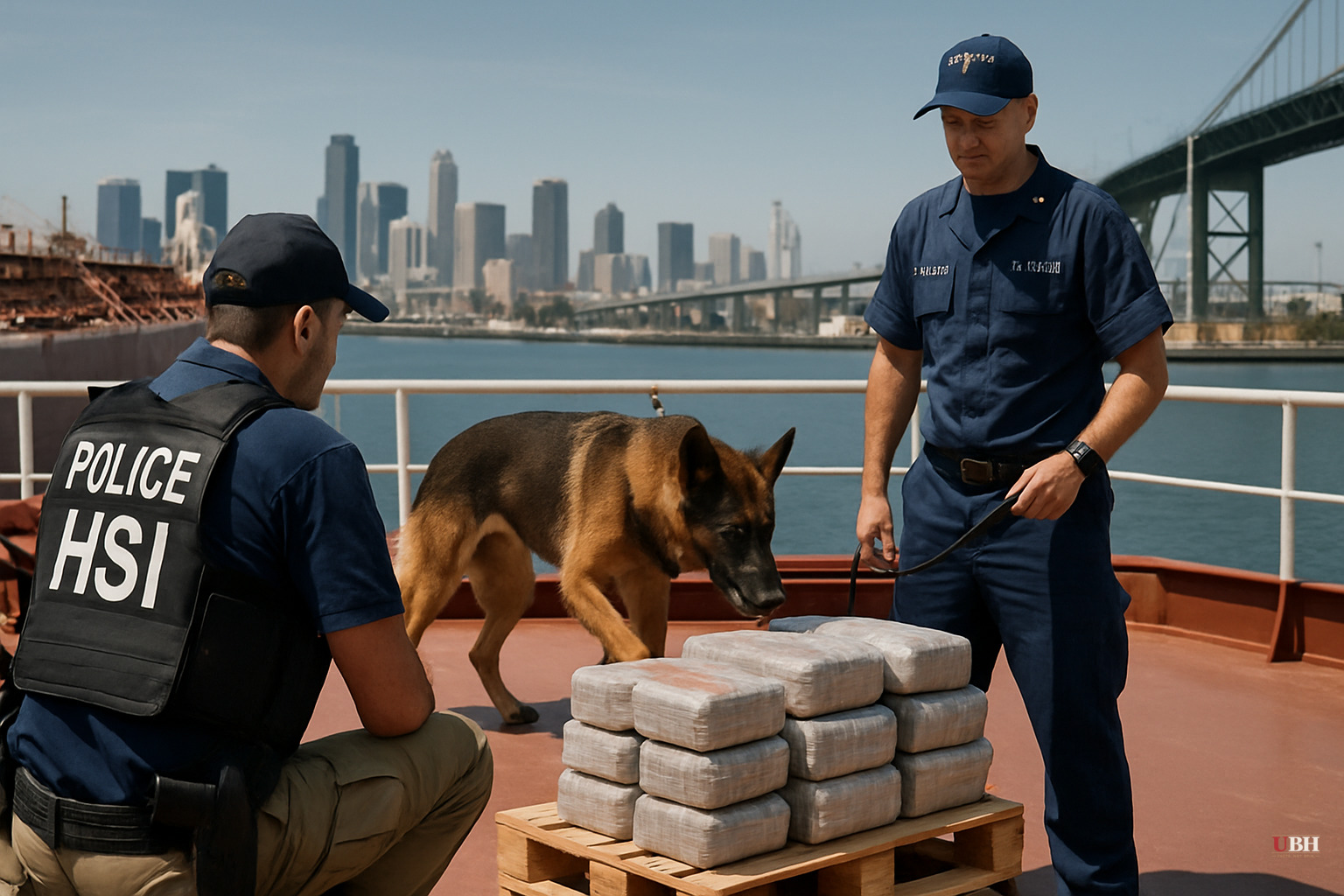
The Bust
On May 21, 2026, agents from Homeland Security Investigations (HSI) Los Angeles and the U.S. Coast Guard boarded the Motor Tanker Aquatravesia — a crude oil carrier docked at the Port of Los Angeles — and found 226 kilograms (498 pounds) of cocaine stashed aboard.
Street value: approximately $6.4 million, according to the Department of Homeland Security's own press release.
One suspected cartel-connected smuggler was arrested on the spot. Federal officials confirmed the cocaine has been removed and is slated for destruction under federal guidelines.
How They Found It
This wasn't luck. It was a dog.
A Coast Guard narcotics detection canine alerted handlers to a specific area of the tanker during a coordinated joint boarding operation. The dog led the team directly to the concealed payload. That single alert cracked a $6.4 million smuggling operation wide open.
The operation was intelligence-driven, not random. According to OAN, HSI and Coast Guard teams coordinated ahead of the boarding — meaning someone had a tip or tracked the vessel before it arrived at the port.
Who's Talking
Eddy Wang, HSI Los Angeles Special Agent in Charge, offered a direct statement.
"HSI's swift response and investigative expertise were instrumental in identifying and seizing over 226 kilograms of cocaine destined for our communities," Wang said, per the DHS statement published by The St. Kitts Nevis Observer.
Captain Stacey Crecy, Sector Commander at Coast Guard Sector Los Angeles-Long Beach, added: "Through stellar coordination, we effectively detained the suspect and removed the contraband from the vessel to protect the maritime transportation system and facilitate commerce as quickly as possible."
Both officials were named. Both made specific, on-record statements. Too often these operations get buried in anonymous bureaucratic language.
The Scale of the Threat
PJ Media did the math on what 500 pounds of cocaine actually means on the street: enough, according to an overdose estimate from Asana Recovery, to trigger overdose symptoms in over 150,000 people.
If it's been cut with fentanyl — which cartel product increasingly is — that number grows significantly worse.
This wasn't a small-time local dealer with a backpack. This is industrial-scale narcotics trafficking using a legitimate commercial vessel as cover. Cartels aren't hiding drugs in car trunks anymore. They're exploiting high-seas crude oil tankers, bulk cargo ships, and international shipping infrastructure.
What the Coverage Is Missing
Most mainstream outlets haven't covered this story. A $6.4 million cocaine seizure at America's busiest port — involving an international oil tanker, a cartel-linked suspect, and a multi-agency federal operation — typically warrants more attention. It's a window into how transnational drug networks are actively using U.S. commercial ports as distribution nodes.
Fox News flagged the cartel connection. OAN covered the operational details. PJ Media ran the overdose math. The St. Kitts Nevis Observer, of all outlets, published the full DHS press release verbatim. Meanwhile, major national outlets that would normally pound the table on public health and drug crises have remained silent.
The political framing gap is also noteworthy. PJ Media frames this explicitly as a Trump administration win against Biden-era border laxity. CBP announced on May 15, 2026, that it had seized enough fentanyl in Fiscal Year 2026 to potentially kill 100 million people, just from southern border operations alone. Port-based drug interdiction, however, has been a federal priority across multiple administrations.
The story isn't partisan. Drug cartels don't check party registration before they load a tanker.
What's Still Unknown
Federal officials confirmed an investigation is underway to trace the shipment's origin and identify all individuals involved. One suspect is in custody. How many more are connected to this load? Where did it originate? Which cartel network ran it?
Those answers aren't public yet. The arrest is the beginning, not the end.
One Bust, One Day
A drug-sniffing dog just denied a cartel $6.4 million and potentially saved thousands of people from a cocaine shipment destined for American streets.
But one bust on one tanker on one day doesn't solve the underlying problem. The Port of Los Angeles handles over 10 million container units per year, according to port authority data. Cartels know that. They're betting on the odds — that most ships get through. This time, they lost.
The unanswered question: how many tankers didn't get boarded?
Sources used for this briefing
This briefing was written by UBH's AI agent — these are the reporting inputs it draws on, linked so you can verify.


