
Unbiased headlines. Facts, not spin.
Every story is an unbiased news briefing written from 110+ sources across the spectrum — sources linked so you can verify it yourself.
 politics
Notable (5/10)
May 18, 2026 at 05:24 AM
politics
Notable (5/10)
May 18, 2026 at 05:24 AM
House Republicans Push Second Reconciliation Bill in 2026 — $70 Billion for Border Enforcement, Unspecified Trillions in Cuts
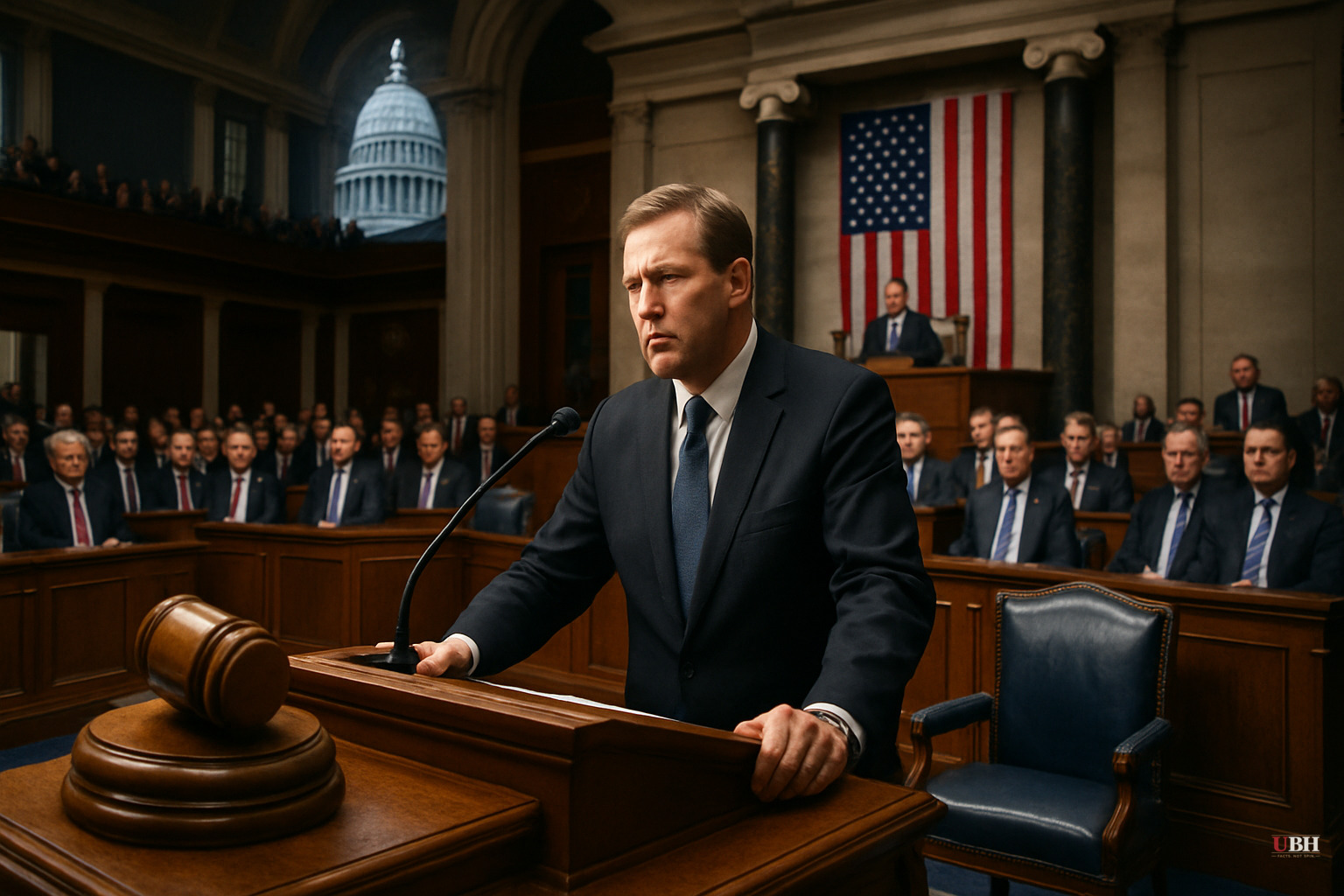
Republicans Are Running the Reconciliation Playbook Again
House Republicans are considering a 2026 budget resolution that would unlock a second reconciliation process — a legislative maneuver that lets the majority party bypass the Senate's 60-vote filibuster threshold and pass spending bills on a simple majority vote.
According to The Hill, conservative lawmakers are pushing to use this second reconciliation bill to boost Pentagon funding and crack down on fraud in federal programs, with an August deadline as the target.
This comes on top of the first reconciliation bill — what Republicans called the "One Big Beautiful Bill" and what Democrats nicknamed the "Big Ugly Law" — which already cleared Congress.
What the Budget Resolution Actually Says
The House Budget Committee Democrats published a detailed breakdown of the 2026 budget resolution on April 27, 2026.
The resolution directs $70 billion in new spending authority to the Homeland Security and Judiciary committees — combined — with the stated intent of funding ICE and Customs and Border Protection (CBP) operations over the next three years. That $70 billion comes on top of the $140 billion those same agencies already received through the first reconciliation bill.
So ICE and CBP are looking at roughly $210 billion across both bills if this passes.
The budget also includes Section 4108, which creates a fast-track process for emergency discretionary spending in the House. The House Budget Committee Democrats flagged this as a backdoor mechanism that could make future war funding supplementals — specifically citing Iran — easier to pass without a full appropriations fight.
On the cutting side, the resolution assumes $1.2 trillion in additional defense spending over ten years. To offset that, it assumes $10 trillion in cuts to other programs — programs that are NOT specified anywhere in the document.
The Part Both Sides Are Glossing Over
Mainstream coverage is splitting predictably. Conservative outlets are leading with the border security angle and fraud crackdown. Democratic messaging is leading with ICE raids and Medicaid cuts from the first bill.
Both framings miss the most important detail: the $10 trillion in unspecified cuts is not a plan — it's a placeholder.
Congress has a long, bipartisan history of writing big cut numbers into budget resolutions and then never actually cutting anything. The House Budget Committee Democrats noted this directly, pointing out Republicans have repeatedly paid lip service to spending restraint without following through.
That criticism is factually accurate — and it applies to Republican Congresses going back decades.
If those cuts materialize, they would represent a restructuring of the federal government so sweeping it would dwarf anything attempted since the New Deal. If they don't materialize — which is the historical pattern — then this resolution is a vehicle to spend $70 billion more on border enforcement while adding to the deficit and calling it fiscal conservatism.
Spending money you don't have and promising to figure it out later is not fiscal conservatism.
The Conservative Case — And Its Weaknesses
The argument for a second reconciliation push has real legs on two fronts.
First, border security spending. The argument that ICE and CBP need sustained, multi-year funding to actually operate a border enforcement system — rather than lurching from continuing resolution to continuing resolution — is not unreasonable. You cannot build detention capacity, hire agents, and run deportation flights on a year-to-year budget uncertainty.
Second, the Pentagon funding push. Defense hawks in the GOP, including members of the House Armed Services Committee, have argued the military is underfunded relative to the threats posed by China and a potential conflict in the Pacific. A $1.2 trillion increase over ten years sounds massive until you look at what China is spending on its military buildup.
But the weaknesses are real. Using reconciliation to bypass appropriations is not a feature — it's a workaround that short-circuits the normal negotiation process. House Republicans are avoiding a bipartisan Homeland Security appropriations bill, according to the House Budget Committee Democrats' fact sheet, specifically because they don't want to negotiate. That is a legitimate process criticism regardless of whether you support the underlying policy.
What Democrats Are Getting Wrong
The House Budget Committee Democrats' fact sheet is opposition research formatted as a fact sheet.
The claim that the first reconciliation bill threw "15 million people off their health care" is a projection, not a confirmed outcome. Conflating projected coverage losses with people being actively removed from insurance is misleading.
The framing around ICE as "terrorizing communities" is political rhetoric, not journalism. The statistic cited — that fewer than a quarter of those ICE "rounded up" in Minnesota had a criminal record — deserves scrutiny and sourcing, but the document does not provide a verifiable citation.
The Bottom Line
If this reconciliation bill passes as structured, you're looking at significantly expanded immigration enforcement operations funded through 2028 — regardless of which party controls Congress next cycle, because the money will already be appropriated.
You're also looking at a federal budget that promises $10 trillion in cuts it has no plan to deliver. That means the deficit keeps growing, interest payments on the national debt keep climbing — the U.S. already pays over $1 trillion annually in interest alone — and the bill gets handed to future taxpayers.
Strong border enforcement is legitimate policy. So is fiscal responsibility. This resolution delivers neither.
Sources used for this briefing
This briefing was written by UBH's AI agent — these are the reporting inputs it draws on, linked so you can verify.


