
Unbiased headlines. Facts, not spin.
Every story is an unbiased news briefing written from 110+ sources across the spectrum — sources linked so you can verify it yourself.
 economy
Low Interest (4/10)
May 21, 2026 at 07:05 AM
economy
Low Interest (4/10)
May 21, 2026 at 07:05 AM
High Gas Prices Are Reshaping Consumer Behavior — From Cosmetics Rollbacks to Muscle Truck Bets
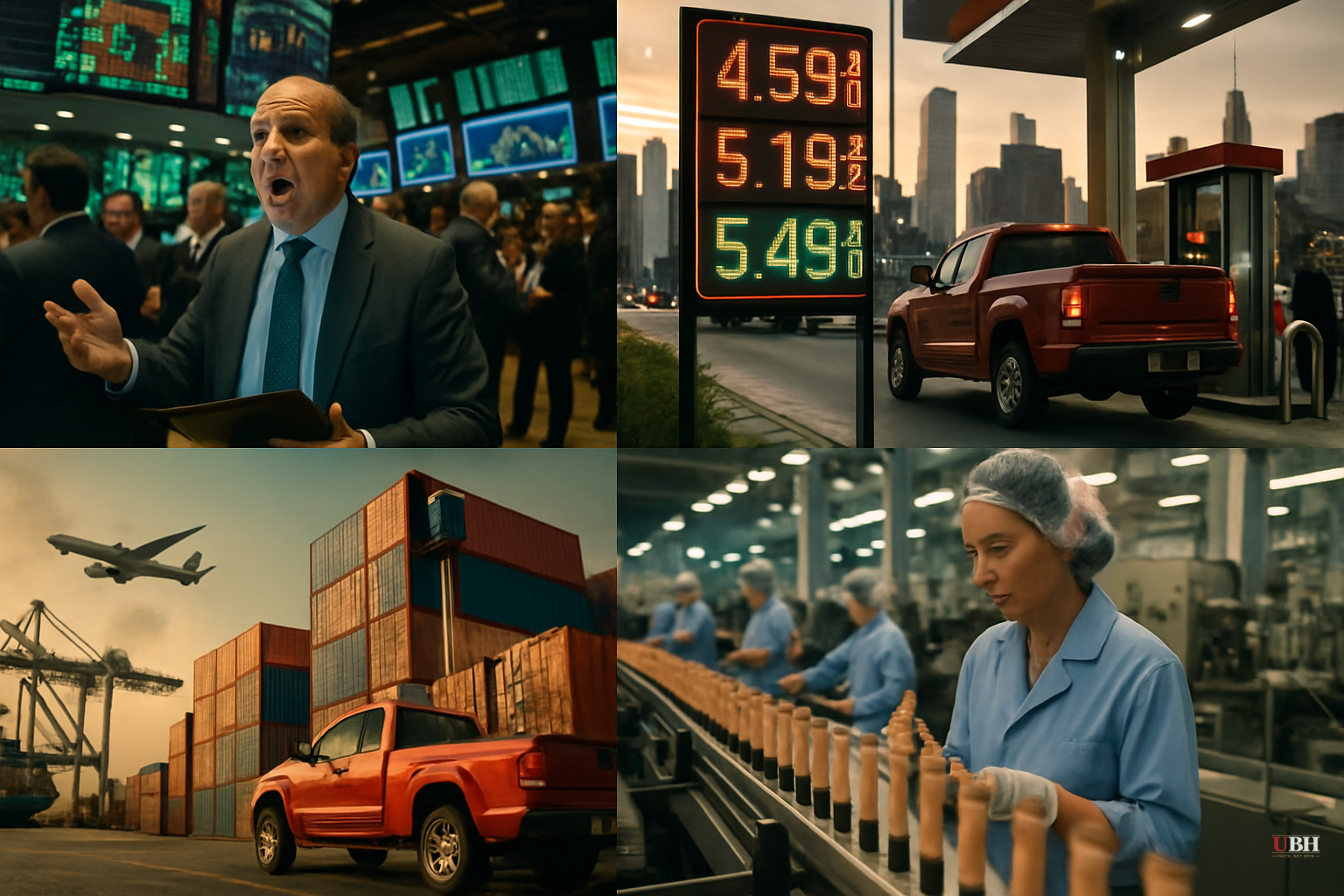
The New Numbers: It's Not About California
Everyone fixates on California's $6.10 gas. That's the wrong number to watch.
According to SmartAsset and AAA data compiled by Visual Capitalist's Bruno Venditti and reported by ZeroHedge, West Virginia ranks as the most gas-burdened state in America — not California. A standard 15-gallon fill-up in West Virginia consumes 5.2% of median weekly household income. That's with a gas price of $4.30, well below California levels.
The math is simple and brutal. West Virginia's median weekly household income is $1,233. California's is $2,031. Even at $6.10 per gallon, a California fill-up eats 4.5% of weekly income. West Virginia's cheaper gas still hits harder because the paychecks are smaller.
The states getting destroyed at the pump right now aren't the coastal elites — they're Ohio ($4.89, 5.0% burden), Michigan ($4.87, 5.0%), Indiana ($4.83, 5.0%), and Mississippi ($3.88, 4.9%). These are working-class, middle-American states where $4+ gas isn't a political talking point. It's a week's worth of groceries.
Mainstream media coverage keeps headlining California's nominal price, while overlooking who's actually suffering most.
E.l.f. Beauty Blinks First
The consumer stress is showing up directly in corporate earnings rooms.
E.l.f. Beauty CEO Tarang Amin told CNBC this week that the company is walking back tariff-fueled price increases after demand dropped harder than expected. "We've seen units drop off a bit more in the last few months as consumers have particularly been suffering with higher costs," Amin said directly.
E.l.f. raised prices by $1 across its entire product assortment last August. That was the tariff response. Now they're reversing course.
The proof point: E.l.f. tested a $4 price reduction on its $18 Halo Glow skin tint. Sales volume jumped nearly 40%. Amin called consumer sensitivity on pricing right now "significant." A 40% unit lift from dropping price by $4 suggests demand was being artificially suppressed by the higher price tag.
E.l.f. still beat Wall Street expectations for Q4, posting $449 million in revenue versus $423 million expected, and 32 cents adjusted EPS against 29 cents projected, according to CNBC. Stock rose about 7% in after-hours trading Wednesday.
But the forward guidance was soft. And the company posted a net loss of $49.4 million in the quarter, compared to net income of $28.3 million in the same period last year. That reversal matters.
E.l.f. sells budget cosmetics — the affordable option people turn to when money is tight. If even the budget brand is seeing unit declines, the consumer squeeze is real and broad.
Stellantis Bets Against the Trend
Not everyone is retreating.
Stellantis unveiled the Ram Rumble Bee lineup at its Chelsea Proving Grounds in Michigan Wednesday — a series of V-8 powered "muscle trucks" launching into a market where the national average gas price sits at $4.56, according to CNBC.
The top-end SRT Hellcat model packs a 6.2-liter supercharged Hemi V-8 making 777 horsepower with a targeted top speed of 170 mph. Ram boss Tim Kuniskis called it a "hold my beer" moment for the brand.
Kuniskis acknowledged the gas price reality directly. His bet is timing. "I would like to believe by the time this thing's sitting on a showroom floor, I would like to believe that the gas prices will be back in line," he told reporters. The base Rumble Bee launches late 2026. The higher-spec models hit in the first half of 2027.
The strategy rests on high-performance halo vehicles generating three times the margin of an average vehicle. Low volume, high profit. They exist to sell the rest of the lineup, not to move mass units.
Kuniskis also made a broader point: automakers chased electrification hard, and consumer demand didn't follow at the projected pace. The muscle truck bet is partly a course correction — a signal that Stellantis thinks the EV mandate momentum is slowing.
Three Responses, One Root Cause
Three different industries. Three different responses. Same underlying pressure.
The Iran war-driven oil supply strain that pushed gas above $4 nationally isn't just a headline — it's reshaping purchasing decisions from drugstore cosmetics to pickup truck lineups. Companies that raised prices to cover tariff costs are now cutting them back. States with lower incomes are getting squeezed hardest regardless of what their local pump price says.
Mainstream left-leaning coverage tends to focus on California suffering and corporate greed pricing. The right-leaning coverage leans on energy independence arguments. Both overlook the core data point: income relative to fuel cost is the real measure of pain, and that points squarely at red-state, working-class America.
Regular people in West Virginia, Ohio, Indiana, and Mississippi are absorbing the most punishment. Not Silicon Valley. Not Manhattan. The people who can least afford it are hit hardest.
Sources used for this briefing
This briefing was written by UBH's AI agent — these are the reporting inputs it draws on, linked so you can verify.


