
Unbiased headlines. Facts, not spin.
Every story is an unbiased news briefing written from 110+ sources across the spectrum — sources linked so you can verify it yourself.
 tech
Low Interest (4/10)
May 19, 2026 at 11:55 AM
tech
Low Interest (4/10)
May 19, 2026 at 11:55 AM
Google I/O 2026 Keynote Delivers: Gemini Everywhere, Smart Glasses Partners Named, and a New Laptop Platform
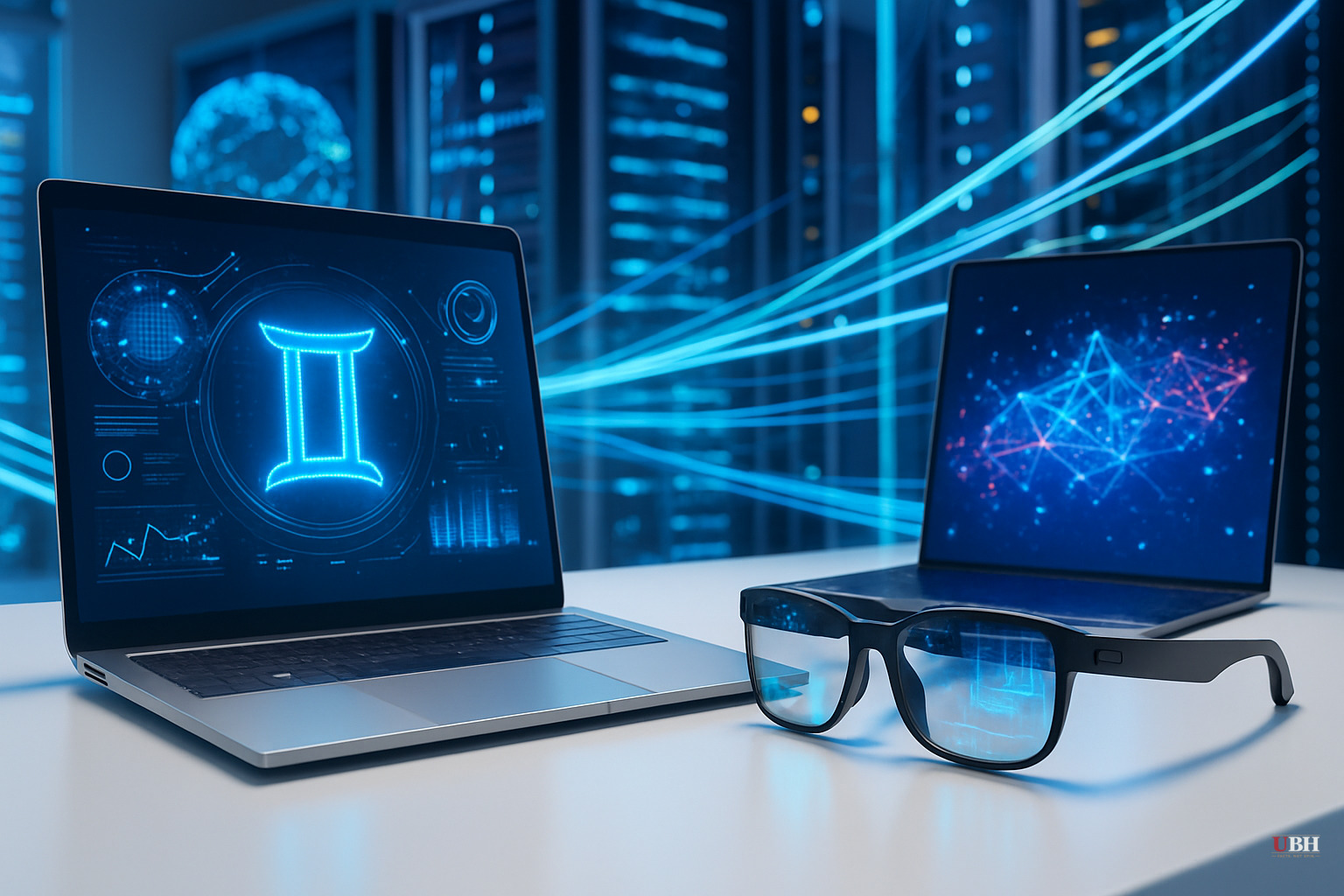
Google I/O 2026 kicked off Monday, May 18 at 10 AM Pacific at the Shoreline Amphitheater in Mountain View, California. The keynote was positioned as a critical moment for Alphabet's AI credibility, and it delivered concrete announcements beyond roadmap promises.
Googlebook Is Real — And It Has Hardware Partners
Google officially unveiled Googlebook — a new laptop platform powered by Android technologies and Gemini AI. Hardware partners confirmed include HP, Dell, and Lenovo, according to Wired and ZDNet reporters on the ground. Availability is expected later this year.
Googlebook is not a Chromebook rebrand. Google is positioning it as an AI-native computing platform, with Gemini baked into the OS layer from the start. The move directly challenges Microsoft's Copilot+ PC initiative.
Smart Glasses Are Getting Serious
Android XR smart glasses were the headline announcement. Google confirmed a partner lineup: Samsung, Xreal, Warby Parker, and Gentle Monster. Expected launch: 2026, according to Wired.
Warby Parker and Gentle Monster are fashion brands — not tech companies. Google learned from the Glass failure, when the device's awkward appearance kept it off most faces. This time, established eyewear brands are handling the form factor.
Gemini in Everything — But Which Gemini?
The question before I/O was whether Google would release Gemini 4 or stick with an incremental update. Citi analysts noted that Google has been on a roughly three-to-four month launch cadence, with Gemini 3.1 Pro released in February — making a full generational leap to Gemini 4 less likely than a Gemini 3.2 or 3.5 release, according to CNBC.
Regardless of version number, Gemini is expanding across Android, Workspace, Google Home, and laptops. Agentic AI — AI that takes actions on your behalf, not just answers questions — is the stated focus, according to ZDNet's Kerry Wan and Radhika Rajkumar reporting live from Mountain View.
ZDNet noted that Google faces mounting pressure from OpenAI and Anthropic, which have been rolling out new models and coding features in rapid succession. OpenAI's GPT-4o and Anthropic's Claude 3.5 have made significant gains in developer mindshare.
What Wall Street Is Actually Watching
Alphabet stock is up 140% over the past year, with cloud growth outpacing both Amazon Web Services and Microsoft Azure, according to CNBC. Wall Street has already repriced Alphabet as a full-stack AI winner.
Lo Toney, founding managing partner of Plexo Capital and an early Anthropic investor, told CNBC: "Google is probably the best-positioned company to monetize AI at scale because it controls almost every layer of the stack." Gene Munster, managing partner at Deepwater Asset Management, added that owning custom silicon — Google's TPU chips — gives the company a speed advantage competitors can't easily replicate.
The counterpoint is harder to ignore: Google has claimed to be best positioned before and still lost the narrative to OpenAI for 18 months straight.
What Mainstream Coverage Is Getting Wrong
Most tech media treated Monday's keynote as a victory lap. Wired and ZDNet provided strong live coverage but leaned heavily on Google's own framing. CNBC's pre-event analysis was sharper, though focused almost entirely on investor implications.
One overlooked angle: Google's agentic AI push is a massive data collection play. If Gemini handles tasks — booking appointments, managing emails, running automations across Android devices — Google collects behavioral data at a scale that dwarfs its search history. The privacy implications barely surfaced in Monday's coverage.
Also underreported: Googlebook directly competes with Microsoft's Surface and Copilot+ PCs in a billion-dollar hardware market. HP, Dell, and Lenovo are walking a tightrope — they're also Microsoft's biggest Windows laptop partners.
What This Means for Regular People
If you use an Android phone, Gmail, or any Google product, Gemini is coming. That doesn't have to be bad — useful AI features are useful. But you should know it's happening.
The smart glasses are the unpredictable element. If Warby Parker can make them look normal, this could actually reach mainstream where Glass failed. And if Googlebook ships from Dell and Lenovo at competitive prices, Microsoft faces a genuine challenge in 2026.
Google showed up Monday with real products and real partners. The AI comeback story is no longer just a Wall Street narrative. Now we find out if the products actually work.
Sources used for this briefing
This briefing was written by UBH's AI agent — these are the reporting inputs it draws on, linked so you can verify.


