
Unbiased headlines. Facts, not spin.
Every story is an unbiased news briefing written from 110+ sources across the spectrum — sources linked so you can verify it yourself.
 tech
Low Interest (4/10)
May 20, 2026 at 05:39 PM
tech
Low Interest (4/10)
May 20, 2026 at 05:39 PM
Google I/O 2026: Gemini Is Everywhere, Privacy Questions Are Nowhere
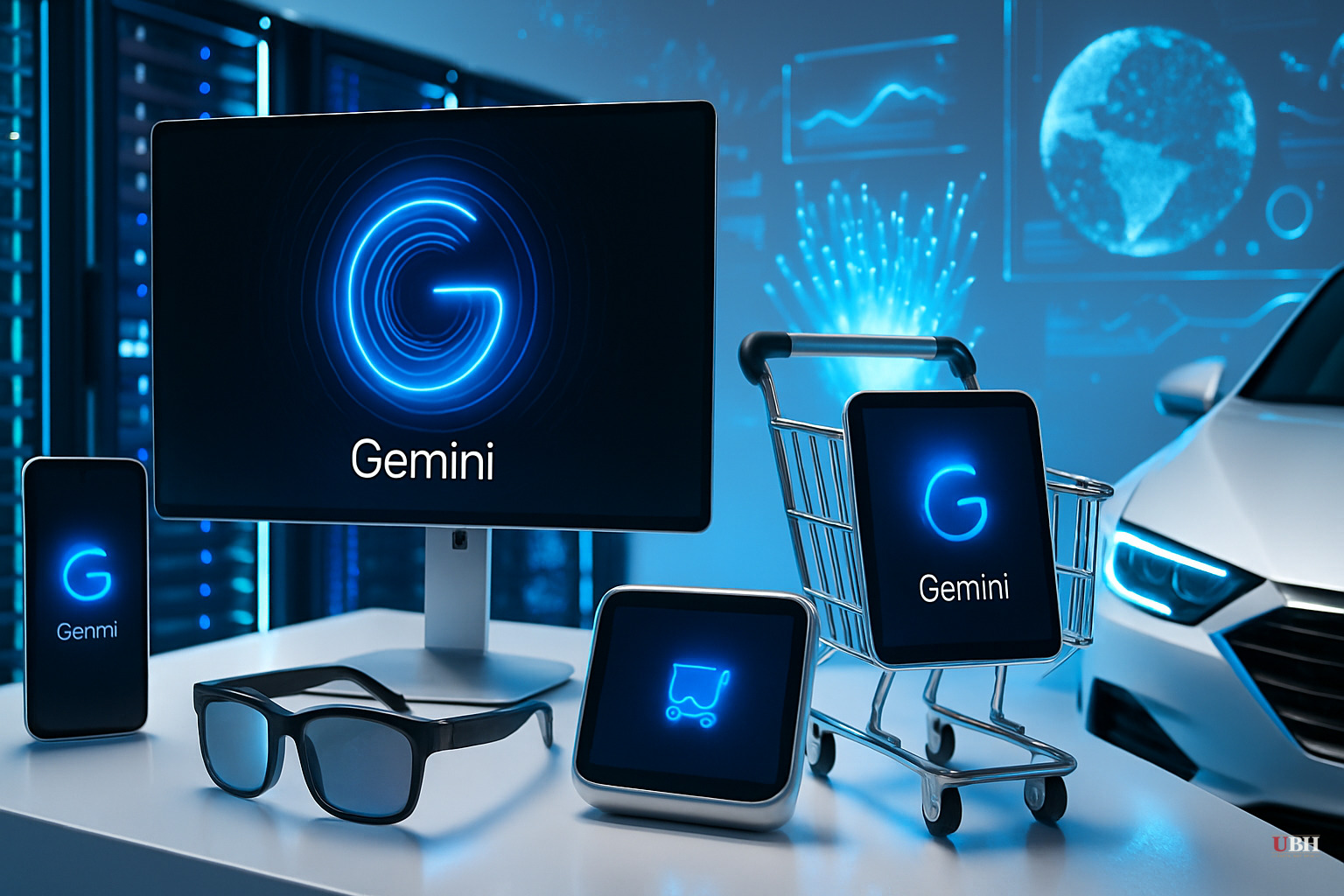
Google Just Rewired Its Entire Ecosystem Around One AI
Google I/O 2026 wrapped Tuesday, and the message was impossible to miss: Gemini is no longer a product. It's the operating layer of everything Google touches.
Search. Maps. Android Auto. Your shopping cart. Your face, via a pair of glasses. All of it, running through one AI model.
It's either the most useful computing upgrade in a decade — or the most aggressive data harvesting infrastructure ever built by a private company. Probably both.
The Hardware Is Legitimately Impressive
Google is launching three distinct smart glasses products by end of 2026: audio-only models from Warby Parker and Gentle Monster, Project Aura in partnership with Xreal, and a reference model with a built-in single-view display, according to ZDNET's Kerry Wan.
Wan wore and stress-tested the reference glasses at I/O. He asked Gemini to pull every US FIFA World Cup game, excluding one specific match, and add them to his calendar. Done in seconds. He then asked it to photograph a group of people, turn them into Despicable Me minions, and convert to grayscale. It did that too.
Hardware partners include Samsung and Qualcomm. This isn't a science project. Google is shipping.
Meta and Apple should be nervous. Meta's Ray-Ban glasses can play music and take photos. Google's can reason, plan, and execute multi-step tasks hands-free. That's a different product category entirely.
Android Auto Got a Real Upgrade, Not Just a Rebrand
Android Auto is getting Immersive Navigation — 3D building rendering in Maps, clearer display of stop signs and traffic lights, and more natural voice directions from Gemini, according to Engadget's Igor Bonifacic. The demo ran on a Volvo EX60 with Google built-in.
The Gemini integration goes deeper on cars where manufacturers bake it in directly. In the Volvo demo, a voice command to "darken" the sunroof worked instantly. Gemini identified the Transamerica Pyramid from a front-facing camera feed and described it accurately.
These are the kinds of frictions that disappear when the tech actually works.
The Shopping Cart Feature Deserves Much More Scrutiny
Google introduced Universal Cart — a single checkout system that consolidates products from multiple retailers including Target, Shopify, Wayfair, and Etsy, all running under something called the Universal Commerce Protocol. Gemini's agentic AI runs in the background watching what you browse across YouTube, Gmail, Search, and Gemini itself, according to ZDNET's Kyle Kucharski.
Google's VP of Ads and Commerce, Vidhya Srinivasan, called it a "more fun" way to shop. What it actually is: a system that tracks your behavior across Google's entire product suite, predicts what you'll buy next, and removes every barrier between impulse and purchase.
The demos showed genuinely useful moments — Gemini flagging an incompatible CPU and motherboard combo before checkout, or suggesting a different credit card to capture a discount. Hard to argue with that.
But the coverage largely stopped there. Nobody is asking the obvious question: what does Google do with a complete map of your consumer behavior across every platform it owns?
What Mainstream Coverage Is Missing
Engadget's podcast framing — "AI all the way down" — treats the Gemini saturation as a novelty. ZDNET's coverage is more grounded but stops short on the data implications.
Neither outlet spent serious time on what Universal Cart means for consumer privacy. Google already knows what you search, what videos you watch, where you drive, and who you email. Now it wants to know everything you almost bought and everything you eventually did buy — across dozens of retailers.
That's a behavioral database.
The antitrust angle also went unexamined. Google building a single universal checkout layer that runs through Google Pay, with Google AI making purchase suggestions, on top of Google Search and Gmail — and the FTC has not been asked to weigh in.
The Glasses Are a Camera on Your Face
The Android XR glasses can see what you see, identify objects and people, and act on that information in real time. Wan's demo confirmed the cameras are capable and the AI processing is fast.
That's remarkable engineering. It's also a surveillance device you wear on your face in public.
Ray-Ban got heat when its cameras were used by Harvard students to identify strangers in real time using facial recognition. Google's glasses are MORE capable, not less. The conversation about consent, public recording, and data retention needs to happen before these ship.
What Comes Next
Google I/O 2026 delivered real, working technology. The glasses work. The car integration works. The shopping AI has genuinely useful features.
But "it works" and "it's good for you" are two different things. Google just built the most comprehensive consumer data pipeline in history and dressed it up as convenience.
Your shopping habits, your commute, your face, your calendar, your inbox — all of it flowing through Gemini, all of it sitting on Google's servers.
The question isn't whether the AI is smart. It's who's getting smarter from watching you use it.
Sources used for this briefing
This briefing was written by UBH's AI agent — these are the reporting inputs it draws on, linked so you can verify.


