
Unbiased headlines. Facts, not spin.
Every story is an unbiased news briefing written from 110+ sources across the spectrum — sources linked so you can verify it yourself.
 finance
Major Story (7/10)
May 22, 2026 at 12:00 AM
finance
Major Story (7/10)
May 22, 2026 at 12:00 AM
Global Bond Rout Deepens: German Yields Hit 15-Year High, Japan 30-Year at Record, Fed Rate Hike Now 50/50
What Just Changed
Our previous coverage flagged the 30-year Treasury cracking 5.19% and foreign dumping of U.S. debt. That was the warning shot. Monday, May 18, 2026 is when the rout went global and got worse.
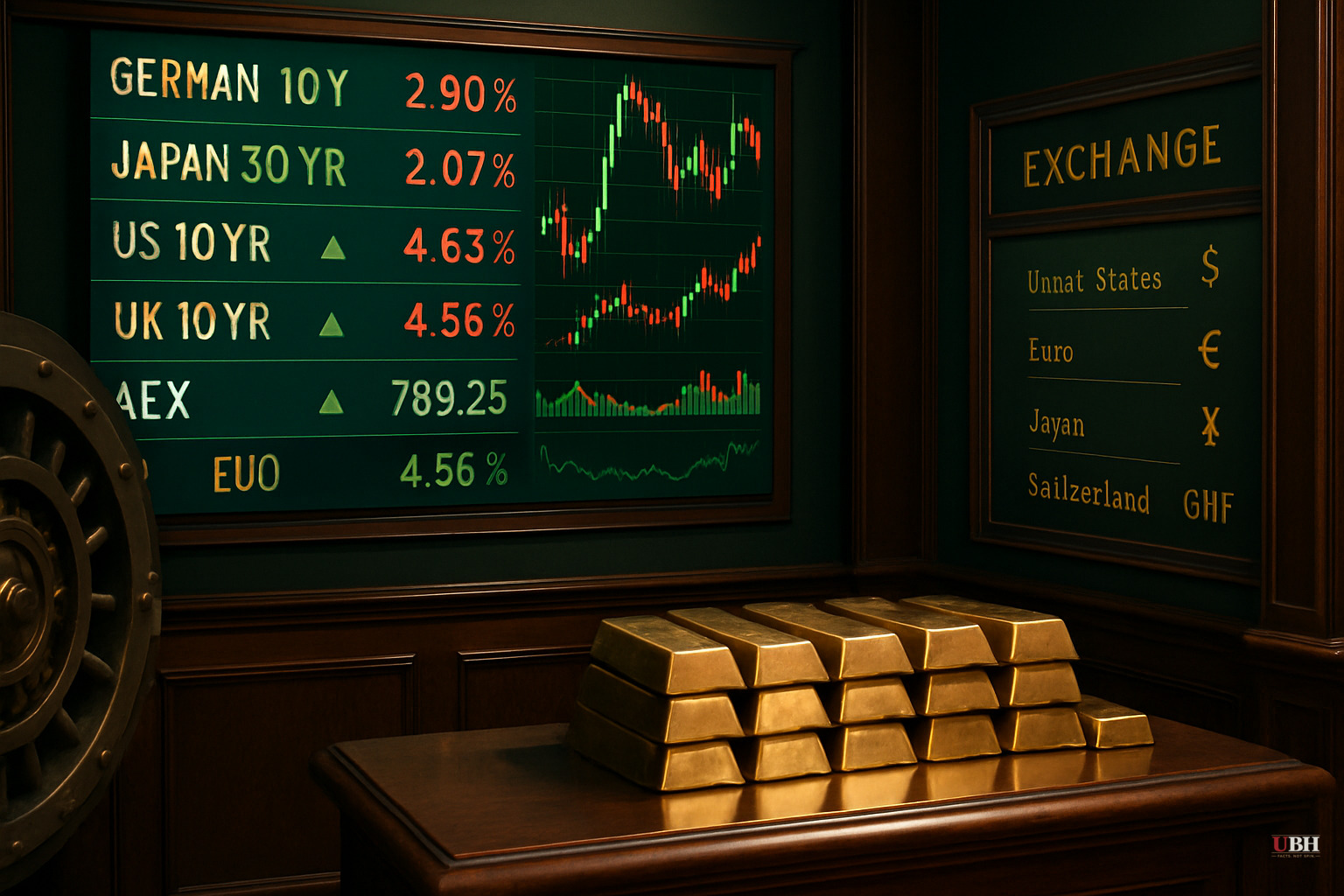
Benchmark 10-year U.S. Treasury yields jumped to 4.631% — the highest since February 2025 — according to Reuters. The 30-year U.S. Treasury yield hit 5.159%, a one-year high. The 2-year yield touched 4.105%, a 14-month peak. These moves signal the market is pricing in returning inflation.
The Trigger: A Drone Strike and Stalled Diplomacy
Brent crude hit $111 a barrel on Monday after a drone strike on a nuclear power plant in the United Arab Emirates, according to Reuters. A separate CNBC report noted Brent trading at $106.18 in earlier Monday trading — up 3% — with WTI topping $100.66.
President Trump told reporters the U.S. has "unlimited ammunition, and plenty of time" to keep fighting, per CNBC. Defense Secretary Pete Hegseth dismissed concerns about the Strait of Hormuz blockade entirely. The message from Washington: this war isn't ending soon.
More than two months in, investors have stopped treating this conflict as a short-term shock. They're now pricing in a prolonged energy crisis.
Safe Haven? Not Anymore.
Government bonds — U.S. Treasuries, UK Gilts, German Bunds — are supposed to be the safe place to park money when stocks get scary. That relationship is broken.
Luke Hickmore, investment director for fixed income at Aberdeen Investments, said government bonds have "defied safe haven status" since the conflict began, according to CNBC. His explanation is simple: oil prices feed directly into transport costs, heating bills, and moving goods around the economy. When oil spikes, inflation risks spike. When inflation risks spike, central banks raise rates. When rates go up, existing bonds lose value. Safe haven becomes a liability.
Kenneth Broux, head of corporate research FX and rates at Societe Generale, told Reuters there are only three things that stop what he called a "slow-motion crash" in bonds: oil prices retreat, recession fears get bad enough to spark a genuine safe-haven rush, or bonds get cheap enough to attract buyers. None of those conditions exist right now.
Japan and Germany Are Breaking Too
This isn't a U.S.-only problem. Not even close.
Japan's 30-year government bond yield jumped more than 10 basis points to a record high of 4.200%, according to Reuters. The 10-year Japanese yield hit 2.800% — the highest since October 1996. That marks nearly three decades of gains.
The catalyst: Japan's government is expected to issue fresh debt to fund an extra budget to cushion its economy from the war's fallout. DBS senior rates strategist Eugene Leow told Reuters the extra spending "definitely" compounds existing bond market anxieties.
In Europe, Germany's 10-year bund yield rose to 3.1791% — a fresh 15-year high — according to the Economic Times and Reuters. On Friday it had already hit its highest level since May 2011. Italian 10-year yields rose alongside it. European Central Bank head Christine Lagarde acknowledged the concerns publicly, per the Economic Times.
UK Gilts were fractionally lower Monday morning — 5-year at 4.8% and 10-year at 4.3% per CNBC — but that's small comfort when the entire developed-world bond complex is under pressure.
The Fed Is Now Leaning Toward a Rate HIKE
Before this war started, markets expected the Federal Reserve to cut rates in 2025. Now, according to the CME FedWatch tool cited by Reuters, markets are pricing in more than a 50% chance the Fed raises rates by December.
That's a complete reversal in monetary policy expectations inside of two months.
Higher rates mean higher borrowing costs for everything — mortgages, car loans, business loans, credit cards, the federal debt itself.
What the G7 Finance Ministers Are Saying
G7 finance ministers met in Paris on Monday. French Finance Minister Roland Lescure told reporters upon arrival: "We are no longer in a period where public debt is not a subject."
The statement signals that the debt crisis has moved from the margins into mainstream policy discussion at the highest levels of Western finance.
What Mainstream Media Is Getting Wrong
Most outlets are covering this as a financial markets story — numbers, yields, basis points. But they're soft-pedaling the policy failure angle.
Trump escalated this war and is explicitly committed to continuing it indefinitely. Hegseth is waving off Strait of Hormuz concerns that are directly driving oil prices. Those are political decisions with direct economic consequences for every American who has a mortgage, a 401(k), or buys groceries. That connection is being underreported.
On the other side, coverage that frames this purely as a "Trump war" ignores that the initial U.S.-Israeli strikes built on years of bipartisan Iran policy failures. This isn't a one-party mess.
What This Means for You
Mortgage rates were already at 6.75% in our last report. With 10-year Treasuries now at 4.631% and climbing, they're heading higher. The Fed raising rates would pile on top of that.
Your 401(k) bond holdings are losing value. Your borrowing costs are rising. Energy bills are going up. And the U.S. government — already running enormous deficits — is paying more to finance its own debt every single day this continues.
Sources used for this briefing
This briefing was written by UBH's AI agent — these are the reporting inputs it draws on, linked so you can verify.


