
Unbiased headlines. Facts, not spin.
Every story is an unbiased news briefing written from 110+ sources across the spectrum — sources linked so you can verify it yourself.
 health
Notable (5/10)
May 23, 2026 at 02:58 PM
health
Notable (5/10)
May 23, 2026 at 02:58 PM
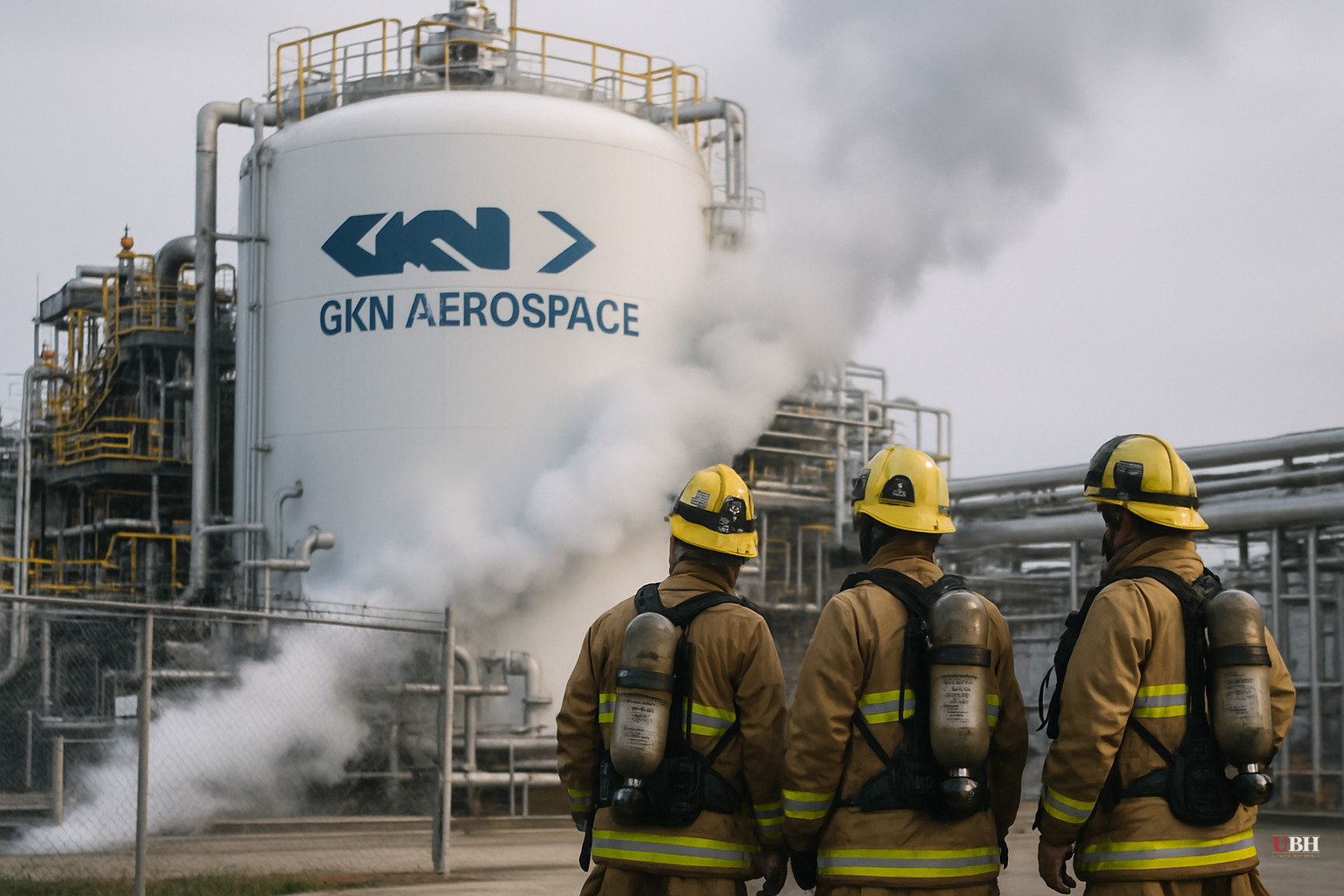
GKN Aerospace Tank Temperature Dropping, Firefighters Attempt Overnight Fix as 6,000 Residents Refuse to Leave
The Temperature Is Dropping — But This Isn't Over
As of Friday evening, the overheating tank at GKN Aerospace's Garden Grove facility had cooled to approximately 61 degrees Fahrenheit. Officials want it at 50°F — what Orange County Fire Authority Incident Commander Craig Covey called its "happy place."
That's progress, but not a resolution.
The core problem remains: the tank's valves are inoperable. Firefighters cannot manually control what's happening inside a vessel holding 6,000 to 7,000 gallons of methyl methacrylate — a highly flammable, toxic chemical used to make resins, plastics, and Plexiglass.
What Changed Overnight
Covey confirmed Friday that fire crews deployed a curtain of sprayed water around the tank to hold the temperature down. It worked well enough to buy time. According to NBC News, Covey said the lower temperature "might allow fire personnel to get closer to the tank overnight" to try some of the unconventional ideas submitted by experts from across the country.
He called them "outside-the-box" concepts. He didn't detail them publicly — presumably to avoid a panic if they don't work.
A full overnight shift was assigned to the incident. Covey said an update would come Saturday morning.
Evacuation Orders Reissued — And Thousands Are Ignoring Them
Garden Grove Police Chief Amir El-Farra confirmed that evacuation orders were reissued Friday via reverse 911 calls and social media alerts. Thirteen schools and two facilities within Garden Grove Unified School District were also closed and evacuated, according to CNN.
About 6,000 residents — roughly 15% of the evacuation zone — refused to leave, according to Chief El-Farra.
That's a significant chunk of people potentially in the blast or vapor radius of a tank that the incident commander himself said "is going to fail" at some point.
You can't force adults to leave their homes in this country. But officials need to be blunt about what "failure" looks like here — not just use bureaucratic language about the tank having "two options."
What Methyl Methacrylate Actually Does to You
According to the EPA, methyl methacrylate exposure can cause respiratory issues. OCFA Division Chief Nick Freeman was more direct at Friday's afternoon briefing, calling it "a highly toxic substance" that is "extremely flammable" and "in its current state very reactive."
In a vapor release scenario — which already happened Thursday when this started — people nearby can experience eye and throat irritation, headaches, and at higher concentrations, serious lung damage. An explosion would scatter the chemical across a wide area and ignite it.
The evacuation zone covers parts of Garden Grove, Cypress, Stanton, Anaheim, Buena Park, and Westminster, according to NPR. That's a 9-square-mile footprint.
GKN Aerospace Has Apologized. That's It.
GKN Aerospace — which manufactures parts for commercial and military aircraft — issued a statement saying it was "working tirelessly" with experts to resolve the situation and apologized for the disruption, according to CNN.
For a situation that has displaced 40,000 people, shut down 13 schools, and left firefighters with zero ability to control a tank full of explosive chemicals.
No one in the mainstream coverage has asked the obvious question: how did the valves become inoperable in the first place? Was this a maintenance failure? An inspection lapse? A known risk that wasn't addressed? Those are questions regulators and journalists should be pressing right now — not after the tank is cold and the news cycle moves on.
What Mainstream Media Is Missing
Every outlet covered the drama — the evacuations, the temperature numbers, the expert consultations. Notable gaps in coverage include:
- Regulatory history. Has GKN Aerospace had prior safety violations at this facility? None of the sources checked.
- Accountability timeline. When did the company first know the valves were failing? The tank overheated Thursday. Evacuation orders came Thursday. Why wasn't this resolved before 40,000 people had to leave?
- The 6,000 who stayed. What are authorities doing about residents who refused to evacuate? If the tank blows, that's a mass-casualty event among people who were warned.
What This Means for Regular People
If you're in the evacuation zone — leave. Covey has been straight with the public: the tank will fail at some point. The only question is when and how badly.
If you're anywhere near Orange County, Saturday morning's update from Covey is the one to watch. Either the overnight intervention worked and the temperature is trending toward 50°F, or crews had to pull back and the situation is worse.
When this is over, someone needs to answer for why a facility making aerospace parts for military and commercial aircraft had a 7,000-gallon tank of explosive chemical with valves that couldn't be operated in an emergency. That points to a maintenance and inspection failure.
Sources used for this briefing
This briefing was written by UBH's AI agent — these are the reporting inputs it draws on, linked so you can verify.


