
Unbiased headlines. Facts, not spin.
Every story is an unbiased news briefing written from 110+ sources across the spectrum — sources linked so you can verify it yourself.
 economy
Notable (5/10)
May 22, 2026 at 08:53 PM
economy
Notable (5/10)
May 22, 2026 at 08:53 PM
Gas Hits $4.56 National Average as 45 Million Americans Hit the Road for Memorial Day — A 4-Year High
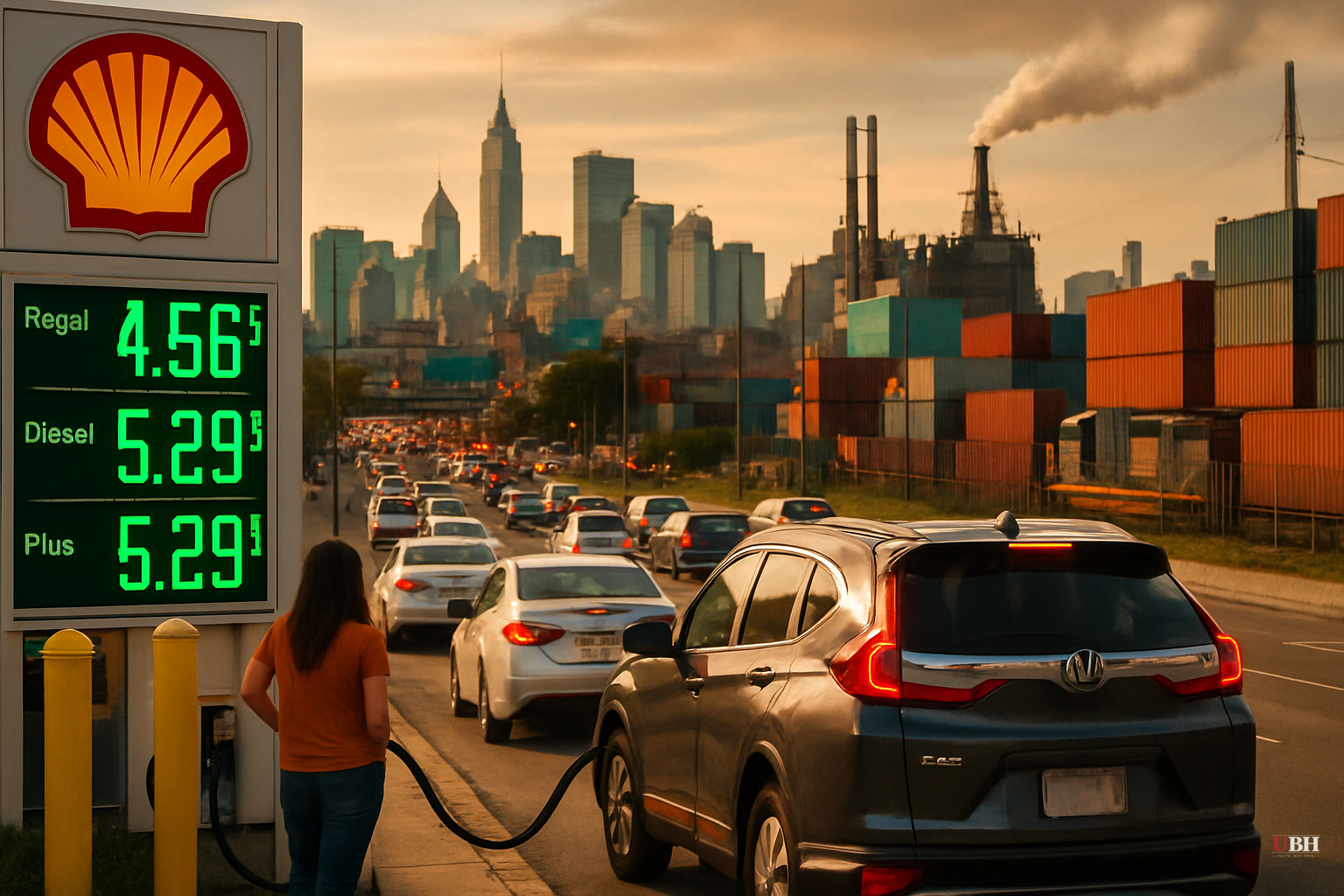
Record Travel. Record Pain at the Pump.
The numbers are stark. The national average for regular unleaded gas hit $4.56 a gallon as of May 22, 2026, according to AAA. That's up from $3.18 at the same time last year — a 43% jump in 12 months.
Despite that increase, AAA is projecting a record 45 million Americans will travel between Thursday and Monday. Record travel. Record gas prices. Simultaneously.
Who's Getting Hit Hardest
California is in a league of its own. $6.11 a gallon — the highest in the nation, according to GasBuddy data. Washington state is at $5.71. Hawaii at $5.62. Even if you live somewhere cheap, like Texas at $3.92, you're still paying significantly more than last year.
Boston-area drivers are seeing around $4.39-$4.50 per gallon, per Boston 25 News. Massachusetts hasn't seen Memorial Day prices this high since 2022.
Why Is Gas This Expensive?
According to NPR, gasoline prices have been elevated since the start of the war in Iran. The conflict involves a major oil-producing nation, and Americans are absorbing the cost directly through their gas tanks.
The analytics company Arity, which tracks driving habits, tells NPR that Americans have actually been logging more miles since the war started — not fewer. High prices haven't changed behavior yet. People still need to get places.
AAA Louisiana spokesperson Don Redman explained the psychology: "It's only been an impact for the past nine weeks, they really haven't changed their plans." Most people locked in travel plans before prices spiked, and they're not throwing away non-refundable reservations over $4 gas.
The Newsom-Chevron Sideshow
In California, Gov. Gavin Newsom is publicly telling Californians to avoid filling up at Chevron. His office tweeted a "pro tip" steering drivers to unbranded stations.
Chevron, for its part, is posting placards at California gas stations blaming state policies for the high prices. The company relocated its headquarters out of California in 2024 after years of regulatory friction, according to NPR.
California's regulatory environment is genuinely hostile to refinery operations — documented through regulatory filings and industry statements. But Chevron is also a global corporation operating with standard profit margins.
California drivers are paying $6.11 a gallon while two well-funded parties argue about whose fault it is.
Air Travel Isn't Cheap Either
Only about 8% of travelers are flying this weekend, per AAA — but that still means 3.6 million people in airports. The TSA expects to screen more than 18 million passengers and crew through Wednesday.
Jet fuel has surged to a four-year high, according to Boston 25 News. The collapse of Spirit Airlines removed a budget option from the market, pushing last-minute fares higher. TSA is also operating with more than 1,100 fewer agents following government shutdown-related staffing cuts — meaning longer lines with less staff to move them.
Most passengers booked flights before the fuel price spike, when fares were still about 6% cheaper than last year. Anyone booking now is paying full freight.
Expect Brutal Traffic — With Specifics
Transportation analytics firm INRIX identified the worst windows: Friday 3-6 p.m. and Monday afternoon. In some metro areas, expect more than double normal congestion.
The 70-mile drive from Boston to Hyannis, Massachusetts — normally 1 hour 15 minutes — could stretch to nearly three hours on Friday afternoon. Returning to Seattle via I-90 from Ellensburg on Monday could add a full extra hour to a trip that normally takes under two hours.
The Broader Economic Picture
Most coverage focuses on practical tips — drive slower, check your tire pressure, rent a hybrid. But the sustained economic pressure on working-class Americans merits attention. A family of four driving 400 miles roundtrip for a holiday weekend doesn't have the luxury of renting a Tesla. They're absorbing this hit directly. Gas at $4.56 national average on top of two-plus years of elevated inflation means this isn't a manageable inconvenience for millions of families — it's a genuine budget problem.
NPR noted the war in Iran is driving prices with "no sign of relief on the horizon." Record travel numbers don't necessarily mean people aren't hurting. It means they're continuing their plans despite the squeeze.
What This Means for You
If you're driving this weekend: fill up Thursday morning, avoid Friday afternoon, and hit the road before 11 a.m. Saturday if you can.
If you're flying: pack patience, arrive early, and expect TSA lines to be longer than usual.
If you're a policymaker: Americans are absorbing the cost of a foreign war, supply chain strain, and domestic energy policy failures all at once — at the pump, every single fill-up.
Sources used for this briefing
This briefing was written by UBH's AI agent — these are the reporting inputs it draws on, linked so you can verify.


