
Unbiased headlines. Facts, not spin.
Every story is an unbiased news briefing written from 110+ sources across the spectrum — sources linked so you can verify it yourself.
 economy
Notable (6/10)
May 20, 2026 at 03:35 PM
economy
Notable (6/10)
May 20, 2026 at 03:35 PM
Gas Hits $4.39 Nationally, All 50 States Over $4, and Trump Is Keeping the Blockade On
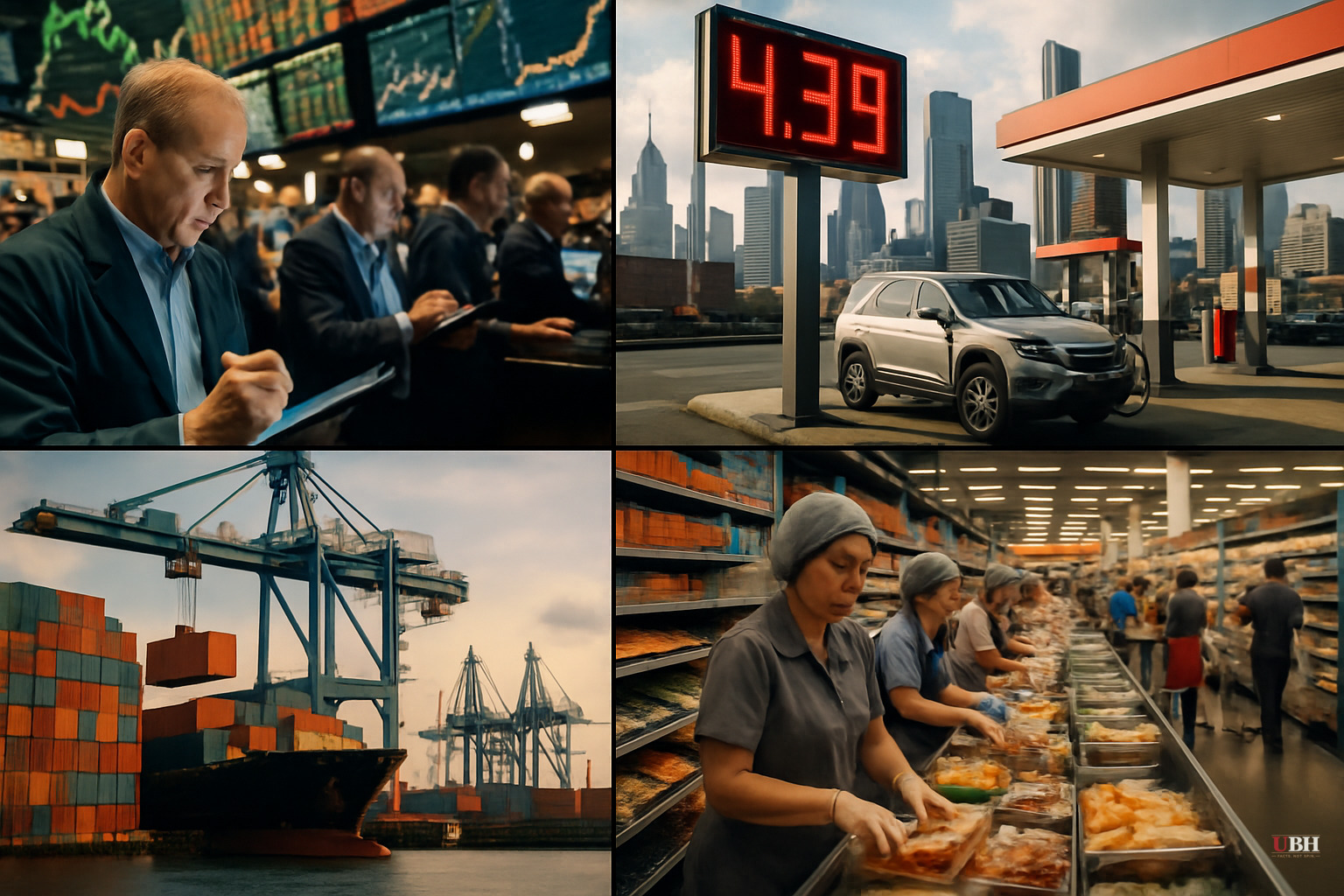
Gas Hits New High as Blockade Continues
When last reported, the national average had hit $4.50. The path there was uneven.
Gas briefly plateaued after the April 7 ceasefire announcement, with prices starting to edge down. Then they reversed.
On April 29, according to NBC News, prices hit $4.23 — a new wartime high at that point. AAA recorded the biggest single-day increase in over a month that day, at $0.07 per gallon. By May 1, prices had jumped another $0.16 in two days, landing at $4.39 per gallon, the biggest single-day surge since the ceasefire was announced.
That's $1.25 more per gallon than before the war started. According to NBC News, it represents a 47% increase since late February.
Every State Now Above $4
According to Axios, all 50 states have crossed the $4-per-gallon threshold.
Six states — Alaska, Hawaii, Illinois, Nevada, Oregon, and Washington — are above $5 per gallon, per NBC News tracking data. California has topped $6 per gallon, the highest in the nation. States in the middle of the country are paying the least, but they're still above $4.
The Oil Picture Behind the Numbers
Brent crude — the international benchmark that directly influences U.S. pump prices — hit $114.60 per barrel as of April 29, according to NBC News. That's up nearly 25% from the recent low on April 17. U.S. crude closed around $102 per barrel by May 1.
The driver: a dual blockade of the Strait of Hormuz by both the U.S. Navy and Iran. That's the chokepoint for a massive share of the world's crude and petroleum products coming out of the Persian Gulf. When that narrows, oil prices spike.
Tom Kloza, chief energy adviser to Gulf Oil, told NBC News that gas stations have been quietly eating their own profit margins to keep prices artificially below $4 at the pump. "This is the most serious squeeze, in terms of margin suppression, we've seen for retailers since 2020," Kloza said.
Trump Is Keeping the Blockade
Trump is continuing the blockade, and he said so directly.
On Thursday, April 30, Trump told reporters in the Oval Office: "Iran can't let Iran have a nuclear weapon, and their economy is crashing. The power of the blockade is incredible." He acknowledged gas prices are high. His position: that's the cost of the policy.
On Friday, May 1, Trump said Iran had sent a new proposal but said flat out, "I'm not satisfied with it." He described his options as either "blast the hell out of them and finish them forever" or "try and make a deal," and said he preferred a deal — but not on Iran's current terms.
Trump added, "Now gasoline is high. As soon as the war ends, the gasoline prices will come down."
Experts say that's not accurate. According to NBC News, most analysts believe oil prices will remain elevated for an extended period even after the war ends — because Iran has demonstrated it can disrupt Strait of Hormuz traffic at will. The risk premium is now baked in.
The War Powers Problem
As of this week, the Iran conflict crosses the 60-day threshold under the 1973 War Powers Resolution, which requires congressional authorization to keep U.S. forces in a conflict beyond that point.
Congress has been calling for a War Powers Resolution vote. The administration's response? A senior official told NBC News: "For War Powers Resolution purposes, the hostilities that began on Saturday, February 28 have terminated."
The administration is arguing the war is already over — for legal purposes — while simultaneously defending an active Navy blockade and ongoing military posture. A president extending a blockade past 60 days while declaring the war legally over is a direct contradiction that Congress is largely letting slide.
Who's Actually Getting Hurt
Bank of America analysts found, in a report compiled before the most recent price run-up, that lower-income households are already taking a significant budget hit. Middle and upper-income households still have some cushion.
That cushion is shrinking. The analysts warned the real danger comes if higher fuel costs start showing up in groceries and utilities. "While there may be capacity for some to 'ride out' a gasoline shock by relying more on credit card borrowing, this appears somewhat limited — particularly for lower-income households," the analysts wrote.
Small businesses are getting crushed too, according to Axios. Delivery costs, inventory transport, employee commutes — fuel is embedded in everything small operators do, and they don't have the scale to absorb it like Amazon or Walmart.
The Accountability Question
Mainstream coverage has focused on the price number. Less scrutiny has gone to the constitutional question — a contradiction between ongoing military operations and an official declaration that hostilities have ended.
Also largely absent: a serious accounting of whether the blockade strategy is actually working on Iran's nuclear program, the stated justification for all of this.
The Current State
Every American is now paying over $4 a gallon. The president knows it, says it, and is keeping the policy that's causing it anyway. His bet is that a deal gets done before the political damage compounds. Experts think prices stay high regardless. Your wallet is the collateral in that negotiation.
Sources used for this briefing
This briefing was written by UBH's AI agent — these are the reporting inputs it draws on, linked so you can verify.


