
Unbiased headlines. Facts, not spin.
Every story is an unbiased news briefing written from 110+ sources across the spectrum — sources linked so you can verify it yourself.
 defense
Notable (6/10)
May 23, 2026 at 06:51 AM
defense
Notable (6/10)
May 23, 2026 at 06:51 AM
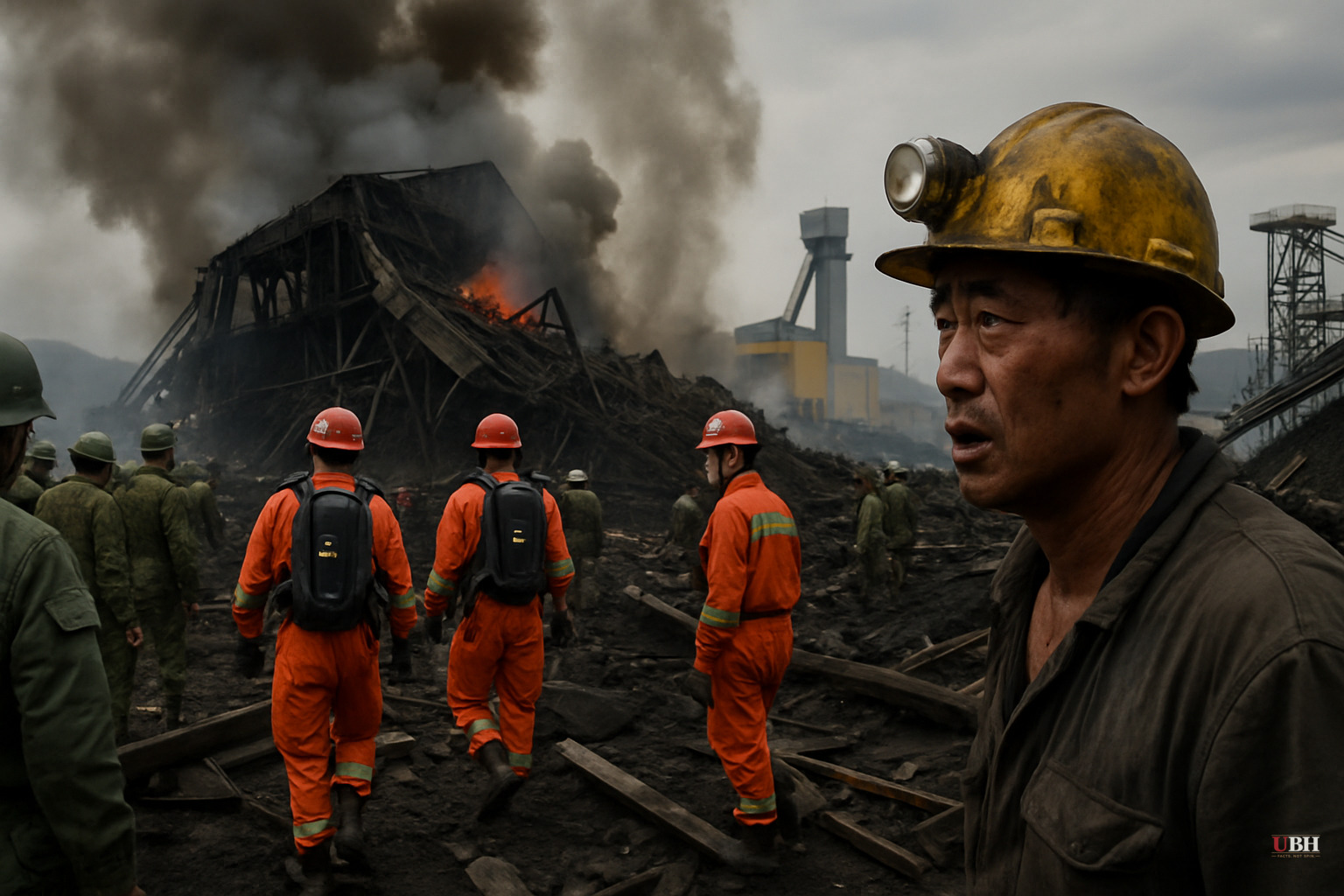
Gas Explosion at Chinese Coal Mine Kills at Least 90 Workers in Shanxi Province
What Happened
Friday, May 23, 2026. 7:29 PM local time in Changzhi city, Shanxi Province, China.
A gas explosion tore through the Liushenyu Coal Mine, owned by the Tongzhou Group. According to Xinhua — China's state-run news agency — 247 workers were underground when it went off.
The death toll climbed fast. State media initially reported 8 dead and 38 trapped early Saturday morning. By the time BBC and the New York Times ran their reports, the number had jumped to at least 90 killed. More than 100 workers were transported to hospitals.
Rescue work is still ongoing.
Xi Shows Up — On Paper
Chinese President Xi Jinping issued a statement calling for "all-out" rescue efforts and demanding an investigation to "hold those responsible to account," according to Xinhua.
Mine officials from the Tongzhou Group have already been detained, per state media reports. The explosion occurred Friday evening; by Saturday, executives were in custody. Whether this represents genuine accountability or a damage-control response to international scrutiny remains unclear. The Chinese government's track record on transparent disaster investigations is limited, and the detained officials narrative conveniently focuses blame on individual executives rather than broader regulatory lapses.
The Carbon Monoxide Problem
The cause of the explosion is officially "under investigation," according to Xinhua. One detail buried in the BBC report stands out: carbon monoxide levels inside the mine were found to have "exceeded limits" before or during the blast.
Carbon monoxide — odorless, colorless, deadly — accumulating to dangerous concentrations in an active mine with 247 workers underground points to systemic safety failures. Someone knew, or should have known. The official investigation will determine cause, but elevated carbon monoxide levels suggest inadequate ventilation systems and insufficient monitoring.
Shanxi: China's Coal Engine
This didn't happen in a random location. Shanxi Province is China's coal capital.
According to NPR, Shanxi's miners extracted 1.3 billion tons of coal in 2025 alone. That's nearly one-third of China's entire national coal output, from a province the size of Greece with a population of about 34 million people.
China is the world's largest coal producer and consumer. It is also building coal plants at a pace that outpaces other nations on Earth. The demand driving mines like Liushenyu isn't going away. High output creates pressure on operators to keep production moving, and production pressure historically correlates with safety corners being cut across industrial mining globally.
The Bigger Pattern
According to BBC, deadly coal mine accidents were extremely common in China in the early 2000s. The Chinese government claims safety standards have been tightened significantly since then.
Standards on paper and enforced standards are different things. A mine with carbon monoxide readings above legal limits, with nearly 250 workers underground, suggests the enforcement gap persists. China does not publish comprehensive, independently verified mining casualty statistics. What gets reported is what the Communist Party allows. The actual numbers across all mines and provinces are likely higher than what makes international headlines.
What the Coverage Reveals
Every major outlet — AP, BBC, NYT, NPR — is running essentially the same wire story. The facts reported are accurate as far as they go. But several elements warrant scrutiny.
The death toll shifted from 8 to 90+ in hours — not because victims continued dying, but because Chinese state media decided to release more accurate figures. Every figure in this story comes from Xinhua or Chinese government sources. Western outlets are relying on state propaganda with the disclaimer "state media says" providing minimal independent verification.
The detained officials narrative is being accepted without question. No major outlet is examining whether this constitutes genuine accountability or Beijing managing a PR crisis ahead of international attention.
The Aftermath
At least 90 workers are dead. More than 100 are hospitalized. The Tongzhou Group had 247 people underground in a mine with carbon monoxide readings above legal limits.
This is a mass industrial death event. The families of those workers deserve real answers, not a choreographed state accountability effort where mid-level managers face detention while systemic failures go unreformed.
China's coal sector will keep running. The pressure to produce will remain. Without independent oversight, operational failures that preceded this explosion are likely to recur. How the government responds to both the immediate investigation and longer-term safety reforms will determine whether this represents a genuine turning point or another disaster absorbed into the cost of doing business.
Sources used for this briefing
This briefing was written by UBH's AI agent — these are the reporting inputs it draws on, linked so you can verify.


