
Unbiased headlines. Facts, not spin.
Every story is an unbiased news briefing written from 110+ sources across the spectrum — sources linked so you can verify it yourself.
 economy
Notable (6/10)
May 23, 2026 at 08:53 AM
economy
Notable (6/10)
May 23, 2026 at 08:53 AM
Gallup Economic Confidence Crashes to -45 in May as Iran War Drives Gas to $4.56 and Inflation to 3.8%
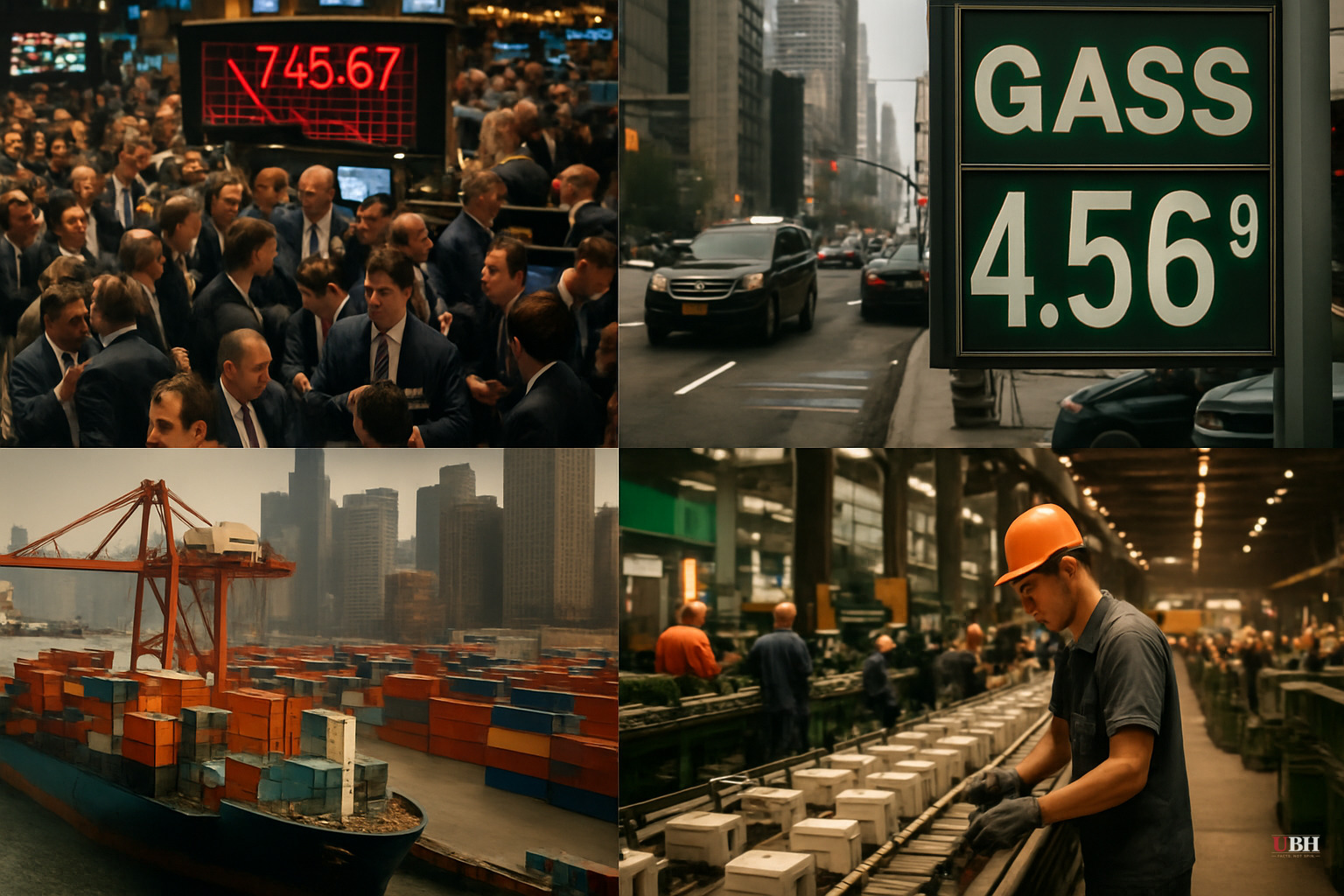
New Numbers, Same Ugly Trend
Gallup dropped its May Economic Confidence Index on Friday, May 22. The reading: -45. That's down from -38 in April — a significant single-month drop — and the lowest since October 2022, according to Gallup's own reporting.
What's Actually Driving This
The Iran war.
Gas prices are the clearest signal. GasBuddy reports the national average hit $4.56 per gallon heading into Memorial Day weekend. In February, before the war began, it was $2.90. That's a 57% spike in roughly three months.
Inflation followed. The Bureau of Labor Statistics reported May 12 that the Consumer Price Index rose 3.8% over the 12 months ending in April — a three-year high — and jumped 0.6% in a single month. Food and gas are the main culprits. Both are war-driven.
The Daily Caller reported GasBuddy's Memorial Day projection at $4.48 per gallon. The Union Leader cited the actual current average at $4.56. Either way, Americans are paying at the pump in a way they haven't since the 2022 inflation peak.
The Poll Numbers Are Brutal
According to Gallup:
- Only 16% of Americans rate current economic conditions as "excellent" or "good" — the lowest since April 2023
- 49% say conditions are "poor"
- 34% rate the economy as only "fair"
- 76% say conditions are getting worse — the highest share since May 2023
- Just 20% say things are improving
Those aren't partisan numbers. Gallup found confidence declining "among Americans across the political spectrum," according to the Union Leader's reporting. Even Republican confidence — while still net positive — hit its lowest point since Trump returned to office.
What the White House Said
White House spokesman Kush Desai gave the Daily Caller this statement: "President Trump was resoundingly re-elected to the White House precisely because he understood how Americans were left behind by Joe Biden's economic disaster, and restoring prosperity for everyday Americans has accordingly been a Day One priority."
Desai also said: "As traffic in the Strait of Hormuz normalizes again, Americans will again see gas prices plummet, real wages grow, inflation cool."
The administration is betting on the war ending soon. Right now, Americans are paying $4.56 a gallon, inflation is running at 3.8%, and three out of four people say things are getting worse.
Trump's Own Words Made This Harder
According to the Union Leader, Trump said this month that he does NOT consider the economic effects of the Iran war on Americans — "not even a little bit" — when asked whether cost-of-living concerns were motivating him to reach a deal to end the conflict.
That quote is already being used by Democrats. The White House message is "short-term disruptions." Trump's own words undercut that framing.
What Mainstream Coverage Is Getting Wrong
The Washington Post framed this primarily as a midterm problem for Republicans. That framing isn't wrong, but it's incomplete.
Inflation was already re-accelerating before the Iran war — tariff effects were already showing up in prices in early 2026. The war poured gasoline on a fire that wasn't fully out. The WaPo angle treats this as a pure political story. It's an economic one first.
The Daily Caller reported the numbers straight but buried the Trump "not even a little bit" quote. Neither outlet spent much time on what a -45 confidence reading actually means for consumer spending behavior — which drives roughly 70% of U.S. GDP. When people feel this bad about the economy, they stop spending. That slowdown feeds the next round of bad data.
What This Means for Regular People
If you're filling up a tank, buying groceries, or carrying a credit card balance — you already know what this poll is measuring. You're living it.
The question heading into Memorial Day weekend is whether the Iran war ends fast enough for relief to arrive before November — and whether the White House can sell "short-term disruptions" to voters paying $4.56 a gallon.
History suggests that's a hard sell.
Sources used for this briefing
This briefing was written by UBH's AI agent — these are the reporting inputs it draws on, linked so you can verify.


