
Unbiased headlines. Facts, not spin.
Every story is an unbiased news briefing written from 110+ sources across the spectrum — sources linked so you can verify it yourself.
 economy
Notable (6/10)
May 23, 2026 at 01:33 AM
economy
Notable (6/10)
May 23, 2026 at 01:33 AM
Food Prices Up 13% Year-Over-Year as Memorial Day Weekend Hits — Corn Up 100%, Burgers Up 20%
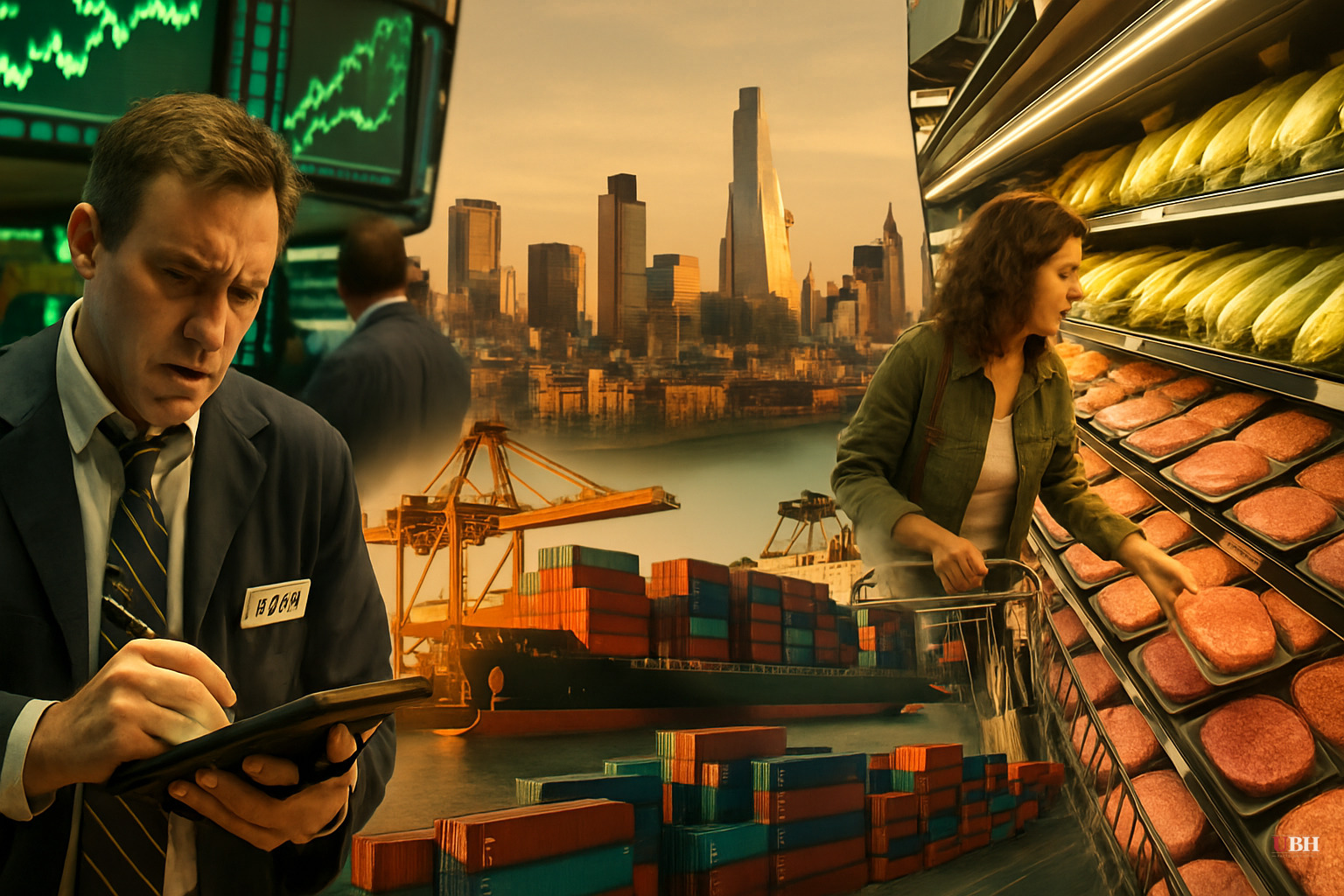
You already know gas hit $4.56 a gallon.
The real story is what's happening inside the grocery store.
The Numbers
According to Lindsay Owens, executive director of Groundwork Collaborative, food prices are up 13% on average compared to Memorial Day last year. Dig into the specifics and the picture becomes clearer.
Burgers and brats — the backbone of every American Memorial Day cookout — are up more than 20%. Corn is up over 100%. Beer is up. Apple pie is up. Even the ketchup for your burger is more expensive, according to Owens, speaking to FOX 11 News.
Nonalcoholic beverages rose 5.1% over the year in April. Alcoholic drinks up 1.9%. Hotels up 4.6%. Airline fares up 20.7% year-over-year, according to Bureau of Labor Statistics data cited by USA Today.
This isn't one price going up. Everything is going up at the same time.
Why Is This Happening?
Owens traces it directly to the war with Iran. Diesel costs more. Farmers pay more to run equipment. Truckers pay more to move food. Every step in the supply chain from farm to shelf costs more — and every one of those costs lands on the consumer.
The Strait of Hormuz disruption is keeping oil supply strained globally, per USA Today's reporting. That's not a domestic policy problem with a domestic policy fix. It's a war premium baked into the price of everything that moves on a truck or flies on a plane.
Stew Leonard Jr., president and CEO of Stew Leonard's grocery chain, told Bloomberg on May 22 that customers are still buying — but they're complaining. He believes fuel prices will eventually come down once the Middle East conflict is resolved. His honest admission: labor costs won't come down, and that means grocery prices aren't coming down either, regardless of what happens to oil.
Two Americas at the Checkout Line
Citi Retailing and Hardlines Analyst Steven Zaccone laid it out plainly to Bloomberg: this is a K-shaped economy. Wealthy consumers keep spending without breaking a sweat. Lower-income shoppers are getting crushed by rising gas and living costs.
Zaccone pointed to the retail winners and losers. Walmart and BJ's — value-focused, serving cost-conscious shoppers — are holding up. Williams-Sonoma — serving wealthy buyers — is fine. The middle is getting hollowed out.
This is a structural split, and Memorial Day weekend is putting it on full display.
What Mainstream Coverage Is Missing
Most outlets covered the gas price story. Fewer covered the food price story with the same urgency. Almost none connected both stories to the same underlying cause: the Iran war driving diesel costs that flow into every corner of the consumer economy.
NBC News ran a tips piece on Memorial Day sales — what to buy, what to skip. Useful, but it treats this as a shopping optimization problem. A Ninja grill discount doesn't help a Wisconsin family that's paying 20% more for the brats they're cooking on it.
The Bloomberg coverage was more substantive, but framed largely around wealthy consumer resilience. The FOX 11 local report out of Wisconsin actually got closest to the ground truth: regular families aren't cutting back on Memorial Day traditions, but they're absolutely feeling it.
Brad Van Hemelryk, plant manager at Maplewood Meats in Howard, Wisconsin, told FOX 11 that business hasn't slowed. People are still buying brats and burgers. But "not cutting back" and "not hurting" are two very different things.
The Contradiction
A record 45 million Americans are traveling this weekend, per AAA. Yet according to a RetailMeNot survey cited by NBC News, over 50% of shoppers plan to spend less than usual during Memorial Day sales.
People are showing up. But they're pulling back on spending. That's not consumer confidence — that's people going through the motions of normal life while inflation quietly drains their budgets.
The Bottom Line
If you're in the top income bracket, this weekend looks normal. Maybe slightly annoying at the pump.
If you're not — if you're a Wisconsin family filling up the truck, buying brats, and grabbing a case of beer — you just paid significantly more for the same Memorial Day you've always had. No upgrade. No extras. Just the same cookout at a substantially higher price.
Owens said it bluntly: "If you sit inside and watch TV, you're going to be paying more for your AC."
There is no corner of this economy right now where the squeeze isn't reaching. The gas price was the headline. The grocery store is the real story. And neither one is going away until the underlying cause — a war disrupting global energy supply — is resolved.
Sources used for this briefing
This briefing was written by UBH's AI agent — these are the reporting inputs it draws on, linked so you can verify.


