
Unbiased headlines. Facts, not spin.
Every story is an unbiased news briefing written from 110+ sources across the spectrum — sources linked so you can verify it yourself.
 finance
Low Interest (4/10)
May 19, 2026 at 03:08 PM
finance
Low Interest (4/10)
May 19, 2026 at 03:08 PM
ECB Chief Economist Philip Lane Signals June Rate Hike Is Likely as Iran War Drives Global Oil Shock
The Debate Is Over — A Hike Is Being Telegraphed
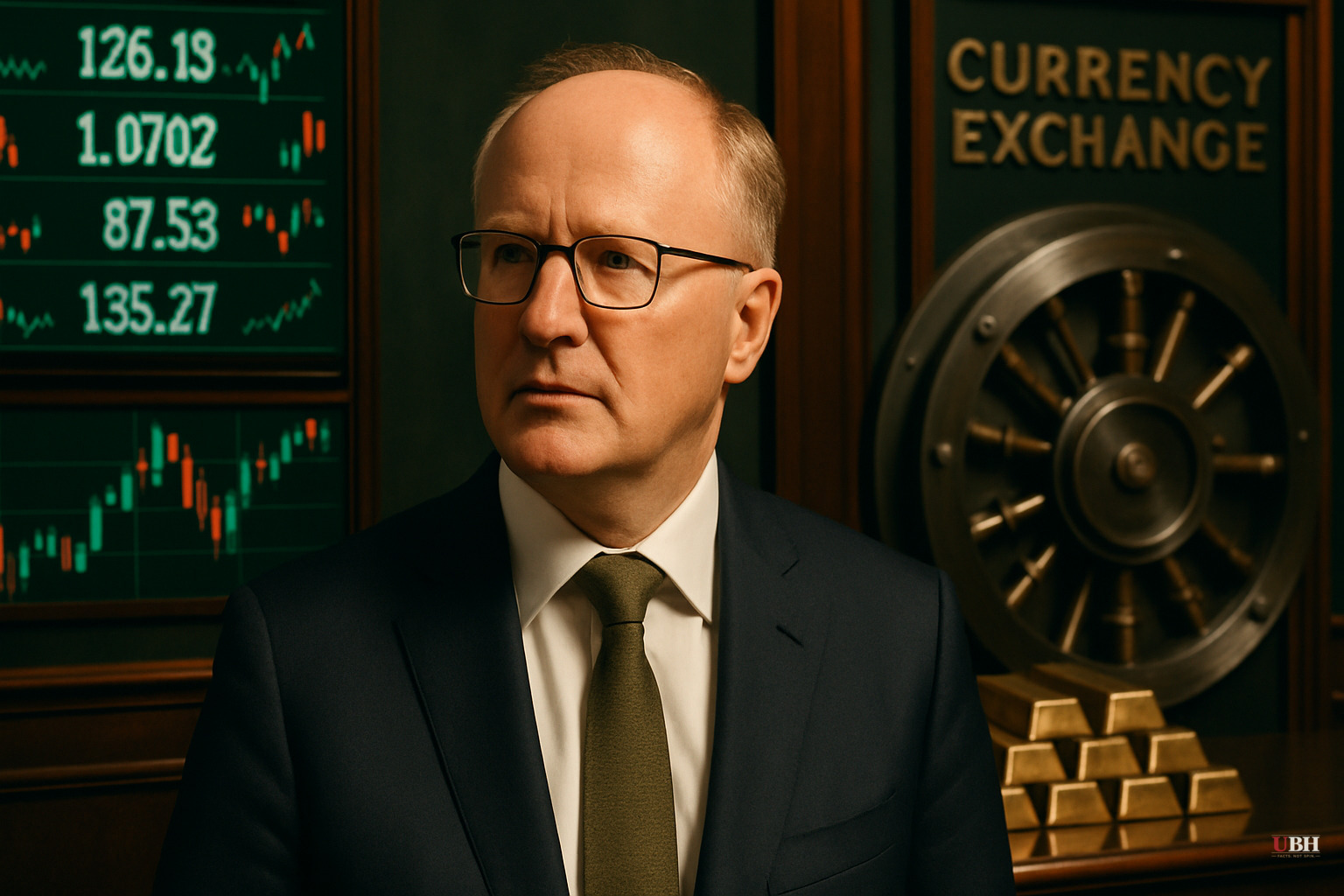
Philip Lane, the ECB's chief economist — the person who sets the intellectual framework for rate decisions — stood in front of an audience in London on May 13 and made the affirmative case for raising interest rates in June.
Lane doesn't freelance. When he talks, he's signaling where the institution is heading.
What Lane Actually Said
According to Reuters, Lane stated directly: "The optimal response might be smaller for an exogenous supply disruption than for a demand shock but there are several reasons why an active response may be required."
In other words: yes, the economy is getting hit, but that doesn't mean the ECB sits on its hands.
His reasoning is specific. The Iran conflict isn't a regional shock like Russia's Ukraine invasion was in 2022. It's a global oil shock. Every country importing energy is getting squeezed simultaneously. There's no cheap-import relief valve this time.
Lane cited ECB internal model simulations: a 10% rise in global energy costs pushes euro zone inflation up by 1.5 percentage points over three years. A regional shock, by comparison, moves it only 0.4 percentage points. That's nearly four times the inflationary punch.
"Global shock means that costs are increasing around the world such that there is no relief via the import channel," Lane said, according to Reuters. "This creates a compounding effect where the final price of a good reflects the cumulated effects of price increases across international suppliers."
Everything gets more expensive, everywhere, and it compounds.
Nagel Piles On
Joachim Nagel, President of the Bundesbank and one of the ECB's most hawkish voices, told Bloomberg the ECB may "have to do something" in June.
Nagel didn't specify whether that means a hike or a pause, but his historical posture suggests otherwise. He's not known for dovish interpretations of inflation data.
Two of the ECB's most influential figures — its chief economist AND the head of Germany's central bank — signaling action in the same week.
What the Media Is Getting Wrong
Most mainstream coverage is framing this as a "debate" still unresolved. The debate has shifted from whether to act to how much and how many times.
Lane explicitly said some policymakers see June as "the first of several" hikes. The financial press keeps running headlines about uncertainty. The actual quotes from Lane and Nagel point in one direction.
Some outlets are running the growth-destruction angle as a reason the ECB won't hike. Lane addressed this directly. He acknowledged euro zone demand was "already soggy" before the war and will get weaker. His conclusion was that it limits how many hikes are needed, not that it rules them out.
Why This Matters Beyond Europe
The ECB raising rates into a growth slowdown is a difficult call. Lane's argument centers on second-order inflation effects — the risk that higher oil prices bleed into wages, inflation expectations, and general price-setting behavior.
Firms and consumers are already primed to expect inflation, coming off the post-COVID surge and the Ukraine-driven energy crisis. That conditioning makes them more likely to pass costs along rather than absorb them. The ECB doesn't want to find out how bad that gets if it waits.
On fiscal policy, Lane flagged a complicating factor: governments may respond to the Iran shock with stimulus spending, which would pour fuel on the inflationary fire. If that happens, the case for hikes gets stronger, not weaker.
The Hard Truth for Regular People
If the ECB hikes in June, borrowing costs go up across the euro zone. Mortgages, business loans, consumer credit — all more expensive. That's a real cost hitting real households that are already paying more at the pump.
But if the ECB doesn't act and inflation expectations break loose, the long-term damage is worse. That's the central banker's dilemma, and Lane is signaling which way he's leaning.
The question now is whether ECB President Christine Lagarde backs her own chief economist when the governing council meets in June — or whether the doves find enough votes to stall. Based on what Lane and Nagel said this week, a pause would require overruling the two most consequential voices in the building.
Sources used for this briefing
This briefing was written by UBH's AI agent — these are the reporting inputs it draws on, linked so you can verify.


