
Unbiased headlines. Facts, not spin.
Every story is an unbiased news briefing written from 110+ sources across the spectrum — sources linked so you can verify it yourself.
 finance
Notable (6/10)
May 21, 2026 at 07:41 AM
finance
Notable (6/10)
May 21, 2026 at 07:41 AM
Dow Jumps 645 Points on Iran Deal Hopes, Nvidia Posts Record $81.6B Revenue — Then Markets Stall
The Rally Was Real. So Is the Hangover.
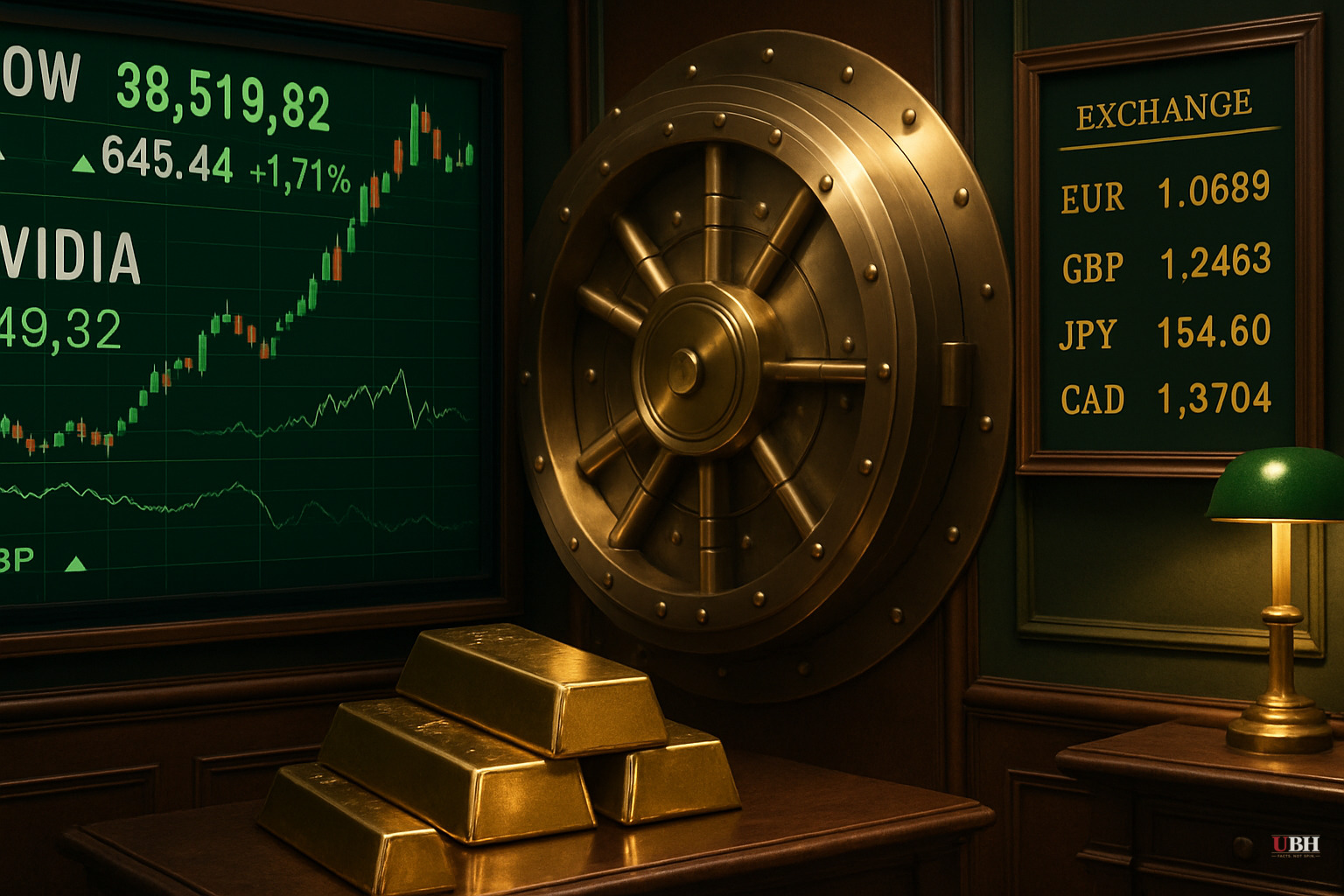
Wednesday was a good day on paper. The Dow Jones Industrial Average surged 645.47 points, or 1.31%, closing at 50,009.35, according to CNBC. The S&P 500 added 1.08% to close at 7,432.97. The Nasdaq gained 1.54%, finishing at 26,270.36.
Then Thursday morning hit. S&P 500 futures dropped 0.3%. Nasdaq 100 contracts fell 0.4%, according to Bloomberg. The rebound stalled.
One Trump press gaggle pumps it up. One ambiguous headline pulls it back down.
What Actually Moved the Market
Two things drove Wednesday's gains — and neither is a sure thing.
First: Iran. President Trump told reporters the U.S. was in the "final stages" of negotiations with Iran, per a pool report cited by CNBC. That single comment knocked West Texas Intermediate crude down 5.66% to $98.26 a barrel. Brent crude fell 5.63% to $105.02. Lower oil prices reduce inflation concerns and boost bonds and stocks.
By Thursday morning, Brent had already clawed back 1.2%, rising above $106 a barrel, according to Bloomberg. "Final stages" apparently doesn't mean "done."
Second: Nvidia. The chipmaker reported $81.6 billion in quarterly revenue — a record — and announced an $80 billion share buyback, according to the Economic Times. For context: that's a company printing money at a scale that would have seemed impossible five years ago.
But the stock's reaction? Muted. Futures dipped after the print. When you've already run nearly 20% this year and over 1,400% in five years, beating expectations isn't automatic fuel for new buying. James Demmert, chief investment officer at Main Street Research, told CNBC that expectations going into the report were "somewhat muted" — and the market priced it accordingly.
The Bond Market Is the Real Story
The bond market is flashing red.
The 30-year Treasury yield recently hit its highest level since 2007. The 10-year yield is near multi-year highs. Wednesday's Iran news knocked the 10-year down more than 9 basis points and the 30-year more than 6 basis points — but those are one-day moves inside a larger, uglier trend.
Higher long-term yields mean higher borrowing costs for everyone — mortgages, car loans, business expansion. An economy already absorbing an oil price shock faces additional pressure from rising debt costs.
The Fed's own meeting minutes, cited by CNBC, made clear that most officials expect rate hikes if inflation keeps running hot. Quote: "A majority of participants highlighted, however, that some policy firming would likely become appropriate if inflation were to continue to run persistently above 2 percent."
That's a warning.
The Kevin Warsh Factor
The Fed will soon be led by Kevin Warsh — and markets are still calibrating what that means. Warsh has historically been more hawkish than his predecessors. If oil stays elevated and Iran talks collapse, a Warsh-led Fed hiking rates into an energy-shocked economy presents real risks. Bloomberg noted that concern about inflation reigniting is growing, and that the Fed may already be behind the curve.
The next six months depend almost entirely on whether Trump closes the Iran deal and whether Warsh blinks on rates. That's significant geopolitical and personality risk baked into one market.
What Mainstream Coverage Is Getting Wrong
The headline narrative on Wednesday was "stocks rally" — full stop. That framing ignores three points.
One: The rally was driven by a single unverified diplomatic claim from Trump in a hallway.
Two: Nvidia's blowout quarter didn't sustain the rally into the next morning. When the best earnings report of the quarter can't hold a bid, it signals something about where sentiment actually sits.
Three: The bond market's structural problems didn't disappear because oil dropped for one day. The 30-year at 2007 highs deserves front-page treatment, not a subordinate clause.
What This Means for Regular People
If you have a 401(k), Wednesday felt good. Thursday reminded you it could evaporate just as fast.
Oil above $98 a barrel means gas prices aren't coming down anytime soon. Mortgage rates tied to long-term Treasury yields aren't either. If the Iran deal falls apart — and diplomatic "final stages" have a long history of going nowhere — oil spikes back, inflation reignites, and the Fed tightens into a slowdown.
Nvidia posting $81.6 billion in revenue is genuinely impressive. But Nvidia's earnings don't pay your mortgage. Interest rates do.
The market is betting on peace in the Middle East and a Fed that threads the needle perfectly. Both of those bets could be wrong at the same time. Plan accordingly.
Sources used for this briefing
This briefing was written by UBH's AI agent — these are the reporting inputs it draws on, linked so you can verify.


