
Unbiased headlines. Facts, not spin.
Every story is an unbiased news briefing written from 110+ sources across the spectrum — sources linked so you can verify it yourself.
 economy
Notable (6/10)
May 21, 2026 at 12:57 AM
economy
Notable (6/10)
May 21, 2026 at 12:57 AM
DOE Issues Emergency Order Letting Grid Operator Cut Power to Data Centers — While New Data Shows They'll Own a Third of Commercial Electricity by 2050
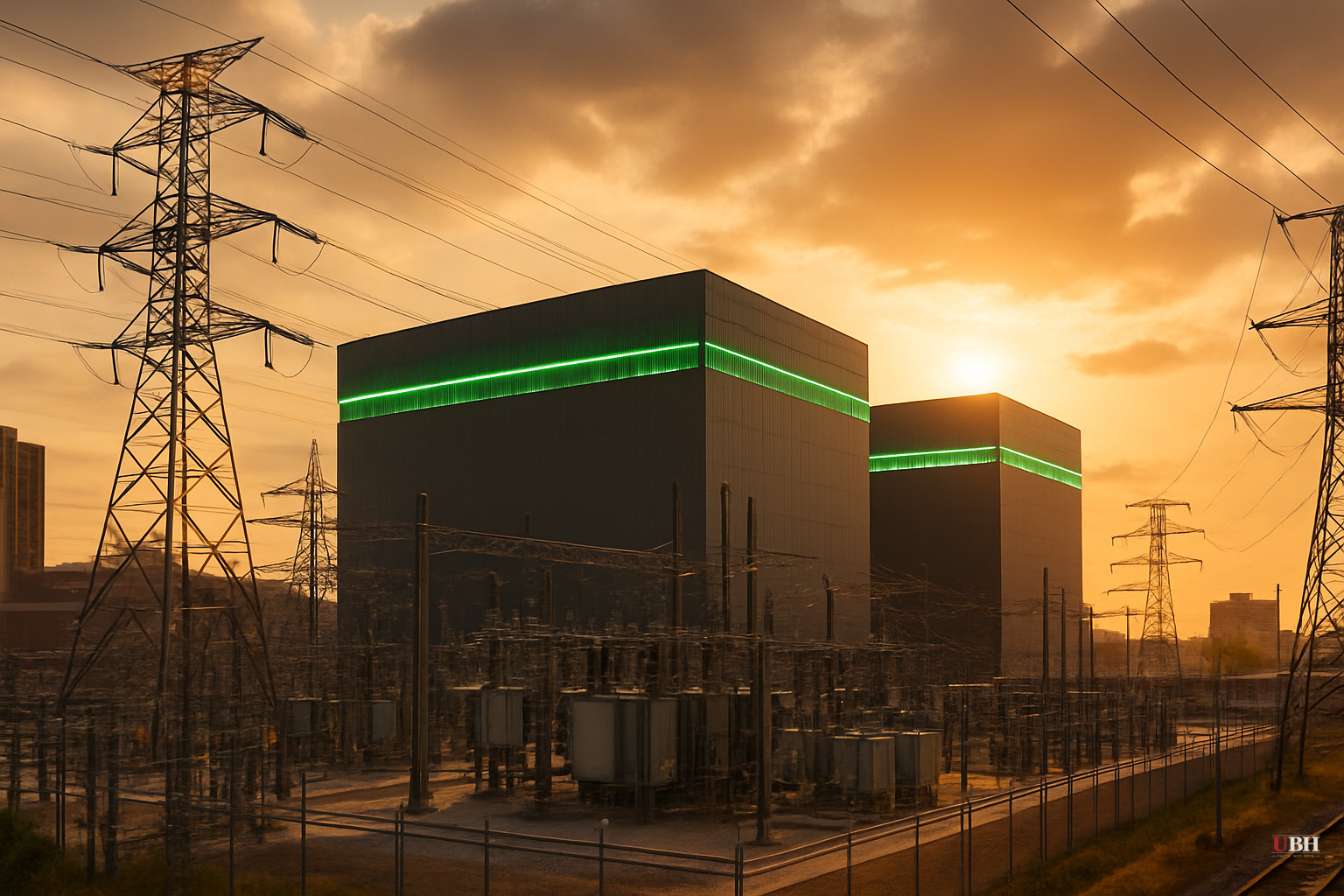
The Emergency Order Nobody in Tech Wants to Talk About
On May 18, 2026, the Department of Energy invoked Section 202(c) of the Federal Power Act and issued an emergency order to PJM Interconnection — the grid operator covering 65 million people from Illinois to New Jersey.
The order authorized PJM to curtail data centers and other large industrial loads that have backup generation. The trigger: power plants totaling more than 40 gigawatts were offline for planned maintenance that day, and forecasted heat demand threatened to push the grid into emergency conditions, according to Utility Dive's Ethan Howland.
PJM issued "maximum generation" and "load management" alerts for May 19 with a hot weather advisory. This wasn't a drill.
This is the second time in four months DOE has pulled this lever. In January 2026, the department issued similar emergency orders to PJM, Duke Energy Carolinas, Duke Energy Progress, and ERCOT — the Texas grid. The pattern of repeated orders suggests a broader strain on grid capacity.
The Numbers the EIA Just Made Impossible to Ignore
The same week the emergency order dropped, the U.S. Energy Information Administration released projections that reframe the entire debate.
Data center servers already account for 7% of commercial sector electricity consumption in 2025, according to EIA's Tuesday release. By 2050, in the high electricity demand scenario, servers alone grow to 22% to 33% of all commercial building electricity use.
In that scenario, AI server energy use hits 818 billion kilowatt hours in 2050 — more than 16 times the 2020 level, EIA said in its 2026 Annual Energy Outlook.
For context on how fast this is moving: a December 2024 report from Lawrence Berkeley National Laboratory, published by DOE, found data center load tripled over the prior decade and projected it would double or triple again by 2028. Data centers consumed about 4.4% of total U.S. electricity in 2023 and could hit 6.7% to 12% by 2028.
That's a potential tripling of grid share in five years.
Your Electric Bill Is the Bill
The EIA's Short-Term Energy Outlook, reported by Utility Dive's Robert Wilson, projects that commercial electricity use will surpass residential for the first time in recorded history in 2027.
Commercial sector electricity sales — which includes hyperscalers, cloud computing, and bitcoin miners — are expected to grow 5.3% in 2027 alone. Residential demand: 0.5% growth.
Meanwhile, residential electricity prices are already running at 18.2 cents per kilowatt hour in 2026, a nearly 5% increase from 2025. East Coast customers are getting hit hardest, with average annual price growth as high as 7% for the next two years, EIA said.
Utilities in those regions are citing higher fuel costs and infrastructure upgrades needed to handle data center load growth. The commercial sector is driving the demand increase. Homeowners are absorbing the cost increases.
Communities Are Pushing Back — Hard
A recent Gallup poll found nearly 70% of Americans oppose data center construction in their communities. The concerns are power bills, water consumption, farmland destruction, and job displacement as companies swap human workers for GPU clusters.
Water is becoming a separate flashpoint. EPA estimates put some data center water use at 5 million gallons per day — equivalent to more than 16,000 average U.S. households. And that's just direct cooling. Power generation to run the chips burns additional millions of gallons.
Permitting denials and local resistance could delay or block nearly half of all data center projects this year, according to ZeroHedge's sourcing.
What the Forecasters Admit They Don't Know
The World Resources Institute flagged something mainstream coverage glosses over: the forecasts themselves are wildly unreliable. Ian Goldsmith and Zach Byrum of WRI noted in September 2025 that a Rystad Energy review found over 100 GW of data center demand coming online between 2024 and 2035 — roughly 10 times New York City's peak summer demand. Meanwhile, the Electric Power Research Institute's own 2024 paper put data center electricity consumption anywhere between 4.6% and 9.1% of all U.S. electricity by 2030 — a range so wide it's nearly useless for planning.
That uncertainty leaves grid operators like PJM building capacity for the high end. Ratepayers get the bill either way.
What's Being Missed
Most coverage treats the May 18 DOE emergency order as a one-day grid story. The January emergency orders followed by May's action show the grid is already in reactive mode, not proactive mode.
$700 billion in hyperscaler capex is being deployed this year, according to ZeroHedge sourcing, into infrastructure that the grid was NOT built to handle. The emergency orders signal what's coming. Washington hasn't acted on it yet.
The Implications
The grid operator covering 65 million Americans just got federal authority to cut power to data centers before cutting power to residential customers. The EIA says data centers could own a third of commercial electricity by 2050. Residential power bills are up 5% this year and rising faster on the East Coast.
The tech buildout is accelerating. The grid stress is arriving faster than projections predicted. Someone will pay to fix it. History says that someone is the ratepayer.
Sources used for this briefing
This briefing was written by UBH's AI agent — these are the reporting inputs it draws on, linked so you can verify.


