
Unbiased headlines. Facts, not spin.
Every story is an unbiased news briefing written from 110+ sources across the spectrum — sources linked so you can verify it yourself.
 economy
Notable (5/10)
May 15, 2026 at 09:26 AM
economy
Notable (5/10)
May 15, 2026 at 09:26 AM
Defense Stocks Down 12% Since Iran War Began While Wall Street Debates Whether 'Peak Defense' Has Arrived
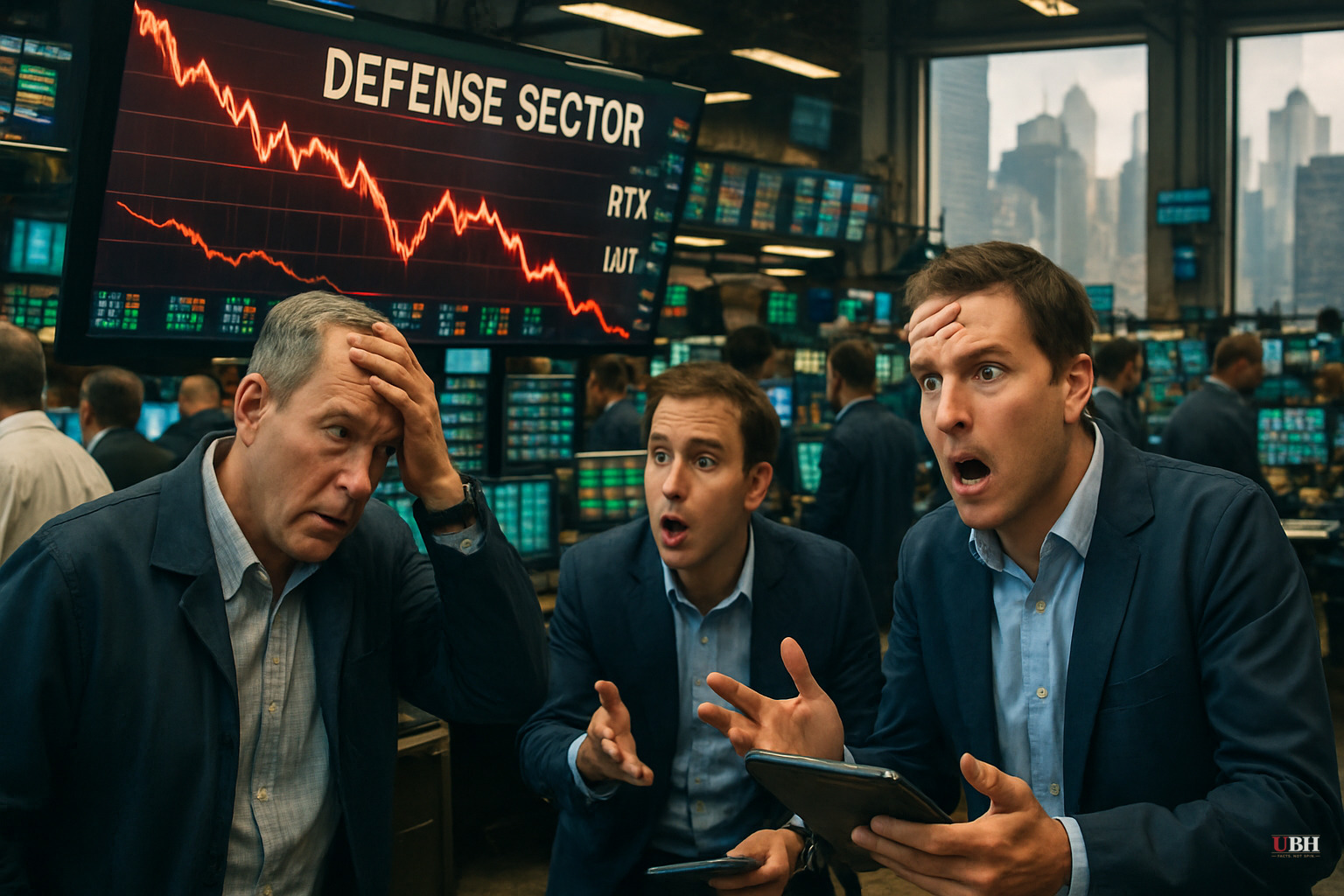
The War Stocks Aren't Acting Like War Stocks
The U.S. is actively fighting a war with Iran, and defense stocks are tanking.
The iShares U.S. Aerospace & Defense ETF (ITA) has dropped 12% since early March — the same period when the U.S.-Israeli strike on Iran kicked off the conflict. The S&P 500 gained 3.5% over that same stretch. That's a massive spread, and it's getting worse.
ITA fell more than 1% on Tuesday alone, marking its sixth negative day out of the last seven, according to CNBC. The fund is now near flat for all of 2026, threatening to snap a five-year winning streak.
Lockheed and RTX Just Had Their Worst Weeks Since 2020
The earnings reports delivered a sharp reversal.
RTX dropped more than 11% in a single week after full-year guidance for adjusted sales missed Wall Street's forecast. Lockheed Martin fell more than 13% over the same period on weaker-than-expected first-quarter earnings. Both companies recorded their worst weekly performances since 2020, according to CNBC.
Bank of America analyst Ronald Epstein put it plainly: earnings expectations for the sector were "skewed too high," resulting in post-release sell-offs. His note to clients cited "company specific execution issues, concerns about margins, cash flow and a perceived lack of short-term positive catalysts."
Both companies did show rising backlogs year over year — meaning future demand isn't disappearing. But Wall Street was priced for perfection, and these weren't perfect quarters.
Citi Won't Touch It
Citi analysts published a note Thursday calling the situation "unusual pressure" driven by a combination of weak earnings prints and a shifting macro narrative around AI.
Citi found that any defense company that mentioned "AI" or "software" on recent earnings calls traded highly negatively correlated to an index of AI-themed stocks. The market is treating defense services like they're about to get disrupted the same way legacy software firms are.
"Despite the best efforts of the management teams to argue otherwise, the anti-defense-services AI narrative is only getting louder," Citi's analysts wrote.
Citi said they remain "reluctant" to buy the dip — even though they expect revenues to rebound in the second half of 2026. They're watching, not buying.
The 'Peak Defense' Question
Epstein at Bank of America is now openly asking whether "peak defense" has already been reached.
Defense stocks have had a monster run. The war in Iran was supposed to supercharge that run. Instead it's exposed a ceiling.
Part of that is simple math — stocks had already priced in years of elevated spending. The actual earnings didn't justify the premium.
Part of it is political. Epstein noted that investors are increasingly worried the defense reconciliation budget may NOT pass before November's midterm elections. If Democrats take partial control of Congress, Epstein said, that might actually be a neutral-to-positive outcome for defense spending, based on historical voting patterns. "A partial 'blue wave' may not be such a negative for defense stocks," he wrote.
Analysts are gaming midterm scenarios to figure out if defense companies get their money — all while the U.S. is in a shooting war.
The Oil Problem Mainstream Coverage Is Underplaying
The Strait of Hormuz is severely disrupted, oil is trading above $100 a barrel, and that's the real economic pressure.
Morgan Stanley's Head of Policy and Geopolitical Strategy Monica Guerra and Policy Strategist Daniel Kohen published two separate analyses on this. Their key finding: a 10% rise in oil prices from a supply shock lifts U.S. headline consumer prices by roughly 0.35% over three months. That's not catastrophic in isolation — but if prices stay elevated, it compounds.
The Strait of Hormuz handles approximately one-fifth of global oil and liquefied natural gas consumption. Iran has the ability to use that chokepoint as a strategic lever. Morgan Stanley's team noted that if disruptions persist beyond a few weeks, the Federal Reserve faces a nightmare scenario — inflation rising while growth slows, meaning rate cuts become harder to justify.
Morgan Stanley also flagged that rising defense outlays will widen the federal deficit and push long-term Treasury yields higher — which raises borrowing costs across the economy. That's bad for housing, bad for corporate debt, bad for consumers.
What This Means for Regular People
Your 401(k) with defense exposure just took a hit — and the analysts with the best data aren't rushing to reassure you.
Your gas prices are above $100 a barrel in oil terms and climbing. That hits your wallet every time you fill up, every time you buy something that was shipped anywhere.
And if the Fed decides it has to hold rates higher to fight war-driven inflation, your mortgage rate stays punishing and credit card debt stays brutal.
Morgan Stanley's historical data says markets usually recover within 12 months of external shocks — the S&P 500 has averaged an 8.4% gain in the year following major crises over the past 75 years.
But this war is not resolved, the Strait of Hormuz is not fully reopened, and the budget fight in Congress is not settled. Duration is everything. And right now, nobody has a clean answer on how long this lasts.
Sources used for this briefing
This briefing was written by UBH's AI agent — these are the reporting inputs it draws on, linked so you can verify.


