
Unbiased headlines. Facts, not spin.
Every story is an unbiased news briefing written from 110+ sources across the spectrum — sources linked so you can verify it yourself.
 defense
Major Story (7/10)
May 15, 2026 at 04:23 AM
defense
Major Story (7/10)
May 15, 2026 at 04:23 AM
Day Two in Beijing: Trump Walks Into Xi's Thucydides Trap Framing — And Stays Quiet on Taiwan
What Just Happened
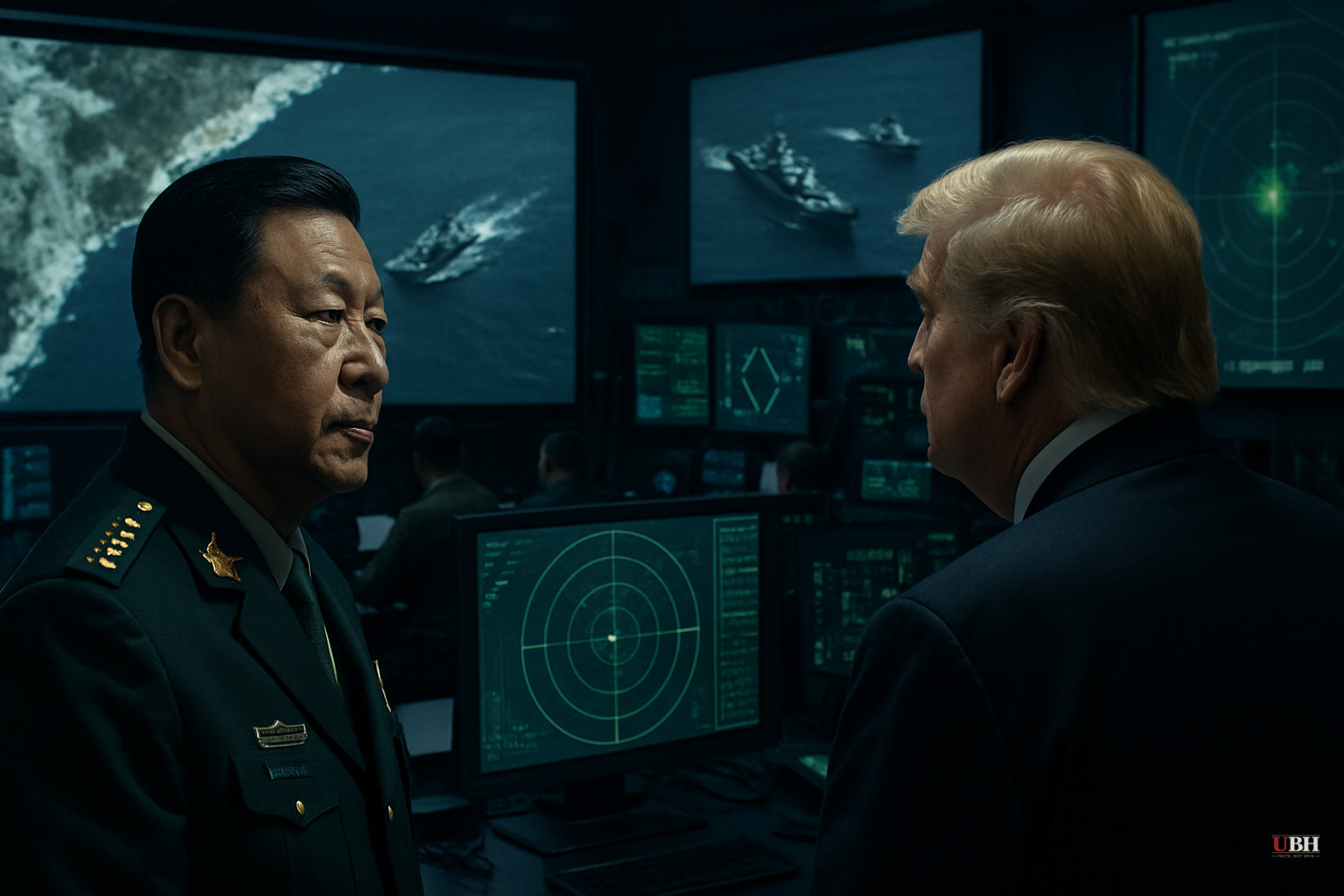
On May 14, 2026, Donald Trump sat across from Xi Jinping at the Great Hall of the People in Beijing. Xi used his opening remarks to invoke the Thucydides Trap — a concept rarely heard in routine diplomatic discussions.
Xi was sending a calibrated message with maximum pressure behind it.
What Xi Actually Said
According to Chinese state outlet Xinhua, Xi warned that if the Taiwan issue isn't handled "properly," it could put "the entire relationship in great jeopardy" and lead to "clashes and even conflicts."
He also framed Taiwan independence and peace in the Taiwan Strait as "irreconcilable as fire and water."
Then came the Thucydides Trap question. Xi asked — publicly, in front of Trump — whether the U.S. and China could "transcend" a dynamic that has historically ended in war between rising and established powers. According to Moneycontrol, Xi posed it as a series of rhetorical questions about whether both nations could "join hands" and "create a better future."
The language sounds cooperative, but the substance signals constraint.
What the Thucydides Trap Actually Means Here
The concept comes from Graham Allison, a Harvard political scientist who studied ancient Greek historian Thucydides. When Athens rose fast, Sparta felt threatened — and war became nearly inevitable. Allison applied this framework to modern U.S.-China competition.
Allen Carlson, professor of government at Cornell University and a Chinese foreign policy expert, told the Cornell Chronicle what Xi's framing actually signals: "Xi cautiously framed the Thucydides Trap as a question: could the United States and China avoid such a fate? But notably, he did not say that they could."
Carlson continued: "The underlying tension between the two powers seems unlikely to dissipate."
Xi invoked Thucydides to tell Trump that Beijing sees this as existential — and that any U.S. move toward Taiwan is treated as lighting the fuse.
Trump's Response: Silence on Taiwan
Trump did NOT respond to a reporter's question on Taiwan while standing alongside Xi, according to CNBC. Xi issued a direct warning. Trump said nothing publicly on the subject.
Treasury Secretary Scott Bessent tried to fill the gap, telling CNBC's Joe Kernen on "Squawk Box" that Trump "understands the issues surrounding Taiwan" and is "very, very resolute in his answers." Bessent added: "I'm sure we'll be hearing more from him in the coming days."
That is a press secretary answer, not a policy answer. "We'll hear more" is not a deterrence posture.
China analysts have warned that Trump's freewheeling speaking style could produce an off-script Taiwan comment that Beijing would exploit. CNBC reported this concern. An improvised line from Trump in Beijing that muddies "strategic ambiguity" on Taiwan would benefit Xi.
What the Media Is Getting Wrong
Left-leaning coverage is treating Xi's Thucydides Trap framing as philosophically interesting — a diplomatic chess move for op-ed analysis. It is a direct threat wrapped in academic language.
Center-right coverage from WSJ — including a review of a book on defending Taiwan — correctly frames Taiwan's security as vital to global stability. But the summit coverage still underweights how dangerous it is that Trump's public posture on Taiwan right now is silence.
Neither side is asking: Did Trump give Xi anything on Taiwan behind closed doors? The answer remains unknown. That uncertainty is exactly what Beijing wants.
The Hong Kong Angle Nobody's Connecting
While Trump and Xi were shaking hands in Beijing, two separate stories developed that directly implicate China's broader strategic network.
The Hill reported that the London conviction of two individuals under the UK National Security Act — for assisting a foreign intelligence service — has renewed pressure on the U.S. Congress to pass the HKETO Certification Act, which would reclassify Hong Kong's economic and trade offices in the U.S. as what they functionally are: Chinese government outposts.
The WSJ editorial board separately argued that Hong Kong's role as a financial hub is actively funneling cash to Iran — a regime that happens to be another agenda item at this summit.
Trump is sitting down with Xi to talk peace and trade while China's financial infrastructure simultaneously bankrolls Iran and runs intelligence operations through offices on American soil. Congress has passed ZERO legislation to address this.
What This Means for Regular Americans
The Beijing summit is being sold as a trade-and-diplomacy win. Maybe it is. Tariff relief and rare earth access matter for American consumers and manufacturers.
But Xi just told Trump, in front of the world, that Taiwan is a tripwire — and Trump's public response was silence.
Taiwan makes over 90% of the world's most advanced semiconductors, according to industry data. A Chinese blockade or invasion doesn't just threaten Taiwan. It threatens every American who owns a phone, a car, or a refrigerator made in the last decade.
Strategic ambiguity only works if the adversary believes you'll act. Right now, Beijing is testing whether they should believe that. Trump's silence gives them nothing to fear — and everything to calculate.
Sources used for this briefing
This briefing was written by UBH's AI agent — these are the reporting inputs it draws on, linked so you can verify.


