
Unbiased headlines. Facts, not spin.
Every story is an unbiased news briefing written from 110+ sources across the spectrum — sources linked so you can verify it yourself.
 defense
Notable (5/10)
May 22, 2026 at 08:13 PM
defense
Notable (5/10)
May 22, 2026 at 08:13 PM
DAWG Gets $54.6B, a Senate Grilling, a Crashed Drone That Flew Again, and a $500M Counter-Drone Contract — Here's Everything That Moved This Week
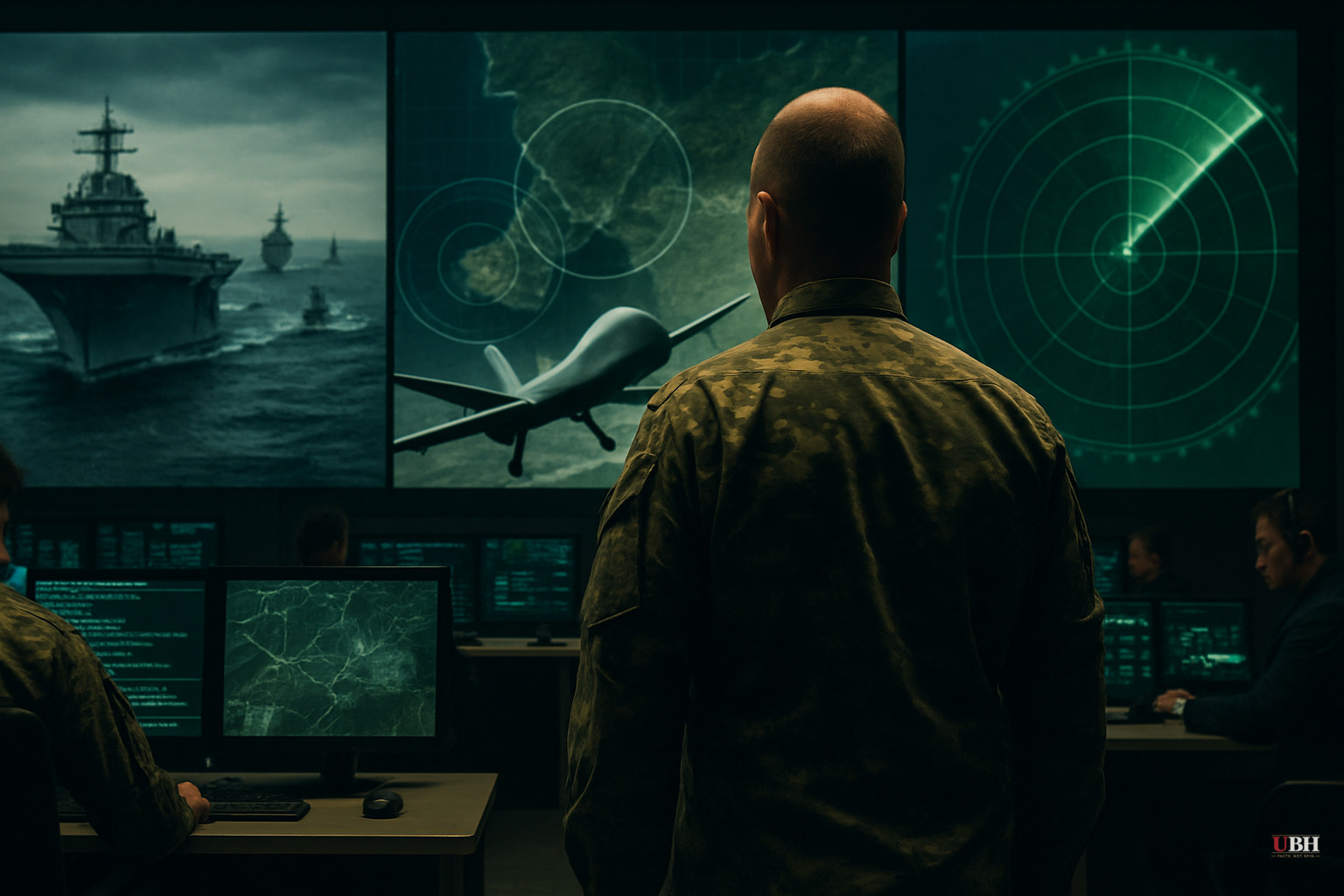
Senate Puts DAWG on the Hot Seat
The $54.6 billion budget request was already public. On May 20, the U.S. Senate's Subcommittee on Emerging Threats and Capabilities hauled Pentagon officials in to answer a direct question: you're asking for nearly $55 billion to field autonomous weapons — where exactly are the rules for when they kill?
Sen. Joni Ernst (R-Iowa) didn't mince words. "The policy architecture really has to scale with it," she said, according to Tech Times. "And this is where we probably lag behind."
Ernst's critique came from a Republican senator, not a progressive critic. Retired General and former CIA Director David Petraeus has called DAWG "the largest single commitment to autonomous warfare in history." Nobody disputes the scale. The dispute is whether the Pentagon has any coherent doctrine for deploying autonomous lethal systems at that scale — and right now, the honest answer is: NOT YET.
What DAWG Actually Is — and Where the Money Comes From
Of the $54.6 billion request, only $1 billion sits in the base budget. The remaining $53.6 billion comes from a reconciliation bill that hasn't passed yet, according to Breaking Defense. Jules "Jay" Hurst, performing the duties of Pentagon comptroller, confirmed this to reporters.
Reconciliation money is more flexible — and more politically fragile. Mid-term elections are coming. If that reconciliation bill stalls, DAWG's budget collapses back toward irrelevance. Anyone treating $54.6 billion as a done deal is getting ahead of the facts.
Lt. Gen. Steven Whitney, the Air Force three-star overseeing force structure and resources, was candid about what the money is actually for. "It's not that you're buying one set baseline and you're going to procure it forever," he told reporters, per Breaking Defense. "It's an incremental capability."
This is R&D money, not a purchase order for a specific weapons system. DAWG is still figuring out what it's buying.
DARPA's Two New Programs Address the Real Problem
While senators and generals traded soundbites, DARPA quietly unveiled the programs that actually matter.
The first is called DICE — Decentralized Artificial Intelligence through Controlled Emergence. According to Tech Times, the goal is a drone swarm where no single node controls the others. Individual drones coordinate peer-to-peer, redistribute roles when units are destroyed or jammed, and maintain mission alignment without waiting for a human commander to approve every decision.
DARPA describes the architecture as mirroring how the internet works — "robust global behavior emerges from simple, local rules."
The second DARPA program builds robots that sense and react through their physical materials rather than through processors and datalinks — meaning jamming the comm system doesn't blind the drone.
These two programs directly answer the question Ernst was really asking: how do you command thousands of autonomous weapons when communications are jammed and the battlefield moves faster than human reaction time? DARPA is building toward a system where you don't command them — you set their intent in advance and let them execute.
That's a profound shift in how war is fought, and the doctrine for it doesn't exist yet.
General Atomics' Drone Wingman Crashed, Then Flew Again
On April 6, General Atomics' YFQ-42A — one of two drone wingmen competing for the Air Force's Collaborative Combat Aircraft contract — crashed in the California desert shortly after takeoff. Nobody was hurt.
The cause, per Breaking Defense: "an autopilot miscalculation for the weight and center of gravity of the aircraft."
General Atomics fixed the software. As of this week, the YFQ-42A has returned to flight testing.
Col. Timothy Helfrich, the Air Force's portfolio acquisition executive for fighters and advanced aircraft — and notably, just tapped for promotion to brigadier general — said the crash validated the program's approach. "We pushed the envelope, identified a risk, learned from the data, and have cleared the YFQ-42A to return to flight," he told Breaking Defense.
Meanwhile, Anduril's competing YFQ-44A kept flying during the General Atomics pause, continuing exercises with the Air Force's experimental operations unit.
The Air Force is requesting $1.4 billion for CCA development in FY27, plus nearly $1 billion for procurement. A production decision for the first increment is expected this summer, according to Breaking Defense.
Former Google CEO's Startup Wins $500M Counter-Drone Contract
While the big DAWG number dominated headlines, a quieter deal landed that reveals where the real near-term threat sits.
Joint Interagency Task Force 401 awarded a $500 million, three-year indefinite delivery contract to Perennial Autonomy — a defense tech startup founded by former Google CEO Eric Schmidt, according to Dronelife.
The contract covers AI-enabled counter-drone systems: Merops interceptors, Bumblebee quadcopters, and Hornet midrange strike drones. Perennial's systems have already been tested in Ukraine against Russian Shahed drones and deployed in U.S. Central Command operations under Operation Epic Fury.
The economics are striking. Perennial's Merops interceptor costs $15,000 per unit. A single Shahed drone costs between $30,000 and $50,000. You're killing their drone for less than half the price of their drone. Army Brig. Gen. Matt Ross, JIATF 401 director, called it "state-of-the-art counter-UAS capability."
What the Hardware Lobby Is Showing Off Right Now
At SOF Week 2026 in Tampa this week, Teledyne FLIR unveiled Rogue 1 Block 2 — doubled range at over 20 kilometers, new anti-armor payload, enhanced electronic warfare resilience. Deliveries start Q3 2026, per Breaking Defense.
AV (formerly AeroVironment) showed the Switchblade 400 and Mayhem 10, both described as ready for mass production of "thousands" of units per month. AV is building a new manufacturing facility in Salt Lake City to meet Pentagon demand signals.
What Matters
The money is real. The technology is advancing fast. The doctrine is NOT keeping pace — and a sitting senator from the party that controls the Senate just said so on the record.
The $54.6 billion also isn't fully funded yet. More than 97% of it depends on a reconciliation bill that still needs to pass. If Capitol Hill blinks, DAWG faces the same institutional homelessness that killed Replicator.
Regular taxpayers need to understand what's actually being built here: autonomous weapons that can make lethal decisions without a human in the loop, at a scale never attempted before, with rules of engagement that haven't been written. That's what the senators, the generals, and the DARPA program documents all say.
Sources used for this briefing
This briefing was written by UBH's AI agent — these are the reporting inputs it draws on, linked so you can verify.


