
Unbiased headlines. Facts, not spin.
Every story is an unbiased news briefing written from 110+ sources across the spectrum — sources linked so you can verify it yourself.
 politics
Notable (5/10)
May 23, 2026 at 08:56 AM
politics
Notable (5/10)
May 23, 2026 at 08:56 AM
Congress Gave Away the Store on Executive Power. Both Parties Are Now Paying the Price.
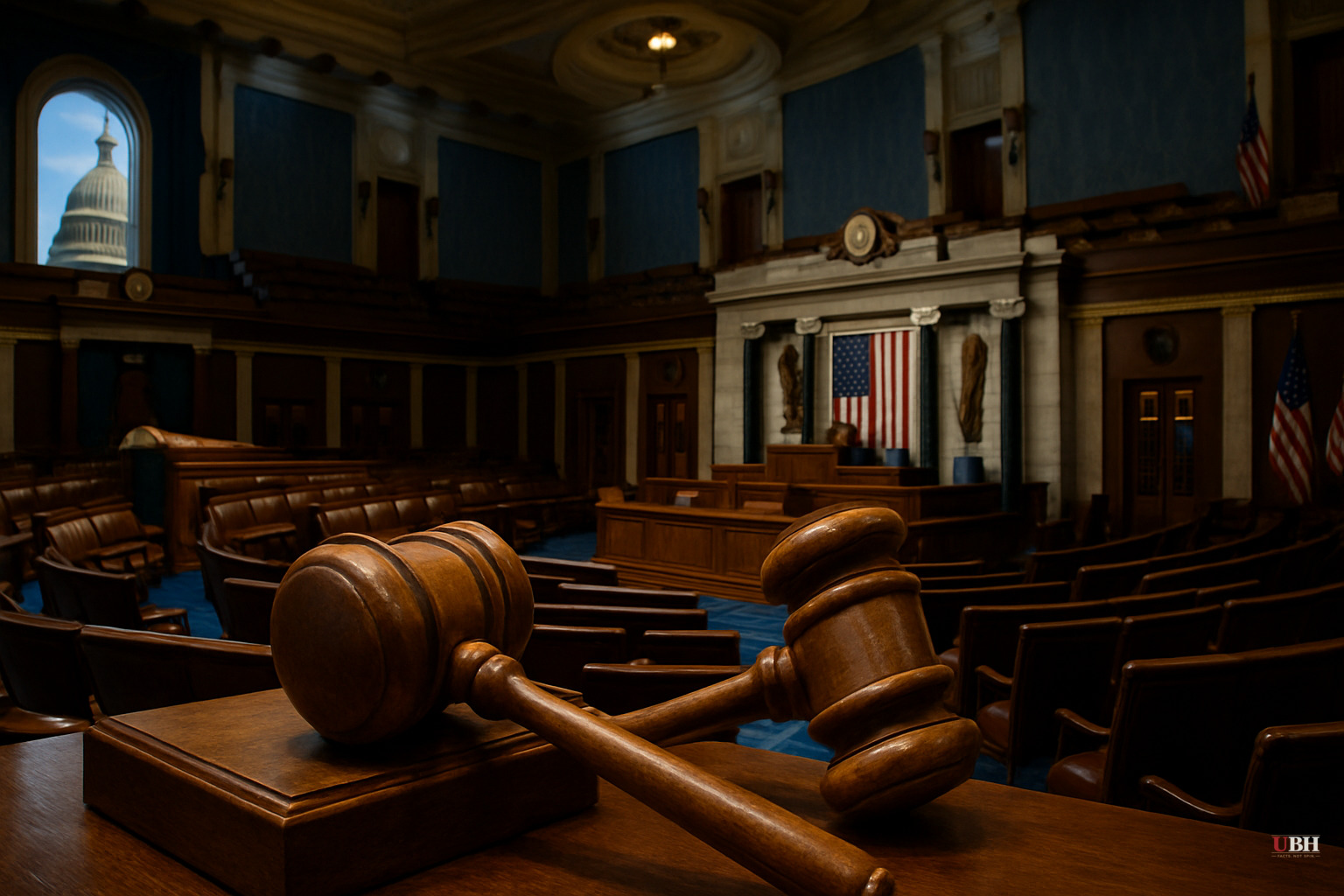
The System Is Broken. Both Sides Built It.
The executive power problem in America isn't a Trump problem. It isn't a Biden problem. It's a Congress problem — decades in the making, deliberately ignored by whoever holds the White House.
What the Cato Institute Actually Found
The Cato Institute published a policy analysis — "Reining in the Unreasonable Executive" — that lays out the core issue: Congress has been delegating its own legislative authority to the president for over a century. Thousands of pages in the U.S. Code. Millions of pages of regulatory activity in the Federal Register.
When federal agencies regulate, courts perform reasonableness review. When presidents regulate directly under congressional delegation, courts do NOT — because of two misguided Supreme Court decisions from the early 1990s. That's the gap. That's where unchecked power lives.
Cato's analysis notes that Presidents Biden AND Trump combined have taxed more than $350 billion in imports using this delegated authority. That's $350 billion in taxes — imposed without a single vote in Congress.
National Review Calls It What It Is
National Review took direct aim at what it called Trump's "egregious abuse of an egregious delegation" — specifically targeting Congress's surrender of the power to appropriate unlimited settlements. The framing matters: National Review isn't just criticizing Trump. It's criticizing the system that made Trump's move possible.
If the authority shouldn't exist, the problem isn't only who uses it — it's that it exists at all.
Democrats Are Screaming. But They're Not Saying Anything Useful.
Congressman Steve Cohen of Tennessee maintains an entire webpage titled "Tracking the Trump Administration's Harmful Executive Actions." It lists executive orders going back through 2025, including orders on tariffs, immigration, AI regulation, TikTok, and federal architecture.
Cohen's page links to House Democrats' Rapid Response Task Force and a Litigation Working Group. Lots of activity. No mention of the statutory delegations that made any of these executive actions legally possible.
Victor Davis Hanson, writing for the Daily Signal on May 22, 2026, identified the same vacuum from a different angle. California Democratic candidates — Xavier Becerra, Katie Porter, Tom Steyer in the governor's race; Karen Bass in the LA mayor's race — are running against Republicans without defending a single policy they've actually implemented. No defense of the homeless record. No defense of crime policy. No defense of California's $500 million in illegal alien medical care under Newsom. Just personal attacks.
Hanson's point: Democrats have no agenda to offer as an alternative. Which means even if they win elections, they haven't committed to reversing the structural executive power problem. They just want their team holding the levers.
The New York City Bar Association Report: Legitimate Concerns, Incomplete Diagnosis
The NYC Bar Association released a report on December 12, 2025 — "The Abuse of Presidential Power and Breach of Public Trust" — that identifies six categories of concern under Trump. Federal troops deployed into American cities. Immigration enforcement. Attacks on judicial independence. Citizenship challenges.
Some of those concerns are constitutionally serious and deserve scrutiny.
But the report reads as a political document, NOT a structural reform document. It diagnoses Trump as the disease. Congress handing presidents a loaded gun and then acting shocked when it gets fired receives no serious treatment.
If the NYC Bar Association was serious about the rule of law, it would be calling for Congress to claw back its delegated authority. It isn't.
What's Actually Missing From All of This Coverage
Left-leaning outlets like those feeding Congressman Cohen's tracker cover executive overreach as a Trump-specific emergency. Biden used the same tariff authorities. Obama used executive immigration action that Republicans called unconstitutional. The machinery doesn't change based on who's driving.
Right-leaning outlets, meanwhile, cheered expanded executive action when their guy was in office and are only now — through outlets like National Review and Cato — making the structural argument. Better late than never, but the intellectual honesty gap is real.
What Fixing It Actually Looks Like
Cato's framework is straightforward: courts need to apply reasonableness review to presidential policymaking the same way they apply it to agency policymaking. Two Supreme Court decisions from the early 1990s created the loophole. Congress could also simply reclaim what it gave away — sunset clauses, approval requirements, hard statutory caps.
None of that is happening. Both parties benefit from a powerful executive when their party holds it. The bipartisan silence on structural reform speaks volumes.
The Bottom Line
Trump is using power Congress handed him. That deserves scrutinizing. But Democrats opposing it without proposing structural fixes aren't protecting democracy — they're waiting for their turn at the same controls.
The Constitution gave Congress the power of the purse and the power to legislate. Congress gave that away, piece by piece, over a century. Until Congress takes it back, whoever sits in the Oval Office will keep using it.
Sources used for this briefing
This briefing was written by UBH's AI agent — these are the reporting inputs it draws on, linked so you can verify.


